

Afghanistan’s Taliban has blamed “irresponsible” Pakistan for the breakdown of recent peace talks in Istanbul, accusing Islamabad of failing to present actionable demands for resolution.
The peace negotiations, mediated by Qatar and Turkiye, ended without progress, raising fears of continued clashes along the Afghanistan-Pakistan border despite international efforts for stability.
Taliban spokesman Zabihullah Mujahid said Islamabad attempted to shift all security responsibilities to Kabul, while refusing to assume accountability for its own national security or Afghanistan’s.
“Pakistan’s non-cooperative and irresponsible attitude prevented any meaningful outcome from these discussions,” Mujahid stated on social media, highlighting the impasse that has left border tensions unresolved.
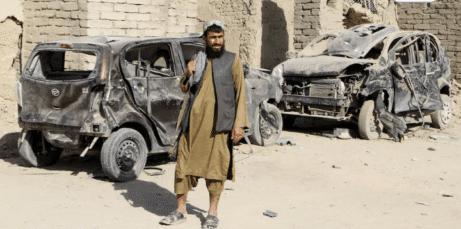
Officials reported that several Afghan civilians were killed and many more injured during recent cross-border skirmishes, underscoring the urgency for a durable ceasefire and diplomatic solutions.
Pakistan’s government confirmed that talks reached a deadlock on Friday, emphasizing that no real progress was made, though a Qatar-brokered ceasefire remained technically in effect.

Pakistan’s Information Minister, Attaullah Tarar, warned Islamabad would not support Taliban steps deemed harmful to Afghan citizens or neighboring countries, reinforcing Pakistan’s security priorities.
Islamabad maintains that the Taliban have failed to honor obligations under the 2021 Doha peace accord, including commitments to combat terrorism within Afghan territory.
A central concern for Pakistan is the sheltering of Tehreek-e Taliban Pakistan (TTP), responsible for deadly attacks inside Pakistan, which has triggered cross-border military responses.
The Taliban, however, denies harboring TTP factions and insists that Afghan authorities remain committed to mutual security and preventing misuse of Afghan territory by foreign actors.
Mujahid stressed, “We will not allow Afghan territory to be used against any country, nor permit actions undermining Afghanistan’s sovereignty or security.”
He also emphasized that the people of Pakistan are considered friends and brothers, but Kabul will strongly defend against any aggression from across the border.
The Taliban expressed appreciation to Qatar and Turkiye for mediation, while reiterating that Afghanistan will take all measures to protect national sovereignty and prevent further escalation.
The October clashes resulted in 50 Afghan civilian deaths and 447 injuries, according to UN data, highlighting the human cost of unresolved border disputes and stalled peace talks.
Explosions in Kabul last month killed at least five people, which the Taliban blamed on Pakistani actions, further straining the fragile diplomatic environment.
The Pakistani military reported 23 of its soldiers killed in attacks by the Taliban, with 29 others wounded, but civilian casualty figures were not provided in official statements.
Regional analysts note that Pakistan’s concerns over India-Taliban relations are influencing its approach, with fears of strategic shifts affecting negotiation dynamics in Istanbul.
Afghanistan’s defense minister, Mullah Mohammad Yaqoob Mujahid, and Pakistan’s defense minister, Khawaja Muhammad Asif, have previously shaken hands during ceasefire signings mediated by Qatar, illustrating past cooperation efforts.
Despite the ongoing tensions, both sides acknowledge the importance of continued dialogue, though each maintains differing interpretations of security responsibilities and cross-border accountability.
The Taliban insists that it remains committed to international expectations, while rejecting allegations of providing safe haven to insurgent groups targeting Pakistan.
Humanitarian observers warn that continued border violence could exacerbate civilian suffering, undermining confidence in both the Taliban’s governance and Pakistan’s border security measures.
Qatar and Turkiye’s mediation role has been widely recognized, though both mediators have acknowledged the complexity of regional security concerns and historical mistrust between Afghanistan and Pakistan.
The failure of talks also raises broader questions about the viability of Afghanistan’s post-2021 peace framework and its ability to prevent the resurgence of cross-border militancy.
Pakistan stresses that Afghanistan must take active measures against armed groups like TTP to prevent destabilizing attacks, framing these obligations as central to future negotiations.
Meanwhile, the Taliban’s rhetoric emphasizes sovereignty and mutual security, insisting that Afghanistan will resist external interference while seeking constructive engagement where possible.
Civil society in both countries has expressed concern over the human toll of border clashes, urging political leaders to prioritize dialogue and minimize military confrontations.
The United Nations has called for restraint and reinforced the importance of diplomatic mechanisms to protect civilians and maintain regional stability amidst the ongoing standoff.
Afghanistan’s Taliban continues to assert its position that Pakistan bears responsibility for non-cooperation, while pledging to engage only in discussions that respect Afghan sovereignty and territorial integrity.
Observers point out that the deadlock in Istanbul underscores longstanding mistrust, making any future peace initiatives contingent on practical commitments from both Kabul and Islamabad.
Pakistan’s insistence on action against TTP remains a central sticking point, with Islamabad signaling it will act decisively to protect national security regardless of diplomatic frustrations.
For its part, the Taliban maintains that constructive dialogue must occur without foreign-imposed conditions, framing the dispute as one of national dignity as much as border security.
Regional experts suggest that external mediation can only succeed if both sides accept reciprocal responsibilities, including transparent mechanisms for ceasefire verification and cross-border accountability.
The failure of these talks may signal a renewed cycle of skirmishes unless both countries find a balanced approach that addresses security concerns and respects sovereignty.
In summary, Afghanistan’s Taliban blames “irresponsible” Pakistan for the stalled peace talks in Istanbul, insisting on sovereignty while acknowledging the need for measured engagement to prevent further civilian casualties.


