The Taliban Pakistan border clashes intensified on Saturday night as both sides exchanged heavy gunfire, deepening Afghanistan Pakistan tensions following an air strike in Kabul earlier this week.
Taliban officials confirmed their fighters launched what they called a “successful retaliatory” campaign against Pakistani positions, accusing Islamabad of repeated violations of Afghan territory and aggressive cross-border incursions.
Enayatullah Khwarizmi, spokesperson for Afghanistan’s Ministry of Defence, said Taliban units targeted Pakistani posts along multiple frontier points, calling the operation a direct response to Kabul air strike incidents.
“The operation was a defensive act against Pakistan’s repeated airspace violations,” Khwarizmi declared on X, claiming the Taliban Pakistan border clashes concluded at midnight after achieving “operational objectives.”
Pakistani Interior Minister Mohsin Naqvi, however, described the Afghan assault as “unprovoked aggression” and vowed that Pakistan’s forces would respond “with a stone for every brick.”
“Firing by Afghan forces on civilian populations is a blatant violation of international law,” Naqvi wrote on X, warning that “no provocation will be tolerated by our brave forces.”
Pakistan’s state broadcaster, Radio Pakistan, cited unnamed security sources saying Taliban attacks were recorded at six separate locations, prompting an “intense counter-response” from Pakistani artillery.
Video footage released by the channel showed the night sky lit with continuous flashes of gunfire and explosions, underscoring the intensity of cross-border conflict unseen in recent months.
Officials did not specify whether the overnight fighting had subsided, but residents near the Durand Line reported hours of bombardment from both sides.
The confrontation followed a Thursday air strike in Kabul that killed several people and which the Taliban blamed squarely on Pakistan, escalating the already fraught Afghanistan Pakistan tensions.
Islamabad has neither confirmed nor denied responsibility for the Kabul air strike, but it has repeatedly accused the Taliban administration of harbouring Pakistani Taliban fighters.
Pakistani officials claim these militants conduct cross-border attacks from Afghan soil with alleged logistical or intelligence backing from India, an accusation New Delhi categorically denies.
“The Taliban must ensure Afghan territory is not used against Pakistan,” a Pakistani security source told Al Jazeera, insisting the government “will defend its sovereignty at all costs.”
The Taliban, meanwhile, maintains that its government does not allow Afghan soil to serve as a launchpad for operations targeting any neighbouring country, including Pakistan or India.
Regional anxiety has risen sharply over the Taliban Pakistan border clashes, prompting diplomatic interventions from Iran, Qatar, and Saudi Arabia urging both sides to de-escalate.
Iran’s Foreign Minister Abbas Araghchi appealed for calm, saying on state television, “Our position is that both sides must exercise restraint and avoid actions that risk regional stability.”
“Stability between Pakistan and Afghanistan contributes directly to the peace of the region,” Araghchi added, highlighting Tehran’s concern about broader regional stability concerns.
Qatar’s Foreign Ministry expressed “deep concern” over the clashes, warning that continued hostilities could threaten the fragile security equilibrium across South and Central Asia.
“Both sides must prioritise dialogue and diplomacy,” the Qatari statement read, calling for steps that “reduce tension, avoid escalation, and contribute to regional peace and stability.”
The Qatari appeal follows Doha’s recent diplomatic outreach to both Islamabad and Kabul in an effort to prevent renewed military escalation along the border.
Saudi Arabia also joined the chorus, urging “restraint and wisdom” from both capitals while pledging its continued support for efforts promoting regional peace and cross-border conflict resolution.
“The Kingdom calls for restraint, avoiding escalation, and embracing dialogue and wisdom to reduce tensions,” the Saudi Foreign Ministry stated late Saturday.
It added that Riyadh “supports all regional and international efforts aimed at promoting peace, stability, and prosperity for the brotherly Pakistani and Afghan peoples.”
The Taliban Pakistan border clashes mark one of the most serious incidents between the two sides since Pakistan launched air raids inside Afghan territory earlier this year.
Those earlier attacks targeted suspected Tehreek-e-Taliban Pakistan (TTP) hideouts but drew a strong condemnation from the Taliban, which called them “a violation of sovereignty.”
Analysts say the Kabul incident and subsequent cross-border conflict expose deep mistrust between Islamabad and the Taliban, both of whom blame each other for instability in frontier regions.
“The relationship has collapsed into mutual suspicion,” said South Asia analyst Rahimullah Yusufzai. “Pakistan feels betrayed, while the Taliban accuse Islamabad of undermining their government.”
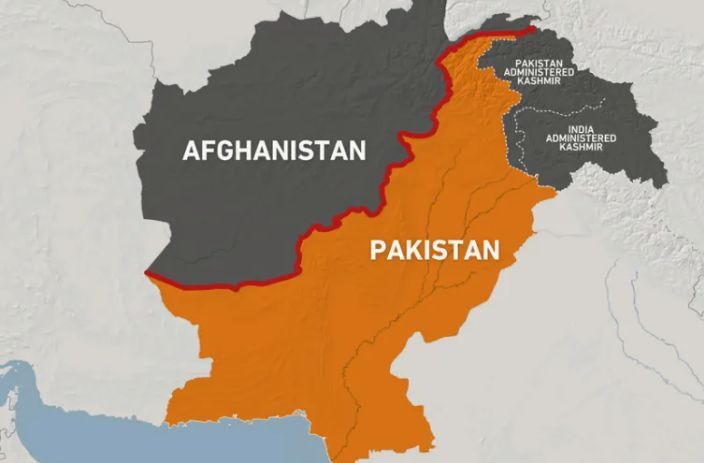
Since the Taliban’s return to power in 2021, Afghanistan Pakistan tensions have oscillated between cautious engagement and direct confrontation, often erupting along the 2,600-kilometre frontier.
The Durand Line, drawn by the British in the 19th century, remains a flashpoint that both countries dispute, and cross-border skirmishes frequently test fragile diplomatic ties.
Security experts say the latest Taliban Pakistan border clashes could complicate international efforts to stabilise Afghanistan and increase fears of renewed militant spillover into Pakistan’s tribal belt.
“Unless both sides establish clear communication channels, misunderstandings could lead to a wider crisis,” warned former diplomat Riaz Khokhar, urging mediation through neutral regional partners.
The situation also threatens to derail economic projects like the CASA-1000 energy corridor and the Turkmenistan-Afghanistan-Pakistan-India gas pipeline, which require cross-border cooperation.
Meanwhile, Pakistan’s military remains on high alert along its western frontier, reinforcing garrisons and deploying additional troops amid fears of Taliban infiltration or retaliatory strikes.
Residents of border villages described sleepless nights, with artillery shells and tracer fire visible across the rugged hills separating Khost province from Pakistan’s Kurram District.
“We could hear explosions all night,” said Ahmadullah, a shopkeeper from the Afghan side. “People are terrified that another air strike may follow the Kabul air strike.”
Humanitarian groups have warned that prolonged fighting could displace thousands in remote areas where medical and food aid remain scarce, aggravating the regional cross-border conflict impact.
Observers say the current crisis highlights the absence of trust-building mechanisms between two governments locked in competing narratives about terrorism, sovereignty, and regional stability concerns.
“The cycle of accusation and retaliation benefits no one,” said Pakistani political commentator Ayesha Siddiqa. “It’s time both sides recognise their shared security interests.”
The Taliban leadership, however, has signalled that it will not tolerate further attacks, describing Pakistan’s alleged air raids as “unacceptable aggression against an independent Muslim nation.”

A senior Taliban official speaking anonymously said, “We have exercised restraint before, but we cannot allow our airspace to be violated repeatedly by Pakistani warplanes.”
As both sides dig in, mediators from Iran and Qatar are reportedly working behind the scenes to calm the crisis, though no direct dialogue has been announced.
With both governments under domestic pressure to appear strong, analysts fear a dangerous spiral could unfold unless regional diplomacy halts the escalation.
For now, the Taliban Pakistan border clashes have pushed two uneasy neighbours toward the brink, raising alarms that another misfire could ignite a broader conflagration neither can afford.
About The Author