United States President Donald Trump has unveiled a sweeping new agreement with AstraZeneca, marking the second major pharmaceutical accord under his administration’s aggressive drug pricing campaign.
The Trump AstraZeneca drug deal was announced at the Oval Office, where the president declared it a “historic achievement” in lowering medicine costs for American consumers.
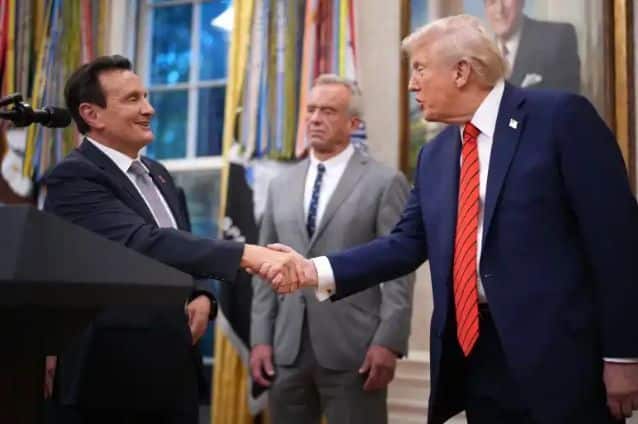
“This is another huge win for the American people,” Trump said, standing beside AstraZeneca’s Chief Executive Officer Pascal Soriot. “We’ve secured the best prices in the world.”
Trump claimed Americans could expect “way over a hundred percent” discounts on popular prescriptions, again promising what he called “impossible savings” through his Trump drug pricing policy.
He cited examples like inhalers for asthma treatment, which he said would be discounted by 654 percent, calling the product “a drug that’s hot, very hot.”
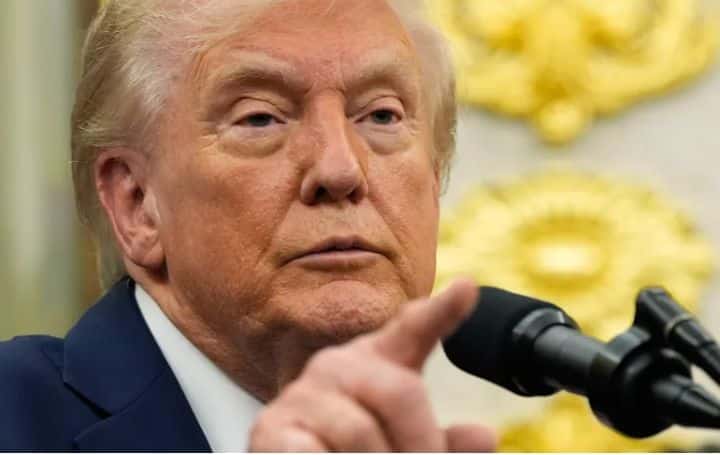
Trump added that some medications might see “a thousand percent reduction,” exaggerating the savings but highlighting his push to reshape the pharmaceutical market through tariff leverage.
The Trump AstraZeneca drug deal follows a similar agreement reached with Pfizer weeks earlier, both companies pledging to cut prices and join the new TrumpRx online marketplace.
AstraZeneca, headquartered in the United Kingdom, became the latest pharmaceutical giant to accept Trump’s conditions after he threatened to impose 100 percent tariffs on imported medicines.
At Friday’s event, Health and Human Services Secretary Robert F Kennedy Jr praised Trump’s hardline tactics, saying, “The president saw leverage where others saw limitation—and used it brilliantly.”
Kennedy credited Commerce Secretary Howard Lutnick with crafting the economic architecture behind the tariffs that fueled these new negotiations with global drug manufacturers.
“The Trump AstraZeneca drug deal proves that strong leadership works,” Kennedy said. “Tariffs, when properly used, are tools of fairness, not punishment.”
Trump, in turn, described tariffs as “the most beautiful word” in the dictionary, claiming they had liberated the United States from dependence on foreign pharmaceutical policies.
AstraZeneca’s Pascal Soriot admitted that tariff threats played a decisive role in finalizing the agreement. “Behind the scenes, yes, tariffs were a big reason I came here,” he said.
The company’s pledge includes $50 billion in new US investments by 2030, including building a major drug substance manufacturing plant in Virginia, a state project celebrated by officials.
Virginia Governor Glenn Youngkin praised the AstraZeneca investment in America, describing it as “a defining economic moment that strengthens our healthcare and creates new jobs for Americans.”
Soriot confirmed AstraZeneca would localize production, saying, “Most of our products are already manufactured here, but we’ll transfer the remaining operations to American soil.”
He thanked Secretary Lutnick for granting a three-year tariff exemption in exchange for the company’s pledge to expand domestic operations and supply the TrumpRx online marketplace.
Trump described the outcome as validation of his US pharmaceutical tariffs, arguing that his threats had forced corporations to act faster than years of negotiations ever could.
“I would never have been able to bring Pascal here without tariffs,” Trump told reporters. “This is how you protect your people—by using leverage.”
The Trump AstraZeneca drug deal thus represents both an economic and political victory, reinforcing his administration’s “America First” manufacturing strategy in the pharmaceutical sector.
Trump had earlier declared that any pharmaceutical company unwilling to move production to the US would face a 100 percent tariff starting October 1.
Pfizer narrowly avoided those penalties by signing a similar agreement just one day before the tariff deadline, prompting speculation about industry-wide compliance.
Both Pfizer and AstraZeneca cited the new agreements as essential to avoiding punitive trade costs while maintaining pricing parity with other developed nations.
Pfizer CEO Albert Bourla had said, “We now have certainty on tariffs and pricing. That stability has long been missing and will help restore our industry’s valuation.”
For Trump, the Trump AstraZeneca drug deal served as proof that economic threats could yield diplomatic and commercial results faster than conventional negotiations.
He boasted that his approach “restored respect” for the American government, which he claimed had been “bullied for years by greedy pharmaceutical interests overseas.”
Trump’s critics, however, argue that his drug pricing policies rely on theatrics more than substance, warning that promises of “a thousand percent discounts” mislead the public.
Economists also question whether the Trump drug pricing policy will actually lower consumer costs, or simply shift manufacturing costs and tax burdens elsewhere.
Yet Trump appears undeterred, framing the AstraZeneca investment in America as an act of patriotism and proof of his “pro-worker, pro-patient” trade doctrine.
“The Trump AstraZeneca drug deal isn’t about politics—it’s about fairness,” he said. “Other countries pay less because we’ve allowed them to take advantage. Not anymore.”
In September, Trump had warned pharmaceutical executives through formal letters that unless they cut costs, his administration would “deploy every tool in our arsenal” against them.
He even hinted at extending US pharmaceutical tariffs to cover raw materials and chemical components unless domestic production expanded significantly within the next year.
This uncompromising posture helped him brand himself as a populist champion against what he calls “abusive drug pricing practices” and “foreign profiteering off American illness.”
While the Trump AstraZeneca drug deal may ultimately lower certain prices, experts say its broader impact depends on whether companies sustain their new commitments over time.
AstraZeneca’s upcoming plant in Virginia, focused on chronic disease treatments, aligns with the administration’s health priorities and its promise to rebuild the manufacturing base.
Trump insisted the agreement would guarantee “the lowest prices anywhere in the world,” resurrecting his old “most-favoured nations pricing” policy from his first presidential term.
That earlier plan failed due to industry opposition and legal barriers, but Trump believes the TrumpRx online marketplace will achieve the same goal through direct consumer sales.
He has described TrumpRx as a “one-stop shop” for affordable medication, though the platform is not yet active and is expected to launch sometime in 2026.
When asked whether he named the site himself, Trump smiled and said, “No, I didn’t name it—but I like the name a lot.”
Analysts say the Trump AstraZeneca drug deal cements his belief that tariffs are an effective diplomatic weapon, calling the approach “tariff diplomacy in its purest form.”
Trump, who once called the introduction of tariffs “Liberation Day,” continues to rely on them to reshape trade relations, from steel to pharmaceuticals.
He has also extended this strategy toward countries accused of manipulating drug prices, urging them to negotiate “fair terms” or face US import restrictions.
While controversial, the Trump drug pricing policy has energized his political base, with supporters praising him for challenging “global corporate greed.”
At Friday’s press conference, Trump reiterated his mantra: “Without tariffs, we’d be at the mercy of foreign interests. With tariffs, we control our own destiny.”
The Trump AstraZeneca drug deal may well define the second term of his presidency, symbolizing his transactional, results-driven approach to both politics and economics.
It also strengthens his reelection narrative—that America’s interests must be defended through strength, not compromise, even in matters as essential as public health.
“Leadership means making the hard calls,” Trump said. “We’ve done that with tariffs, and now we’re doing that with drug pricing. America comes first again.”
Observers believe the Trump AstraZeneca drug deal and similar agreements could reshape the global pharmaceutical market for decades, redirecting investments to the United States.
Others, however, remain skeptical, fearing reduced international cooperation and potential retaliation from trading partners affected by Trump’s aggressive tariff strategies.
Still, for Trump, this latest accord stands as a personal vindication—a moment he insists “proves once again that America wins when America leads from strength.”
About The Author