Kwankwaso at a Political Crossroads as 2027 Calculations Tighten
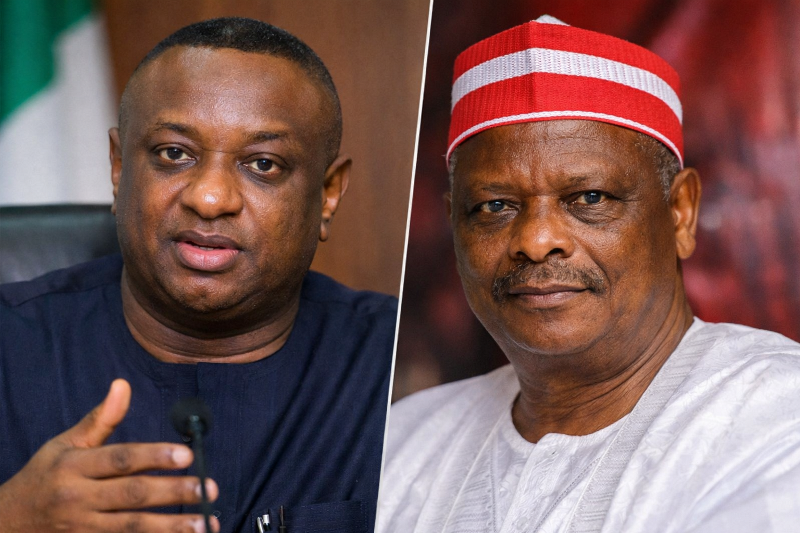
Former Kano State governor and New Nigeria Peoples Party (NNPP) presidential candidate, Senator Rabiu Musa Kwankwaso, appears to be facing one of the most defining moments of his political career as permutations ahead of the 2027 general elections intensify.
This assessment was sharply articulated by the Minister of Aviation and Aerospace Development, Festus Keyamo (SAN), who warned that Kwankwaso’s recent political choices may either revive or permanently end his presidential ambition.
Keyamo’s intervention, delivered via a detailed post on social media platform X, comes amid growing uncertainty around the future of the NNPP and a wave of defections weakening the party’s grip on Kano State—its strongest base since the 2023 elections.
While acknowledging Kwankwaso’s long-standing influence in northern politics, the aviation minister argued that the former governor has “boxed himself into a very tight corner” by declining an earlier invitation to align with the ruling All Progressives Congress (APC).
According to Keyamo, this decision has placed Kwankwaso at a difficult political crossroads, where time, party structures, and zoning realities are all working against him.
Kwankwaso at a Difficult Political Crossroads: The 2027 Reality
At the centre of Keyamo’s analysis is the argument that Kwankwaso’s ambition to become Nigeria’s president in 2027 faces steep structural and political obstacles.
He noted that Nigeria’s two dominant parties—the APC and the Peoples Democratic Party (PDP)—are both expected to zone their presidential tickets to the South in the next election cycle.
This development, Keyamo argued, effectively shuts the door on Kwankwaso’s chances of emerging as a presidential candidate under either platform in 2027.
In addition, he dismissed any realistic pathway through alternative platforms, describing the NNPP as “still largely a one-state party” whose influence may further erode before 2027.
With recent defections—including signals pointing to a possible exit by Kano State Governor Abba Yusuf—Keyamo suggested that the NNPP may struggle to even retain Kano, a scenario that would severely diminish Kwankwaso’s bargaining power on the national stage.
“A leader is only as strong as his devoted lieutenants,” Keyamo stated, warning that political influence cannot survive without a solid and loyal structure.
Why Alliances Matter More Than Ever
Keyamo further argued that Kwankwaso’s reluctance to support another northern presidential candidate complicates his situation.
Supporting a northern contender in 2027, he said, would effectively push Kwankwaso’s own ambition back by another political cycle—potentially until 2039—an outcome he described as unrealistic given Kwankwaso’s age and political timeline.
This, according to the minister, rules out any meaningful Atiku-Kwankwaso alignment in 2027 and narrows Kwankwaso’s viable options to three political platforms: the PDP, the APC, or the Labour Party.
Each option, however, comes with significant trade-offs.
A return to the PDP could allow Kwankwaso to reclaim control of the party’s structure in Kano and parts of the North-West, but it would also require shelving his 2027 presidential ambition due to zoning arrangements.
Aligning with the APC offers national spread and long-term relevance but leaves Kwankwaso with limited leverage, particularly as the party’s structure in Kano strengthens independently of him.
The Labour Party option, Keyamo suggested, is the least likely. He argued that Kwankwaso would neither accept nor be accepted as a vice-presidential candidate to Peter Obi, especially if such an arrangement extends southern leadership for another eight years
2031: The Last Strategic Window?
According to Keyamo’s assessment, the most realistic pathway left for Kwankwaso is 2031—but only if he makes the right alliance choices in 2027.
Any further erosion of his influence in Kano, he warned, could make it difficult for any major party to entrust him with a presidential ticket in the future.
“This is the time he can cash in on his presumed dominance of Kano politics and take a chance,” the minister said, stressing that indecision now could permanently reduce Kwankwaso to a regional political figure.
Keyamo concluded that without a strategic “handshake” with a major political party—similar to the alliance that elevated late President Muhammadu Buhari—Kwankwaso risks remaining a local champion whose platform may soon collapse under internal pressure.
As Nigeria’s political landscape rapidly evolves, Kwankwaso’s next move is being closely watched. Whether he chooses reintegration, realignment, or continued isolation may determine not only his political future but also the balance of power in northern politics ahead of 2027.
About The Author