

The olive harvest season in the West Bank has become increasingly perilous for Palestinian farmers, with many West Bank olive harvesters recounting, “we face threats every day while trying to gather our own olives.” Violence from Israeli settlers and military actions has intensified, putting thousands of trees at risk and fueling tensions across the region.
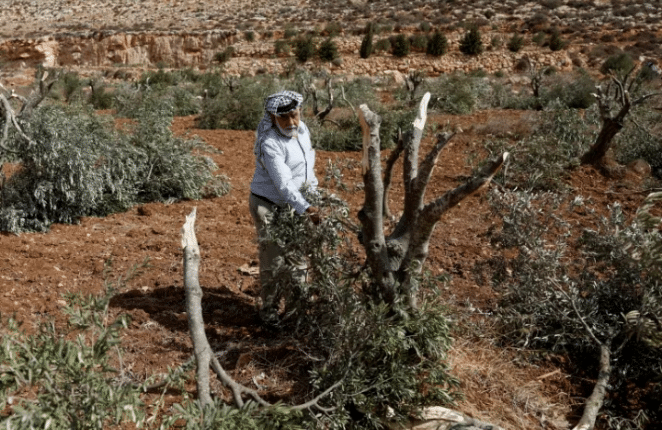
The United Nations Office for the Coordination of Humanitarian Affairs (OCHA) reported 126 attacks across 70 towns and villages, causing damage to more than 4,000 olive trees and saplings. For many West Bank olive harvesters, this represents the most destructive season since 2020.
In Deir Dibwan, east of Ramallah, Israeli settlers set fire to two Palestinian vehicles. “They destroyed our cars and threatened our families,” said a local farmer, highlighting the personal cost of these attacks. The surge in violence coincides with the harvest, a critical economic and cultural period for Palestinians.
Sinjil, north of Ramallah, experienced Israeli soldiers confiscating Palestinian olives after forcibly expelling residents. Although the olive groves lie in Area B—where Palestinians should freely manage their land—authorities declared a closed military zone, restricting access.
A closed military zone allows temporary entry restrictions. Palestinian farmers say such measures, combined with land confiscation as “state land” or “military zones,” have systematically eroded their ability to maintain olive groves. “Our trees are not just crops—they are our heritage,” a West Bank olive harvester explained.
The olive tree holds profound cultural significance. Years of uprooting and vandalism by authorities are seen as part of broader efforts to seize land and displace Palestinian communities, creating both economic and psychological strain for West Bank olive harvesters.
In Turmus Aya village near Ramallah, soldiers deployed tear gas to disperse Palestinians harvesting olives after settlers arrived. These actions directly contravene army directives, which mandate the protection of Palestinian harvesters. “We should be allowed to gather our harvest peacefully,” a local farmer said.
Israel’s High Court of Justice ruled in 2006 that military commanders must avoid closing areas in ways that prevent Palestinians from accessing agricultural land. Despite this, violations continue, undermining the rights of West Bank olive harvesters.
OCHA reports that at least 112 Palestinians have been injured since early October, and more than 3,000 trees and saplings were vandalized. The organization emphasized that most incidents occurred during the olive harvest season, officially starting October 9.
Between October 14 and 20, 49 settler attacks were recorded. Two-thirds of these incidents targeted West Bank olive harvesters. “We work hard to preserve our trees, yet every year we face new obstacles,” said a farmer in the village of Silwad.
Settler violence has surged throughout 2025, with 757 attacks documented in the first half of the year—a 13 percent increase compared with the same period in 2024, according to Peace Now, an Israeli NGO monitoring settlements.
International deadlines, including a September 2025 mandate from the International Court of Justice demanding the end of occupation, have passed with no change on the ground. West Bank olive harvesters continue to face daily threats without meaningful intervention.
Israel’s parliament recently granted preliminary approval to a bill to impose Israeli sovereignty over the West Bank. This measure, widely regarded as de facto annexation, threatens to escalate tensions further and put Palestinian livelihoods, including those of West Bank olive harvesters, at greater risk.
US Vice President JD Vance criticized the Knesset vote during a visit, calling it “a very stupid political stunt” and expressing dismay at Israel’s disregard for international pressure. Yet the enforcement of protections for West Bank olive harvesters remains minimal.
Annexation could effectively end the possibility of a two-state solution, leaving Palestinian communities increasingly vulnerable. “Our land, our olives, our future—it’s all at risk,” lamented a farmer from Turmus Aya, illustrating the human cost of policy decisions.
Despite US opposition to annexation, Israeli forces continue to impose heavy restrictions, often accompanying settler attacks. The contrast between ceasefire advocacy in Gaza and inaction in the West Bank frustrates Palestinian farmers. “We see protection promised, but never delivered,” a local activist said.
Beyond olive groves, Palestinian communities face property destruction and mobility limitations, especially in Area B and C. These measures consolidate control over land while undermining Palestinian agricultural and cultural practices.
The economic impact on West Bank olive harvesters is significant. Many families rely on olive harvests for income. Tree vandalism and restricted access reduce yields and create financial instability. “Each tree lost is months of income gone,” said a farmer in Deir Dibwan.
The symbolic significance of olives cannot be overstated. As one West Bank olive harvester explained, “Our trees are our history. They connect us to our ancestors and to our land.” Destroying these groves is thus both an economic and cultural assault.
The seasonal attacks demonstrate a broader strategy of intimidation. Settlers often harass farmers while authorities either condone or fail to prevent the violence, leaving West Bank olive harvesters in a vulnerable position throughout the harvest.
International human rights organizations have condemned settler violence and military complicity. Advocacy groups continue to urge Israel to uphold protections for Palestinian farmers, particularly during the olive harvest. “Without protection, our harvest is under siege,” a farmer noted.
OCHA continues monitoring attacks closely, documenting both physical and psychological impacts on West Bank olive harvesters. Reports emphasize the importance of safeguarding access to land and protecting Palestinian agricultural livelihoods.
The 2025 olive harvest season highlights systemic issues: occupation, settlement expansion, and cultural erasure. West Bank olive harvesters face not only economic loss but threats to their cultural identity and community continuity.
As annexation legislation progresses in the Israeli parliament, Palestinian farmers fear further restrictions and intensified violence. West Bank olive harvesters remain on the front lines of a broader conflict over land, rights, and heritage.
The pattern of attacks has international implications. Violations against West Bank olive harvesters draw global attention, raising questions about enforcement of international law and protection of civilian rights under occupation.
For many Palestinian families, the olive harvest is both a livelihood and a lifeline. Disruptions threaten immediate income and the long-term sustainability of agricultural traditions. “If we cannot harvest our olives, our community cannot survive,” a farmer in Sinjil stated.
The continued targeting of olive trees also represents an assault on cultural memory. West Bank olive harvesters express that these trees carry stories of their ancestors, connecting each generation to the land they cultivate.
Global observers call for urgent measures to protect West Bank olive harvesters. Without intervention, patterns of violence, land seizure, and cultural destruction are likely to continue, further destabilizing Palestinian communities.
Protecting the olive harvest is more than agricultural—it is symbolic of resilience, identity, and the fight for Palestinian rights. “Our trees are our future,” said one Silwad farmer, reflecting the deep connection between livelihood and heritage.
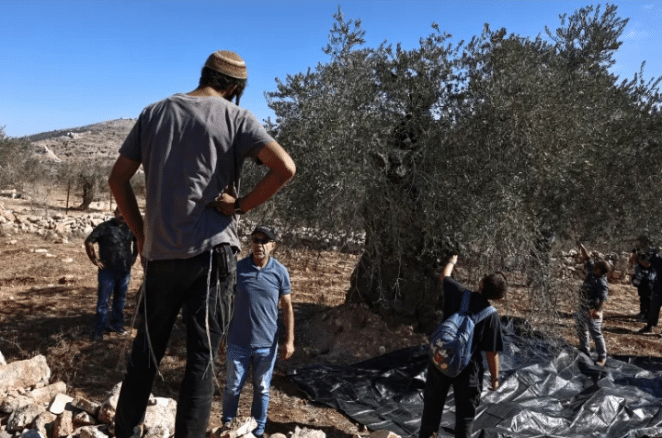
The 2025 olive harvest season in the West Bank serves as a stark reminder of the ongoing conflict. West Bank olive harvesters navigate threats from settlers and military actions while striving to preserve their land, culture, and economic survival.
About The Author


