

More than 252 Venezuelans sent by Trump to El Salvador under his mass deportation policy endured systematic torture, abuse, and sexual assault during detention, according to a new report released Wednesday.
The report, compiled jointly by Human Rights Watch (HRW) and Cristosal, examines conditions at El Salvador’s “terrorist continent center” (Cecot), highlighting inhumane treatment, including prolonged isolation, inadequate food, and unsanitary facilities.
Human rights groups accuse the Trump administration of complicity in the deportees’ suffering, asserting officials knowingly sent Venezuelans to a facility where abuse and life-threatening dangers were routine and extreme.
The report urges the US justice department to conduct an independent investigation, although the likelihood of holding officials accountable remains uncertain given the political climate surrounding Trump-era immigration policies.
Comparisons have been drawn to Abu Ghraib in Baghdad, as US involvement in what the report describes as systematic torture evokes memories of abuses during the “war on terror,” emphasizing historical parallels.
“We reached the conclusion that the Trump administration is complicit in systematic torture and enforced disappearances of the Venezuelans sent by Trump to El Salvador,” said Juanita Goebertus, HRW Americas director.
Citing prior US state department reports, Goebertus added the administration was fully aware that deportees could be tortured or face life-threatening conditions immediately upon arrival in El Salvador, demonstrating foreknowledge.
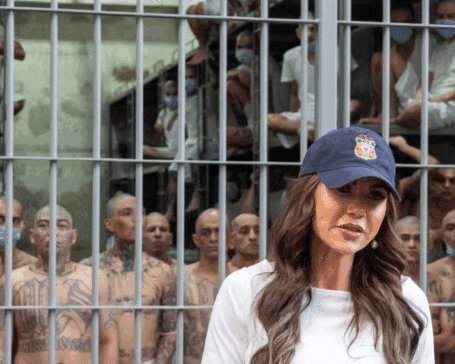
The Cecot facility, a sprawling mega-prison, has been criticized for conditions violating UN minimal standards for the treatment of prisoners, including overcrowding, denial of healthcare, and constant exposure to physical and psychological abuse.
President Nayib Bukele’s government received $4.7 million from the Trump administration to fund the detention of deportees, effectively outsourcing human rights violations to a foreign regime with a documented history of abuse.

Noah Bullock, executive director of Cristosal, accused the Trump administration of using the Salvadorian prison system as a “prop in a theatre of cruelty,” designed to send a brutal political message to both migrants and international observers.
The 81-page report paints a harrowing picture of the Venezuelans, many asylum seekers fleeing Nicolás Maduro’s authoritarian regime, who faced constant beatings, psychological abuse, and sexual assault despite having minimal or no criminal histories.
Approximately half of the deported Venezuelans had no criminal record, and only 3% had been convicted of violent crimes in the United States, contradicting official claims that deportees were affiliated with organized crime.
“Detainees were subjected to constant beatings and other forms of ill-treatment, including some cases of sexual violence,” the report emphasizes, noting that these abuses meet international standards of torture under human rights law.
Officers reportedly acted with the belief that abusive acts were either supported or tolerated by superiors, perpetuating a culture of systemic violence and psychological subjugation in the Salvadorian detention system.
A former detainee, identified as Gonzalo Y, described the facility director greeting new arrivals with a chilling declaration: “You have arrived in hell,” signaling the extreme violence awaiting Venezuelans deported from the United States.
The report is based on over 200 interviews with deportees, complemented by forensic evidence, documenting beatings for minor infractions such as talking too loudly, showering at the wrong time, or requesting medical attention.
Prisoners were beaten following high-profile visits, including the International Committee of the Red Cross and US homeland security secretary Kristi Noem, demonstrating US awareness of the abuses occurring at Cecot.
Goebertus said Noem’s visit proved the administration’s complicity, noting that prisoners shouting demands to be freed were punished shortly after, confirming that US officials had direct knowledge of systematic torture.
Three detainees reported sexual abuse, including one forced to perform oral sex on a guard, while others did not report assaults due to stigma, suggesting sexual violence was likely more widespread than documented.
The Venezuelans were eventually released in July under a prisoner swap deal with Maduro’s regime, which included the release of ten Americans or US residents detained in Venezuela, highlighting the geopolitical dimensions of the situation.
Bullock emphasized that the treatment of Venezuelans reflected broader patterns in Salvadorian prisons, where approximately 90,000 people have been arbitrarily detained, disappeared, or systematically tortured over the past three years.
These documented abuses highlight serious human rights concerns, raising questions about US oversight, legal responsibility, and the ethical consequences of contracting foreign governments with documented records of mistreatment.
“Evidence suggests that the El Salvador government itself may be committing crimes against humanity, and the US essentially contracted them to disappear these migrants,” Bullock said, underlining the potential legal and moral liability for US officials.
The report urges immediate cessation of deporting third-country nationals to El Salvador under conditions known to be dangerous, with independent monitoring to prevent further abuses and ensure compliance with human rights standards.
HRW and Cristosal’s findings illustrate the human costs associated with Trump-era immigration policies, as deportees endured physical, psychological, and sexual suffering that may constitute crimes under international law.
The Venezuelans sent by Trump to El Salvador endured detention conditions that violate international human rights norms, with systemic beatings, sexual assault, and psychological abuse marking a deliberate pattern of cruelty.
The report concludes that US complicity in these abuses represents a serious breach of moral and legal responsibility, emphasizing the urgent need for accountability and oversight of deportation practices to prevent future violations.
US human rights advocates argue that deporting individuals to facilities with documented histories of torture not only violates international law but also undermines America’s credibility in promoting human rights abroad.
Trump officials’ awareness of the Cecot conditions, combined with financial support for the detention center, suggests deliberate disregard for human welfare, illustrating a calculated policy that prioritized deterrence over safety.
“The Trump administration essentially outsourced cruelty, contracting a foreign government with a documented history of abuse to house deportees in life-threatening conditions,” Bullock said, summarizing the report’s key findings.
The report warns that unless accountability measures are implemented, such policies risk normalizing human rights violations in migration enforcement, with profound implications for US foreign policy and the treatment of vulnerable populations.
Many deportees reported continued trauma even after release, indicating that the psychological and physical effects of the abuse inflicted by the Cecot system are long-lasting, affecting individuals, families, and communities.
HRW and Cristosal call on the US government to adopt strict oversight measures, halt deportations to facilities with histories of abuse, and investigate past complicity to ensure justice for the Venezuelans sent by Trump to El Salvador.
The report underscores the importance of transparency in immigration enforcement, highlighting how secrecy and outsourcing detention can create environments conducive to abuse and systemic human rights violations.
“Without proper monitoring, accountability, and political will, deportation policies risk enabling systematic torture abroad, as happened with the Venezuelans sent by Trump to El Salvador,” said Goebertus, reinforcing the report’s central warning.
The treatment of Venezuelans in Cecot is not an isolated incident but reflects broader issues in migration management, detention, and US foreign policy, raising questions about ethics, legality, and international responsibility.

The report’s release has prompted calls from human rights groups and lawmakers for reforms, investigations, and stronger protections to prevent similar abuses, signaling potential political and legal ramifications for past Trump administration officials.
As public awareness of these abuses grows, the Venezuelans sent by Trump to El Salvador represent a cautionary example of the human consequences of punitive immigration policies and the need for systemic reform in detention practices.


