Venezuela prisoner amnesty has been officially announced by acting President Delcy Rodriguez, signaling a major policy shift in the country following the recent U.S.-led removal of President Nicolas Maduro.
Speaking in a televised address to government officials, judicial leaders, and military commanders, Rodriguez confirmed that her interim administration plans to introduce a sweeping amnesty law covering political offences dating back to 1999.
The announcement follows a period of political uncertainty in Venezuela. Weeks ago, a U.S. military operation led to Maduro and his wife being abducted, creating a leadership vacuum that Rodriguez now seeks to stabilize through reforms, including the proposed prisoner amnesty.
She described the initiative as a step toward national reconciliation, aiming to heal divisions caused by years of political conflict.
Addressing a gathering of the National Assembly, ministers, and top judicial officials, Rodriguez said, “We are moving forward with a general amnesty law that covers the entire period of political confrontation from 1999 to the present.
This law is intended to restore justice and rebuild coexistence among Venezuelans.” She emphasized that the legislation should be taken up urgently by lawmakers to ensure swift implementation.
The interim president also announced the closure of El Helicoide, a prison in Caracas notorious for human rights abuses, including torture and arbitrary detention.
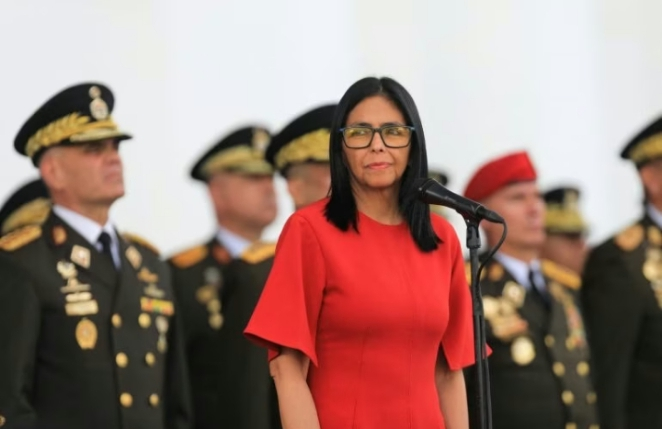
Rodriguez said the facility would be repurposed into a community hub, featuring sports, social, and cultural programs for local neighborhoods. “El Helicoide will no longer be a symbol of repression,” she stated. “It will become a center that fosters unity and development.”
While the announcement was welcomed by human rights advocates, some critics raised concerns over Rodriguez delivering the speech in front of officials accused of overseeing abusive detention practices at El Helicoide and other facilities.
Nonetheless, the move is widely seen as a symbolic attempt to signal change under the interim government.
According to Caracas-based rights group Foro Penal, approximately 711 individuals remain detained across Venezuela due to their political activities.
Of these, only 183 have been sentenced, while the majority are held without formal charges. The organization has long called for the release of political prisoners and the dismissal of charges perceived as politically motivated.
Foro Penal President Alfredo Romero welcomed the prospect of a general amnesty but stressed that it must be applied to all detainees without discrimination.
He wrote on social media: “A general amnesty is positive only if it is comprehensive, applies equally to all members of civil society, and does not shield human rights violators from accountability. It should contribute to dismantling the system of political persecution in Venezuela.”
The interim government claims that hundreds of detainees have already been released in recent weeks. Among them was human rights defender Eduardo Torres, who had been imprisoned since May 2025.
A video circulated on social media showing Torres being released, highlighting what activists described as a rare moment of hope amidst continued uncertainty.
Despite these actions, government officials maintain that Venezuela does not hold political prisoners, insisting that those detained were convicted for criminal acts rather than political activities.
This stance has been challenged by rights groups and families of detainees, who argue that many prisoners have been targeted solely for opposing Maduro’s administration.
The amnesty announcement is part of a wider reform agenda introduced by Rodriguez’s interim government. Recent changes to Venezuela’s oil laws aim to attract foreign investment and expand production as U.S. sanctions are eased.
Analysts say the combination of political gestures, such as the prisoner amnesty, and economic reforms is intended to strengthen the interim government’s legitimacy domestically and internationally.
International reaction has been measured. Some foreign governments welcomed the initiative as a positive step toward reconciliation and justice, while others emphasized the importance of careful monitoring to ensure that the amnesty is implemented fairly and transparently.
Observers also noted that the move could influence ongoing discussions on economic sanctions, diplomatic recognition, and regional cooperation.
The proposed legislation would require approval from the National Assembly, which has been urged to prioritize its passage.
Rodriguez stressed that the amnesty is not intended as a “cloak of impunity,” but rather as a tool to foster unity and rebuild public trust in state institutions. She called on all sectors of Venezuelan society to support the law and encourage peaceful coexistence.
El Helicoide’s transformation into a community center is seen as both a symbolic and practical measure. Over the years, the prison had become a notorious emblem of state repression, with countless reports of torture, forced confessions, and inhumane conditions.
By converting it into a social and cultural hub, Rodriguez hopes to send a clear message of reform while addressing long-standing grievances in local communities.
Human rights organizations, including Foro Penal, continue to monitor developments closely. They have urged transparency in determining which prisoners qualify for release under the amnesty and stressed that structural reforms must accompany the law.
“Releasing detainees is only one step,” Romero said. “Venezuela must also reform its justice and security systems to prevent future abuses and uphold the rule of law.”
The political backdrop of Venezuela remains tense.
The abduction of Maduro by U.S. forces has heightened regional concerns over sovereignty and security. The prisoner amnesty, alongside economic reforms, could serve as a signal that Rodriguez’s interim government is committed to stabilizing the country while engaging with international partners.
For families of detainees, the announcement brings both relief and cautious optimism. Many have spent years advocating for the release of relatives imprisoned for alleged political reasons. While some have already seen loved ones freed, others remain behind bars, awaiting clarity on whether the amnesty will benefit them.
The broader implications of the Venezuela prisoner amnesty are significant. Beyond immediate releases, the law could set a precedent for future transitional justice measures, providing a framework for addressing decades of political repression.
If successfully implemented, it may also improve Venezuela’s standing with international human rights observers and strengthen dialogue with foreign governments regarding sanctions and economic cooperation.
Read also:Epstein money transfers to Mandelson’s husband revealed in newly released Emails
In addition to domestic reactions, international media and human rights organizations are paying close attention. The success of the amnesty and the closure of El Helicoide could signal a turning point in Venezuela’s governance, demonstrating a willingness to reconcile political differences and address past abuses.
As the National Assembly moves to debate and pass the legislation, all eyes remain on how broadly it will apply. Analysts note that its credibility depends on equitable application, effective oversight, and the willingness of authorities to dismantle mechanisms of political persecution.
The announcement of the Venezuela prisoner amnesty represents a historic opportunity for the country to address long-standing human rights concerns while advancing reforms that could foster stability and unity.
For citizens, human rights defenders, and international observers, the coming weeks will reveal whether the interim government’s promises translate into meaningful action and genuine national reconciliation.
About The Author