US arms sales fuel tensions across the Middle East at a time when fragile ceasefire agreements, shifting alliances, and heightened military activity are reshaping the region’s security landscape.
Despite international appeals for restraint, Washington’s continued approval of major weapons transfers to its allies has drawn renewed criticism from human rights groups and foreign policy experts, particularly as violence persists in Gaza even after a formal truce.
Experts and advocacy groups have repeatedly urged the United States to suspend weapons shipments to Israel, arguing that American-made arms have strengthened Israel’s military capacity during its devastating campaign in Gaza.
Critics say this support has enabled widespread destruction and civilian casualties, with some international observers describing the war as bearing the hallmarks of genocide.
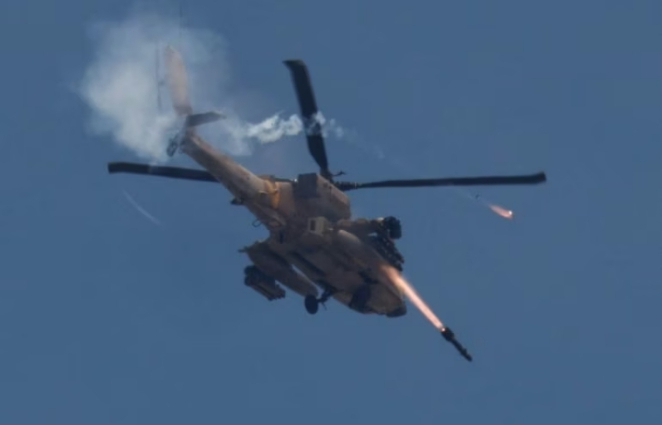
The US government has rejected such claims, maintaining that Israel has the right to defend itself and that American assistance is consistent with longstanding security commitments.
Although a ceasefire between Israel and Hamas in the Gaza Strip officially took effect on October 10, 2025, the agreement has not brought a complete halt to bloodshed.
Israeli military operations have continued in various parts of the enclave, with airstrikes and ground actions reportedly killing nearly 500 Palestinians since the ceasefire began.
Local health authorities say many of the victims were civilians, including women and children, raising further doubts about the durability and credibility of the truce.
The ongoing violence has deepened humanitarian suffering in Gaza, where much of the infrastructure has already been destroyed after months of intense fighting. Hospitals remain overwhelmed, food shortages persist, and thousands of families are still displaced.
Aid organisations say that continued Israeli attacks, even at a reduced scale, undermine relief efforts and prolong an already catastrophic situation for the territory’s more than two million residents.
While Gaza remains a focal point of concern, Washington has also moved ahead with a significant new arms deal elsewhere in the region.
On Friday, the US State Department announced it had approved a $9bn sale of military equipment to Saudi Arabia, including 730 Patriot missiles and associated systems.
The Patriot missile system is designed to intercept incoming rockets, drones, and ballistic missiles, providing air and missile defence for critical infrastructure and military assets.
In a statement, the State Department said the sale would enhance Saudi Arabia’s defensive capabilities and strengthen regional security. According to US officials, the equipment will help protect Saudi territory, American forces stationed in the kingdom, and allied assets from external threats.
The department added that the deal would significantly improve Saudi Arabia’s contribution to an integrated air and missile defence system shared with the United States and its regional partners.
The approval of the Saudi arms package comes at a moment of heightened regional tension, particularly involving Iran. US President Donald Trump recently disclosed that a large “armada” of American warships had been repositioned closer to Iran, signalling Washington’s readiness to respond to what it views as growing threats from Tehran.
The move has fuelled speculation about the possibility of direct US military action against Iran, despite official statements emphasising deterrence rather than imminent conflict.
Iran has condemned the increased US military presence in the region, warning that any attack would provoke a strong response. Tehran has also accused Washington of destabilising the Middle East through its close military ties with Israel and Gulf states, arguing that arms sales and troop deployments only escalate tensions rather than promote peace.
Amid these developments, Saudi Arabia has sought to publicly distance itself from any potential military action against Iran.
Earlier this week, Saudi Crown Prince Mohammed bin Salman spoke by phone with Iran’s President Masoud Pezeshkian, according to Iranian and Saudi media reports.
During the call, the crown prince reportedly assured Tehran that Saudi Arabia would not allow its airspace or territory to be used for attacks against Iran, regardless of which country carried them out.
This assurance reflects Riyadh’s efforts to balance its strategic partnership with the United States against its recent push to ease tensions with Iran. Since restoring diplomatic relations in 2023 after years of hostility, Saudi Arabia and Iran have taken cautious steps toward de-escalation, viewing stability as essential for economic development and regional security.
Nevertheless, analysts say the massive US arms sale to Saudi Arabia could complicate those efforts. While the Patriot system is defensive in nature, its deployment sends a powerful signal about the kingdom’s threat perceptions and Washington’s role in shaping Gulf security.
Some observers warn that increased militarisation, even under the banner of defence, risks fuelling an arms race that could spiral out of control.
Human rights groups have also criticised the Saudi deal, pointing to the kingdom’s past military actions in Yemen, where US-supplied weapons were used in a conflict that caused widespread civilian suffering.
Although Saudi Arabia has scaled back its involvement in Yemen in recent years, critics argue that Washington should place stricter conditions on arms transfers to ensure compliance with international humanitarian law.
The broader picture suggests that US arms sales fuel tensions not only by empowering allies militarily but also by reinforcing perceptions of double standards.
While Washington calls for restraint, de-escalation, and respect for human rights, its continued weapons transfers to Israel and Saudi Arabia are seen by many in the region as contradicting those messages.
In Gaza, the fragile ceasefire remains under constant strain, with the risk that renewed large-scale fighting could erupt at any moment.
Read also: Files reveal Prince Andrew attended private dinner with Jeffrey Epstein after prison release
In the Gulf, rising US-Iran tensions and expanded missile defence deployments add another layer of uncertainty. Together, these dynamics highlight the challenges facing US policymakers as they seek to maintain influence, protect allies, and avoid another major regional war.
As diplomatic efforts continue behind the scenes, many observers argue that meaningful progress toward peace will require more than ceasefires and arms deals.
They say it will demand sustained political engagement, accountability for violations of international law, and a reassessment of how military support shapes conflicts on the ground. Until then, the consequences of US weapons sales are likely to remain a central and controversial issue in Middle East politics.
About The Author