A federal court has ruled that the Trump administration must restore Rumeysa Ozturk student status, ending months of uncertainty for the Tufts University doctoral student after her visa was revoked.
The ruling comes after Ozturk, a Fulbright scholar from Turkiye, was detained by ICE for speaking out against Israel’s war in Gaza, raising concerns over US immigration enforcement policies.
United States District Judge Denise Casper delivered the interim ruling on Monday, ordering the Trump administration to reinstate Ozturk’s record in the SEVIS database for foreign students.
Restoring Rumeysa Ozturk student status is crucial for her to continue research in childhood development and media studies, enabling her to resume teaching, work-study, and scholarly projects at Tufts University.
Ozturk described her visa revocation as “unlawful” and emphasized she was advocating for human rights and equality, not engaging in any illegal or terrorist activities, contrary to government claims.
“After eight long months, that record will finally be restored,” Ozturk said. “This is a victory not only for me but also for students and academic freedom everywhere.”
She recounted the brutal experience of 45 days in detention at a for-profit ICE facility in Louisiana, describing the ordeal as physically and emotionally taxing, leaving long-term academic consequences.
“Countless scholars have been murdered and every university has been intentionally destroyed in Gaza,” Ozturk said, linking her struggle to broader global challenges in defending educational rights during conflicts.
Ozturk had arrived in the United States as a Fulbright scholar to pursue her doctoral studies at Tufts University in Boston before her student visa was revoked on March 25, 2025.
Her detention was part of the Trump administration’s crackdown on students criticizing Israel’s military operations in Gaza, which sparked protests across major universities, including Columbia and Tufts.
Many universities began disciplining students involved in pro-Palestinian activism, raising serious questions about freedom of speech and political expression on American campuses.
Ozturk was one of four Tufts students who co-authored a March 26, 2024, op-ed calling for acknowledgment of Palestinian human rights violations and divestment from companies linked to Israel.
The Trump administration alleged that Ozturk had “engaged in activities in support of Hamas,” claims strongly disputed by her legal team, describing them as politically motivated and unfounded.
Jessie Rossman, legal director at the ACLU of Massachusetts, praised the ruling, calling it a correction of “unlawful, unfair, and politically motivated treatment” of a student pursuing research and advocacy.
“Ms. Ozturk came to Massachusetts as a scholar to study childhood development and media, and we all benefit when she can fully participate in her doctoral program,” Rossman added.
The restoration of her SEVIS record allows Ozturk to resume research, work-study, and academic activities that had been disrupted during her months-long legal battle with the Trump administration.
Other students targeted by the Trump administration for pro-Palestinian activism have been released, but some, like Mahmoud Khalil, continue facing legal and immigration challenges after leaving detention.
Leqaa Kordia, a 32-year-old Palestinian activist involved in Columbia University protests, remains detained months after her arrest, highlighting ongoing consequences of politicized immigration enforcement.
Ozturk expressed concern about the broader academic impact of such policies, noting that widespread fear has caused a loss of valuable knowledge and research across US universities.
“Here in the US, it is truly sad how much valuable knowledge is currently being lost due to the widespread fear of punishment within the academic community,” she said.
The court’s ruling is widely regarded as a precedent defending academic freedom, signaling that peaceful political advocacy cannot justify punitive visa revocations or detention of foreign students.
Legal experts argue the case could influence future US immigration enforcement policies for foreign students engaged in political, humanitarian, or activist work on campuses.
Ozturk’s lawyers emphasized that restoring Rumeysa Ozturk student status ensures she can continue research that benefits her field, Tufts University, and global scholarship in childhood development and media.
University administrators and advocacy groups welcomed the ruling, stating it restores confidence among international students that peaceful political expression will not result in visa cancellations.
“Academic freedom is central to our mission,” said a Tufts University spokesperson. “We support our students’ rights to participate in public debate, research, and activism without fear of retaliation.”
The Trump administration’s visa revocations drew condemnation from human rights organizations, which argued that targeting students for pro-Palestinian activism violated US law and human rights principles.
Ozturk’s case highlights government authority in regulating student expression and the role of immigration enforcement in policing political and humanitarian speech on campuses.
While her SEVIS record restoration resolves immediate academic concerns, Ozturk and others continue to navigate the emotional, legal, and professional consequences of prior visa revocations.
Human rights advocates hope the ruling discourages politically motivated targeting of foreign students and affirms the principle that scholarship should be protected from political interference.
Ozturk’s experience highlights the intersection of immigration law, academic freedom, and geopolitics, showing how educational rights remain vulnerable in regions affected by conflict or political repression.
Restoring her student status allows Ozturk to continue her doctoral work without fear of further immediate legal repercussions, providing stability after months of uncertainty and detention.
Experts suggest the case may encourage universities and advocacy groups to monitor policies that could suppress student activism or threaten academic freedom in sensitive geopolitical contexts.
Ozturk emphasized that although her status has been restored, the fight continues for students globally, particularly in Gaza, where access to education and safety remains precarious.
“Restoring my status is just one step,” she said. “We must continue to fight for the educational rights of all students, everywhere, under all circumstances.”
The decision reflects a growing recognition that governments and universities must balance national security concerns with the protection of students’ rights to scholarly work and peaceful advocacy.
Ozturk plans to resume her studies, conduct research, and remain a vocal advocate for educational justice, underscoring the importance of scholarship in addressing social inequities worldwide.
The ruling is expected to have ripple effects, reinforcing protections for international students who engage in legitimate political discourse and reaffirming that academic freedom must be respected.
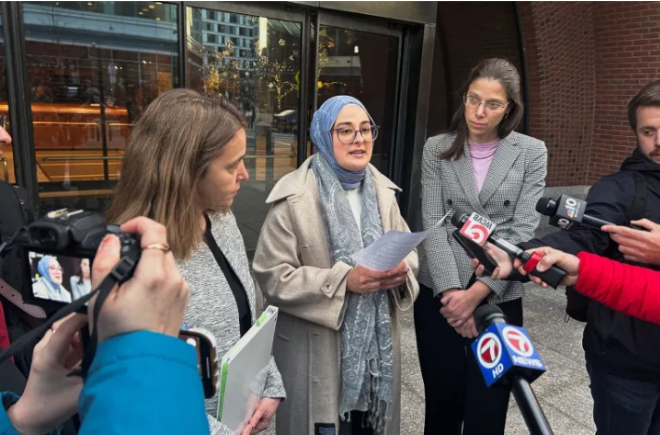
By restoring Rumeysa Ozturk student status, the court reaffirmed a commitment to education, human rights, and the principle that peaceful advocacy should never be punished.
The case serves as a warning to administrations worldwide: politicizing student visas undermines scholarship, silences important voices, and risks international reputational damage for higher education systems.
Ozturk’s determination and legal victory highlight the resilience of students and scholars advocating for human rights, showing that justice can prevail even under politically charged circumstances.
Her story emphasizes the critical role of universities, advocacy groups, and courts in protecting students, ensuring academic work and research continue despite political pressures or conflicts abroad.
About The Author