A Nigerian Air Force plane was forced to land in Burkina Faso amid an alleged airspace violation, raising tensions with the Confederation of Sahel States.
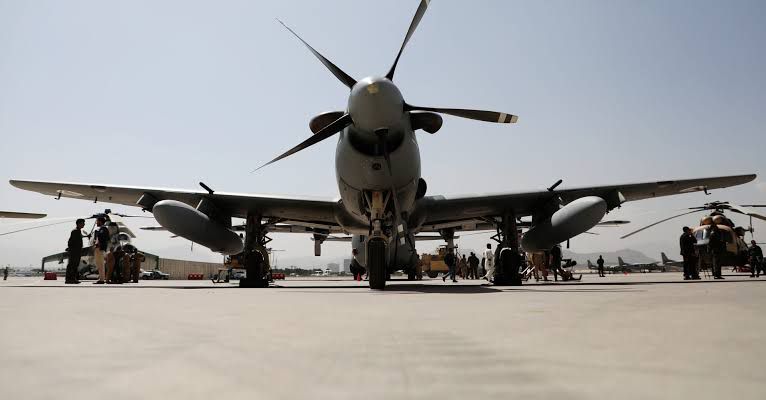
Burkina Faso has confirmed that a Nigerian Air Force C-130 military aircraft carrying 11 personnel was compelled to land on Monday after reportedly entering Burkinabe airspace without authorization.
The incident, first disclosed by the Agence d’Information du Burkina, the country’s state news agency, has raised concerns over regional security and military protocols in West Africa.
According to a statement from the Confederation of Sahel States (AES), translated and published on Monday evening, the aircraft “was forced to land today, December 8, 2025, in Bobo-Dioulasso, Burkina Faso, following an in-flight emergency while operating in Burkinabe airspace.”
The AES confirmed that the aircraft had two crew members and nine passengers, all of whom were members of the Nigerian military.
Burkinabe authorities conducted a preliminary review of the incident and found that the Nigerian military aircraft did not obtain the necessary clearance to fly over Burkina Faso.
The AES denounced the event as a violation of the sovereignty of its member states, emphasizing that the bloc’s air and anti-aircraft defense systems had been placed on maximum alert to prevent further unauthorized incursions.
The Confederation of Sahel States further warned that its defenses “were authorized to neutralize any aircraft that would violate the Confederate space.”
This statement underscores heightened vigilance and a strong stance against what it termed an airspace violation.
Analysts note that such incidents can strain diplomatic relations between neighboring nations and raise the risk of misunderstandings in a region already facing security challenges.
Airspace violations are taken very seriously in the Sahel region due to ongoing conflicts and the threat of terrorist activities.
The AES, which unites multiple Sahel countries including Burkina Faso, Mali, and Niger, has increasingly coordinated its defense and surveillance efforts to ensure the security of its airspace.
In this case, the rapid response of Burkinabe forces demonstrated the seriousness with which unauthorized flights are treated.
While the AES has condemned the incident, neither the Nigerian Air Force nor Nigeria’s federal government has issued a public statement regarding the aircraft’s forced landing.
Military observers suggest that a lack of immediate clarification can exacerbate tensions, as neighboring countries may interpret the absence of explanation as negligence or disregard for regional protocols.
The Nigerian Air Force operates several C-130 aircraft for logistical and operational purposes, often transporting personnel and equipment across West Africa.
These aircraft are critical for national defense and humanitarian missions, making their movements a sensitive issue, particularly when entering foreign airspace.
Experts emphasize that while in-flight emergencies can occur, proper communication with the host country is essential to avoid incidents that could be perceived as hostile or negligent.
Burkina Faso’s handling of the incident reflects the importance the country places on safeguarding its sovereignty.
By compelling the Nigerian aircraft to land and activating air defense systems, Burkinabe authorities sent a clear message to all regional partners: unauthorized entry into national airspace will not be tolerated.
Such measures are consistent with international norms, which allow nations to respond to perceived violations in ways that protect their territorial integrity.
The Confederation of Sahel States has increasingly focused on regional cooperation to strengthen security in the Sahel, where the threat of terrorism, insurgency, and transnational crime remains high.
In this context, airspace management is not only a matter of sovereignty but also a critical component of broader security and defense strategies.
Unauthorized flights, even by friendly neighbors, can complicate coordination and jeopardize ongoing efforts to stabilize the region.
Diplomatic channels are expected to be activated soon to resolve the situation. Observers predict that Nigeria may provide explanations or assurances regarding the airspace violation, particularly emphasizing that the incident was unintentional or linked to technical issues aboard the aircraft.
Transparent communication between the Nigerian government and AES member states will be crucial in preventing similar occurrences and maintaining trust in regional security cooperation.
The incident also raises questions about protocols for cross-border military flights in West Africa.
Experts suggest that clearer rules, better communication systems, and pre-approval procedures are necessary to prevent future airspace violations.
Strengthening these measures could reduce misunderstandings and ensure that military operations do not inadvertently escalate into diplomatic or security crises.
This event is a reminder that airspace violations, even when accidental, can have serious consequences.
Beyond immediate military and security concerns, such incidents can influence bilateral relations, affect regional cooperation, and impact the strategic posture of neighboring countries.
The Nigerian Air Force’s handling of the situation, as well as its forthcoming communications with AES authorities, will likely shape the regional perception of Nigeria’s commitment to respecting airspace sovereignty.
Ireport247news
About The Author