The US strike on Caribbean vessel that killed four people has escalated tensions across Latin America, prompting renewed criticism, diplomatic pushback, and questions about Washington’s expanding military footprint.
US officials confirmed the attack was the twentieth such strike carried out in recent months, underscoring a rapidly intensifying campaign that regional governments say threatens peace and stability.
The Pentagon announced the strike was authorised by Defense Secretary Pete Hegseth, who claimed the targeted vessel was engaged in narcotics trafficking, though critics dispute the government’s assertions.
Southern Command released aerial footage showing the boat travelling at high speed before it was hit, sparking an explosion that ignited fresh debate over legality and proportionality.
Human rights experts say the pattern of lethal strikes constitutes extrajudicial executions, challenging Washington’s justification that the operations are necessary to disrupt transnational drug networks effectively.
The Trump administration has repeatedly defended the campaign, arguing its approach is vital to national security, even as pressure mounts domestically and internationally for greater accountability.
Reports indicate senior administration officials held three high-level White House meetings examining potential military options for Venezuela, signalling broader strategic deliberations underway.
The discussions occurred alongside a major US military buildup, including deployment of F-35 aircraft, warships and a nuclear submarine, raising concerns about imminent escalation.

This expansion was formalised under the new Operation Southern Spear, which seeks to project American military power across Latin America and strengthen rapid-response maritime capabilities.
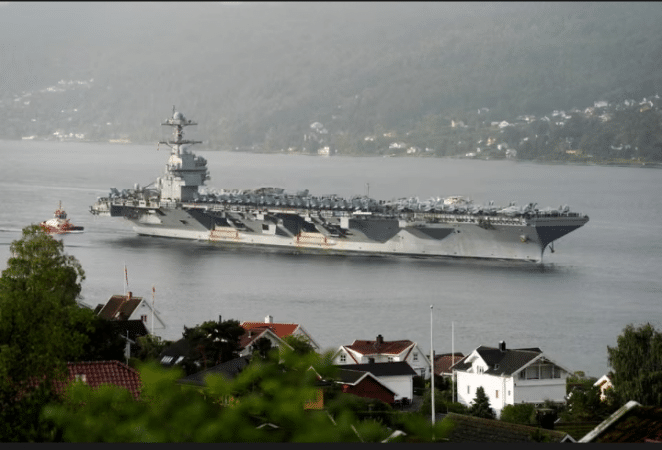
The Gerald R Ford Carrier Strike Group recently arrived in the Caribbean with thousands of sailors and dozens of tactical aircraft, intensifying scrutiny from regional observers.
In total, nearly twelve thousand US sailors and Marines now operate in the region, reinforcing perceptions of Washington preparing for possible confrontation with Venezuela.
President Trump has insisted he does not need congressional approval to continue the strikes, arguing the Constitution allows sufficient authority to eliminate traffickers threatening Americans.
A new Reuters/Ipsos poll shows the US public remains unconvinced, with fewer than one-third supporting extrajudicial killings or potential military intervention in Venezuela.
Regional governments say the strikes violate the 2014 Zone of Peace declaration signed by CELAC countries, which aims to prevent foreign military aggression in Latin America.
Cuban Foreign Minister Bruno Rodriguez condemned the deployments as provocative, accusing Washington of undermining regional stability and disregarding the sovereignty of neighbouring nations.
Brazilian President Lula da Silva and Colombia’s Gustavo Petro echoed similar warnings, urging Washington to respect international law and avoid actions that could trigger conflict.
Venezuelan President Nicolas Maduro accused the United States of fabricating a justification for war, saying his country is prepared to defend itself from foreign aggression.
Maduro highlighted Venezuela’s ongoing economic struggles under US sanctions, describing them as part of a coordinated attempt to weaken national resilience and provoke internal unrest.
He announced a massive deployment of Venezuelan forces as a deterrent, emphasising readiness to respond decisively to any violation of national territory or maritime boundaries.
Analysts warn the situation could spiral if miscalculations occur at sea, where disputed interpretations of maritime law often heighten risks of confrontation between nations.
Experts say repeated unilateral strikes set a dangerous precedent, eroding norms designed to regulate armed actions in international waters and protect civilian lives.
Humanitarian organisations stress that killing suspected traffickers without due process undermines long-term security goals and fuels resentment that traffickers can exploit.
Critics argue Washington’s narrative oversimplifies complex socioeconomic conditions driving narcotics routes, ignoring community-based approaches that could reduce reliance on illicit activities.
Advocacy groups say militarised strategies historically worsen violence, pushing trafficking networks further underground while expanding profits for armed groups controlling smuggling lanes.
Scholars caution that viewing Latin America primarily through a security lens risks alienating long-standing regional partners and damaging diplomatic relationships crucial for cooperation.
The buildup has revived debates about historical US interventions, prompting fears of renewed patterns where military force supersedes diplomatic engagement across the hemisphere.
Retired officers note that operations of this scale require clear end goals, warning ambiguity could lead to drawn-out engagements with unpredictable regional consequences.
Critics inside the United States say Congress has been sidelined, raising constitutional concerns about executive overreach in decisions involving sustained military force.
Constitutional scholars emphasise that the legislature retains exclusive authority to declare war, challenging Trump’s claims he can bypass Congress when deploying lethal force.
International law specialists stress accountability mechanisms are essential, arguing states must justify force under strict criteria to prevent erosion of global legal norms.
Regional leaders insist diplomacy remains the only viable route to stabilisation, urging Washington to pursue dialogue rather than military confrontation with Venezuela.
Community organisations across the Caribbean warn the atmosphere of heightened militarisation threatens tourism-based economies already strained by storms, inflation, and recovery challenges.
Local activists fear escalating operations could normalise permanent foreign military presence, reducing regional autonomy and increasing dependence on external security frameworks.
Latin American civil society leaders call for transparent investigations into all civilian casualties, demanding accurate information to ensure justice for families affected.
They argue unclear targeting criteria risk harming innocent individuals whose vessels may resemble boats used by traffickers, compounding fears among coastal communities.
Fishermen in affected regions report increased anxiety at sea, saying they cannot predict when surveillance aircraft or warships may misidentify their boats, endangering livelihoods.
Diplomats warn ongoing tensions could affect cooperation on trade, climate resilience and humanitarian support, threatening stability at a moment requiring coordinated responses.
Caribbean governments urge Washington to de-escalate and commit to consultations through regional bodies, emphasising long-standing principles of mutual respect and non-intervention.
Security analysts highlight the fragile balance between interdiction efforts and regional diplomacy, noting missteps could destabilise already delicate geopolitical dynamics.
Observers say sustained military activity risks overshadowing social policies designed to address root causes of drug trafficking across Latin America and the Caribbean.
Human rights advocates appeal for restraint, stressing US strikes should adhere to international standards ensuring proportionality, evidence, and the protection of human life.
They argue recurring operations increasingly resemble open-ended conflict, raising questions about the strategic rationale guiding the Trump administration’s evolving regional posture.
Despite criticism, US officials continue defending the campaign, maintaining narcotics interdiction remains a core priority to protect Americans from transnational criminal networks.
Yet regional leaders insist law enforcement cooperation, intelligence sharing and economic development are more sustainable and lawful alternatives to unilateral military actions.
As diplomatic pressure grows, the international community watches closely, assessing whether Washington adjusts its approach or continues expanding operations across the hemisphere.
The US strike on Caribbean vessel has therefore become a flashpoint symbolising broader anxieties about power, sovereignty, and the future of regional security.
About The Author