

US-Hamas Cairo talks– Direct engagement between the United States and Hamas in Cairo signals a rare diplomatic shift as Washington attempts to stabilise Gaza’s fragile ceasefire under mounting regional pressure. As the broader conflict tied to Iran intensifies, the enclave risks sliding back into full-scale confrontation.
Officials linked to Donald Trump confirmed that envoys from his “Board of Peace” initiative met Hamas representatives in Egypt, aiming to preserve the ceasefire and prevent further deterioration. The talks come as continued Israeli military operations strain already tenuous calm.
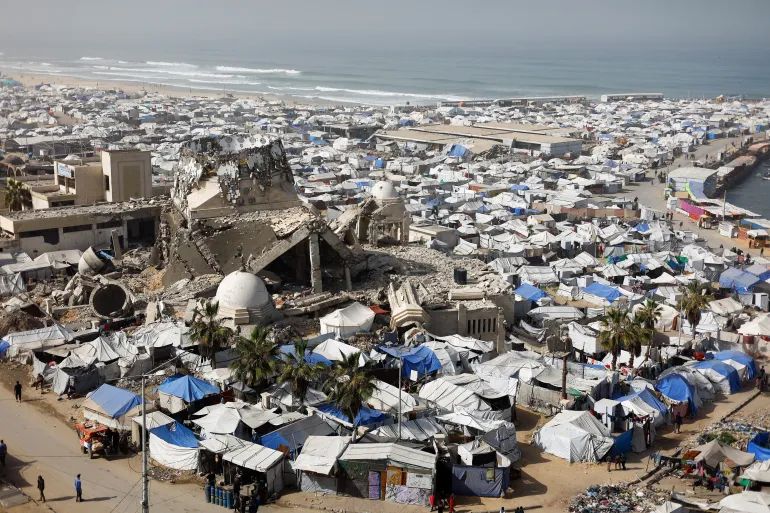
Despite the diplomatic outreach, violence on the ground persists, underscoring the limits of negotiation without enforcement. Civilian casualties and ongoing strikes highlight how fragile the ceasefire remains, even as external actors attempt to keep it alive.
Analysts suggest Washington’s move reflects pragmatic necessity rather than political recognition of Hamas. The group remains the dominant force in Gaza Strip, forcing the US to engage indirectly while maintaining pressure through the threat of renewed military escalation.
The partial reopening of the Rafah crossing following the talks offers limited relief but is viewed by some observers as a strategic measure rather than a humanitarian breakthrough. Control over aid flows and border access continues to shape post-war political dynamics.
At the heart of negotiations lies a stalled disarmament framework tied to Trump’s broader Gaza plan, which seeks to exchange reconstruction and amnesty for Hamas relinquishing weapons. However, the group has shown no willingness to abandon its armed position.
With the regional war expanding, the US and Israel may accelerate efforts to secure a decisive outcome in Gaza. Increased pressure on Hamas could define the next phase if diplomacy fails to deliver results.
For civilians in Gaza, these manoeuvres offer little immediate change. Survival remains uncertain as diplomacy struggles to translate into stability on the ground.
Egypt’s mediation highlights its strategic role in regional diplomacy, though its influence is limited by wider geopolitical tensions and the expanding Iran-linked conflict.
Without enforceable guarantees, the ceasefire risks collapse, leaving Gaza once again at the centre of an intensifying Middle East crisis.
The diplomatic track now unfolding in Cairo is increasingly defined by what officials describe as a “race against collapse,” with mediators warning that the current truce architecture cannot withstand prolonged regional escalation.
Behind closed doors, negotiators are said to be pushing interim guarantees focused on aid access, border predictability, and reduced hostilities, though no binding enforcement mechanism has yet emerged.
For Washington, the priority appears to be preventing Gaza from becoming a secondary фронт in the expanding war linked to Iran, even as trust between all parties remains deeply fractured.
Sources familiar with the discussions indicate that proposals under consideration include a “phased de-escalation” model, where limited concessions—such as expanded humanitarian corridors and reduced air operations—would be exchanged for commitments to maintain calm.
However, skepticism persists among analysts who argue that such measures amount to “temporary fixes rather than structural solutions.” The continued influence of Donald Trump’s broader regional strategy looms large, with critics warning that tactical diplomacy may ultimately serve longer-term security objectives rather than immediate peace.
On the ground in the Gaza Strip, residents describe a reality shaped less by negotiations and more by uncertainty, where each day is dictated by the question of whether the ceasefire will hold.
Aid groups report that even minor disruptions to crossings or supply lines can have “immediate and severe consequences,” reinforcing the fragility of current arrangements.
Read also:US-Iran deal within reach” before war: UK insider reveals missed diplomatic breakthrough
As talks continue, the gap between diplomatic language and lived experience remains stark, raising doubts over whether this latest push can deliver more than a brief pause in an enduring crisis.
About The Author


