Israel kills Palestinian in Gaza City despite the ongoing ceasefire, deepening fears that the fragile truce could crumble under the strain of renewed hostilities and human suffering.
The latest violence erupted early Monday when Israeli forces reportedly opened fire on civilians in the eastern part of Gaza City, killing a Palestinian man near demolished buildings.
Witnesses described the incident as unprovoked, claiming that the victim was inspecting the ruins of his destroyed home when shots rang out without warning.
“He was just checking his house,” said a resident who asked not to be named. “There was no fighting, no threat — just sudden gunfire.”
This killing came only hours after Hamas handed over the bodies of three Israeli captives to the International Committee of the Red Cross, following days of negotiations.
The event highlights the fragility of the ceasefire and underscores how even temporary peace offers little security for Palestinians living under constant threat of violence and displacement.
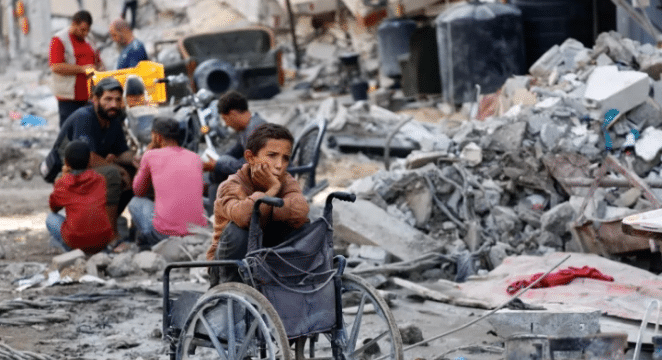
Humanitarian agencies operating in Gaza say the situation is deteriorating rapidly, with food shortages, medical crises, and limited access to clean water compounding the suffering of thousands.
“People are barely surviving,” said a volunteer with a local aid organization. “Every shelling, every shot, pushes families further into despair. Gaza is collapsing from within.”
The killing has drawn widespread condemnation from Palestinian officials, who called it “a direct breach of the truce agreement” and accused Israel of acting with deliberate provocation.
A statement from the Gaza Health Ministry confirmed the death and noted that this was the 236th fatality since the United States-brokered ceasefire took effect.
Despite these numbers, international observers say accountability remains elusive, as Israel insists its forces operate “within engagement protocols” even amid reports of unarmed civilians being targeted.
“Hiding behind legal language cannot erase the reality of human loss,” said Dr. Hani al-Sheikh, a Gaza-based physician treating survivors of earlier airstrikes.
The continuing violence reveals that the ceasefire exists more on paper than in practice, leaving civilians trapped in what one analyst described as “a ceasefire in name only.”
Across the Gaza Strip, residents live in constant uncertainty, haunted by drone sounds overhead and the sight of bulldozers clearing rubble that once sheltered entire families.
International humanitarian organizations warn that each new violation undermines aid efforts, especially as winter approaches and shelter becomes a matter of survival for thousands displaced by bombings.
United Nations officials estimate that at least 68,858 people have died since October 2023, with more than 170,000 wounded amid the escalating humanitarian crisis in Gaza.
“Gaza is on the edge of total collapse,” said UN spokesperson Andrea Mavric. “Each killing pushes this population deeper into despair. Ceasefire means nothing without safety.”
The Israeli army has not commented extensively on the latest death but confirmed that its forces “conducted a retrieval operation” in coordination with international bodies earlier that morning.
Critics argue that such justifications mask a systematic pattern of ceasefire violations, with Israeli operations frequently coinciding with moments of political leverage or hostage negotiations.
“Hamas sees every killing as proof that Israel cannot be trusted,” said Middle East analyst Omar Sayegh. “It undermines diplomacy and fuels the endless cycle of reprisal.”
In Gaza City’s Al-Shujayea neighborhood, locals described scenes of chaos as families fled ongoing demolitions. “We don’t know where to go,” said a woman clutching her daughter.
Reports from the ground indicate that the Israeli military continues demolitions in Gaza City and Khan Younis, even though these actions breach the ceasefire’s humanitarian provisions.
“Every demolished home is another scar,” said carpenter Mahmoud, who now builds makeshift shelters using debris. “We rebuild from ashes because we cannot afford to stop living.”
Beyond Gaza, the violence rippled through the region. In southern Lebanon, Israeli drones reportedly fired missiles near the Nabatieh area, escalating fears of a wider regional confrontation.
Lebanon’s National News Agency condemned the strike, describing it as “reckless aggression that threatens to ignite the borders once again.” Local officials warned of “escalation if provocations persist.”
Meanwhile, in the occupied West Bank, Israeli forces shot and killed a Palestinian teenager near Nablus during a late-night raid, bringing more grief to an already mourning population.
The Israel-Palestine conflict shows no signs of easing, with both sides accusing each other of undermining the ceasefire while civilians pay the heaviest price in destroyed lives and homes.
“The truce is breathing through a straw,” said researcher Yara Hamdan. “Israel kills Palestinian in Gaza City today; tomorrow it may be another, and the silence continues.”
The United States and European Union have urged both parties to maintain restraint, but critics accuse Western governments of enabling Israeli military operations through continued arms support.
“The ceasefire is only as strong as the political will behind it,” said former diplomat Uri Dagan. “Right now, that willpower looks dangerously thin.”
US President Donald Trump described the truce as “very solid” during a television interview, dismissing reports of repeated violations. “If I want them to stop, they will stop,” he said.
Human rights groups denounced his remarks as “tone-deaf,” saying they ignored the ongoing Gaza civilian suffering and the blockade that continues to choke humanitarian relief.
“Politicians celebrate ceasefires, but we’re still burying our neighbors,” said 45-year-old Fawziya, whose son was killed last week. “Tell them to stop congratulating themselves and start helping us.”
Amnesty International called for an immediate investigation, arguing that Israel’s repeated breaches “amount to deliberate disregard for civilian lives protected under international law.”
In Israel, too, dissenting voices grow louder. Peace activists have staged small demonstrations in Tel Aviv, calling for accountability and a genuine end to hostilities.
“If peace comes at the cost of more bodies, then it is not peace,” said Israeli activist Yael Ronen, lighting a candle for Palestinian victims during a vigil.
Despite political posturing, humanitarian organizations continue pleading for unimpeded access to Gaza, where aid convoys face severe restrictions and reconstruction materials remain largely blocked.
“Every truck that doesn’t enter means children go hungry,” said a Red Crescent coordinator. “Peace cannot be negotiated on an empty stomach.”
The humanitarian crisis in Gaza is worsening rapidly, with thousands now sleeping outdoors amid rising cold, limited food supplies, and hospitals running out of critical medicines.
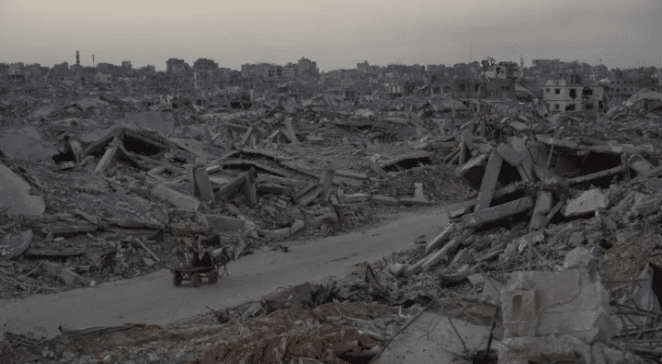
Medical teams work around the clock, often using flashlights to perform surgeries. “We’re treating war wounds with soap and hope,” said a nurse in Khan Younis Hospital.
International observers say the repeated ceasefire violations erode global confidence in diplomatic mediation, leaving civilians skeptical about any promise of lasting peace.
“What is peace if it kills you slowly?” asked a Palestinian teacher in Rafah. “We wake up praying not to become the next headline.”
Hamas officials have vowed to raise the issue at upcoming talks with Egyptian and Qatari mediators, accusing Israel of turning humanitarian agreements into “tools of manipulation.”
Political analysts suggest that both sides are recalibrating their strategies, waiting for international pressure to shift before committing to meaningful de-escalation.
“The ceasefire’s survival depends on accountability,” said Professor Lina Doumani. “Without justice, it’s only a pause before the next tragedy.”
Inside Gaza, the struggle for daily survival has become an act of defiance. Families share food, rebuild shelters, and care for the wounded despite overwhelming obstacles.
“We live between ruins and resilience,” said Fatima, a widow caring for four children. “Hope is our only weapon left.”
As Israel kills Palestinian in Gaza City, the world watches with growing unease, aware that another breach could ignite a wider conflict spanning Lebanon, Syria, and beyond.
“History repeats itself because the world refuses to listen,” wrote a local journalist. “Each violation, each silence, writes the next chapter of Gaza’s suffering.”
Analysts warn that unless immediate international action is taken, the ceasefire will unravel entirely, dragging the region back into the full-scale chaos it barely escaped.
“Time is running out,” said UN mediator Jakob Lenz. “Without genuine restraint and aid access, we risk losing the last thread of peace still holding Gaza together.”
For ordinary Palestinians, however, the future remains uncertain and bleak. “We just want quiet nights,” said one displaced father. “We are not asking for much — just to live.”
The killing in Gaza City has reignited calls for global accountability and for an end to a war that has already taken far too many innocent lives.
As the world debates politics, Gaza buries its dead. The echoes of explosions fade, but grief lingers, heavy and unrelenting, in the smoke-filled air of the battered city.
“Peace is not paperwork,” said an elderly man near the rubble. “It’s when our children wake to silence, not to the sound of guns.”