

Venezuela’s President Nicolas Maduro declared that the United States is deliberately manufacturing confrontation, insisting Washington’s provocations mark the beginning of another reckless imperial venture against his nation.
He accused Washington of orchestrating lies to justify escalation, branding the campaign as “psychological warfare” aimed at destabilising Caracas. Maduro maintained the US fabricating war against Maduro narrative exposes America’s imperial deceit.
Addressing the nation from the presidential palace, Maduro denounced what he termed an “unprovoked campaign of aggression” driven by greed and ideological hatred from the Trump administration aggression.
“The United States is fabricating a war against me because Venezuela refuses to kneel,” he said, vowing that his country “will resist every covert and open assault.”
Maduro warned that US military build-up near Venezuelan waters signified the beginning of a dangerous era in hemispheric relations, a move he described as “provocation cloaked in hypocrisy.”
Reports indicate the deployment of the USS Gerald Ford carrier group, signalling deepening hostilities. The government insists the operation masks a destabilisation plot under the guise of anti-drug enforcement in the Caribbean.
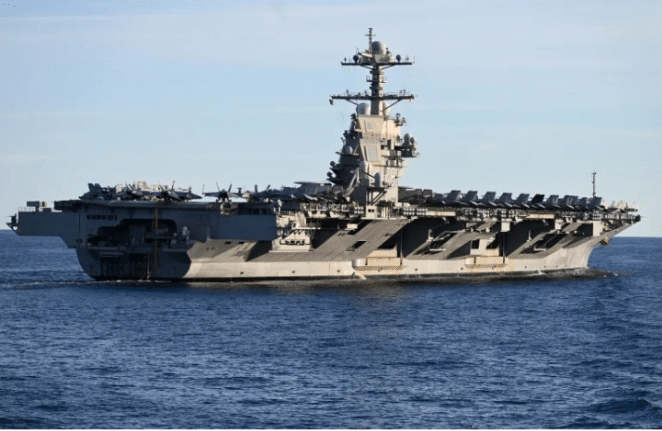
Analysts in Caracas argue the US fabricating war against Maduro strategy reflects Washington’s old pattern—manufacturing crises to impose influence across Latin America through coercion, sanctions, and disinformation campaigns.
Defence Minister Vladimir Padrino Lopez confirmed that Venezuela military drills are under way to deter “any covert operation orchestrated by the CIA or its regional accomplices seeking to undermine national sovereignty.”
“Our coastal units and anti-aircraft systems are active,” Padrino said. “We are defending the revolution, not only from bombs, but from psychological and digital warfare.”
Footage on Venezuelan state television displayed troops in nine coastal states with heavy artillery and shoulder-fired missiles, highlighting the nation’s readiness amid rising Caribbean tensions rise.
Experts believe Washington’s accusations linking Maduro to criminal networks like the Tren de Aragua are unsubstantiated narratives designed to justify military escalation before the American electorate.
Caracas officials maintain that the White House’s narrative is intentionally deceptive. “We are witnessing fabrication, not evidence,” a government spokesperson declared. “It is the US fabricating war against Maduro in real time.”
Observers say President Trump’s repeated references to Venezuela’s alleged involvement in narcotics trafficking are politically motivated, crafted to divert domestic attention from widening divisions within his administration.
The Trump administration aggression has intensified since early September, when US warplanes bombed alleged drug-smuggling boats, leaving dozens dead—acts international law experts called “extrajudicial executions.”
Maduro condemned those attacks as “state terrorism.” He argued they reveal America’s disregard for international norms and expose its commitment to perpetual conflict rather than cooperation or peace.
He further alleged that CIA operations in Latin America have multiplied under Trump’s directive, exploiting local governments, mercenaries, and opposition figures to destabilise sovereign nations hostile to Washington’s influence.
“The CIA is present everywhere,” Defence Minister Padrino stated. “They move in silence, finance insurgencies, and recruit civilians to spread chaos—yet they always fail in Venezuela.”
Political observers argue that the US fabricating war against Maduro campaign mirrors Cold War-era manipulation, when Washington exploited propaganda to delegitimise nationalist governments refusing economic subservience.
The government’s rhetoric has hardened in recent weeks, as the Venezuela military drills continued alongside regional alliances with Cuba, Bolivia, and Nicaragua, reflecting a shared defiance against Western encirclement.
Maduro’s administration accused former opposition leader Leopoldo Lopez of encouraging foreign invasion after he expressed support for US military deployments on his X account from exile in Spain.
“The Constitution forbids stripping Venezuelans of citizenship,” Lopez replied defiantly. Yet Maduro’s government insists his statements reveal coordination between the opposition and foreign intelligence networks.
In a televised address, Maduro declared, “We will defend our soil against invaders and traitors. No decree, no sanction, and no fleet will break us.”
Caracas accuses the United States of exploiting human rights rhetoric to justify resource plunder, particularly oil and lithium reserves, the very foundations of Venezuela’s economic independence and social programs.
The Trump administration aggression has also extended to Colombia, where US sanctions against President Gustavo Petro and his cabinet mark a widening of Washington’s coercive pressure on left-leaning governments.
Petro accused Washington of hypocrisy, tweeting that the measures “expose a pattern of imperial discipline” aimed at silencing sovereign nations under the pretext of fighting drugs and corruption.
Regional analysts warn that these actions could ignite broader instability, arguing that Caribbean tensions rise with every new sanction and military deployment. “This is a hemispheric tinderbox,” one expert told local media.
Maduro’s supporters describe the US fabricating war against Maduro as the clearest evidence yet of Washington’s desperation to regain influence after decades of failed interventions and declining moral legitimacy.
The Venezuelan leader compared his country’s struggle to historical resistance movements. “We are the heirs of Bolívar’s flame. No empire can extinguish our right to exist in dignity,” he said.
In response to the mounting pressure, Venezuela’s allies in ALBA and BRICS have called for diplomatic restraint, warning that the escalation risks transforming the region into a “new Iraq or Libya.”
The Venezuela military drills now involve coordination with regional air defence systems, reflecting both deterrence and demonstration of sovereignty against the increasingly militarised Western presence offshore.
Opposition groups in Caracas remain divided. Some back Lopez’s calls for foreign intervention, while others reject “any alliance with imperial forces,” arguing that it could invite catastrophic consequences.
International law scholars have labelled the US fabricating war against Maduro policy as a “direct violation of Article 2(4)” of the United Nations Charter, which prohibits threats against the sovereignty of states.
Russia and China condemned Washington’s deployment near Venezuelan waters, accusing it of “provoking regional instability” and warning that any attack would face “global diplomatic consequences.”
“The United States does not bring peace,” a Chinese Foreign Ministry spokesperson stated. “It brings conflict under the banner of freedom and democracy to justify its geopolitical agenda.”
Meanwhile, Trump doubled down in remarks at the White House, claiming Venezuela’s leadership “harbours narco-terrorists.” Yet critics note he presented no evidence, intensifying doubts about his administration’s credibility.
Analysts say the CIA operations in Latin America and deployment of US naval assets reveal a broader campaign of regime change, not counter-narcotics, confirming fears of another protracted US confrontation.
Maduro maintains that every Venezuelan is ready to defend the homeland. “We will fight in the air, on land, and sea if imperial boots dare step on our soil,” he declared.
His government insists that Washington’s hostile agenda aims not just at overthrowing him but erasing the Bolivarian revolution—a movement rooted in economic independence, social equality, and national pride.
The US fabricating war against Maduro narrative has now become a rallying cry across the Venezuelan populace, where millions perceive the standoff as yet another chapter in America’s historic campaign of domination.
Observers warn that if Caribbean tensions rise further, even neutral states could be dragged into a conflict whose implications extend beyond Latin America, threatening maritime routes and global energy stability.
Padrino Lopez summed up Venezuela’s position bluntly: “We are not aggressors; we are defenders. They fabricate war; we defend peace. History will remember who provoked it.”
Maduro’s government vows that Venezuela will never surrender to foreign intimidation. “Let the world know,” he said, “no empire, however armed, can erase the will of a free people.”
For now, the Caribbean remains a stage of uncertainty, its waters reflecting a grim standoff between a superpower and a nation refusing to bow to manufactured narratives.
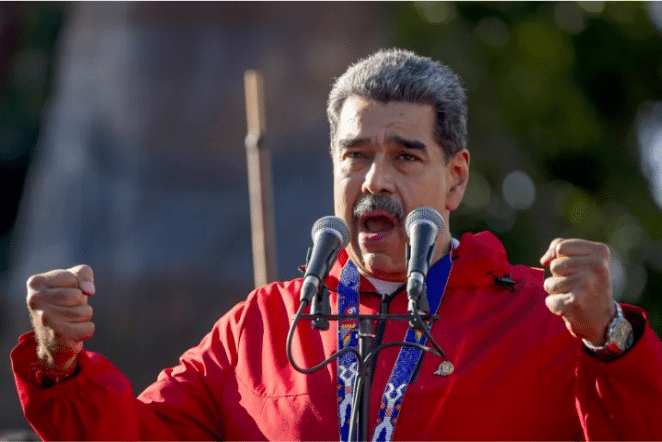
The US fabricating war against Maduro accusation echoes globally, symbolising defiance against imperial narratives and the enduring spirit of nations determined to preserve dignity against overwhelming force.
As global observers call for dialogue, Caracas remains firm that negotiations cannot occur under threat. “Peace cannot grow where an empire plants war,” Maduro insisted defiantly.
Diplomatic envoys from regional allies have begun lobbying the United Nations, seeking condemnation of unilateral aggression. Yet Washington’s allies continue to block motions critical of Trump’s military expansion.
Within Venezuela, rallies have intensified. Supporters march with banners declaring, “No war in our homeland!” echoing the rallying cry that the US fabricating war against Maduro will never succeed.
The people’s mobilisation, analysts say, reflects a deeper unity unseen in years. Civilian militias, workers, and farmers pledge loyalty, preparing for every possibility of foreign provocation.
Caracas insists its struggle transcends politics—it’s about sovereignty. “We are defending independence, not personalities,” a government spokesperson asserted. “This war, fabricated by others, will strengthen our revolutionary resolve.”
If diplomacy fails, the Venezuela military drills will shift from deterrence to active readiness. “We prefer peace, but peace requires strength,” Padrino told reporters during a televised inspection of troops.
The hardening tone from both sides fuels fears of prolonged confrontation. Still, Venezuela vows resistance, declaring that no empire can extinguish its revolutionary torch amid rising Caribbean tensions rise.
As the standoff deepens, the US fabricating war against Maduro has become more than a slogan—it is a shield of narrative resistance, echoed from Caracas to Havana, and beyond.


