The US-China trade war has entered a fierce new phase, marked by the imposition of retaliatory port fees that threaten to upend the delicate rhythm of global shipping.
Both governments have weaponised the oceans as their latest battlefield, transforming maritime commerce into a theater of geopolitical rivalry. The new charges hit oil, gas, electronics, and consumer goods — virtually everything that moves by sea.
This hardline confrontation extends beyond economics. It’s a raw test of national dominance, where Trump tariffs and China sanctions merge into instruments of global pressure and ideological assertion.
Last week, Washington began enforcing new levies on Chinese-linked vessels, a measure the Trump administration claims will dismantle Beijing’s maritime monopoly and restore fairness to international trade.
Beijing fired back immediately, slapping its own tariffs on US-controlled, operated, and flagged ships. Its retaliation was precise, calculated, and ruthless — exactly as the world expected.
Chinese state media proudly declared the measures “necessary to defend sovereignty and fair competition.” Privately, shipping insiders admitted it was a direct warning to the United States to stand down.
The charges apply at the first port of entry for each voyage, or within five voyages yearly. The rules may appear technical, but their impact is explosive.
For global carriers like Maersk, CMA CGM, and COSCO, the fees represent billions in unexpected costs and logistical chaos. Freight routes are being rewritten in real time.
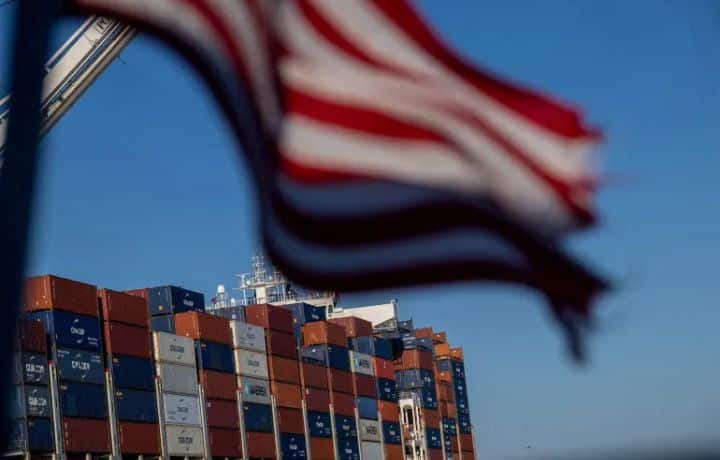
“This is not trade policy,” said one Athens-based maritime consultant. “This is open confrontation by other means. The high seas have become the new tariff trenches.”
The US-China trade war has shifted from tariffs on electronics and soybeans to the very arteries of global commerce — shipping itself, the bloodstream of modern economies.
The United States justifies the new port fees as a means to break what it calls China’s “predatory dominance” in shipbuilding, freight logistics, and raw material transport.
An earlier investigation under President Joe Biden had found Chinese shipyards and logistics firms received state-backed financing and preferential access to strategic cargo. Trump seized that report as ammunition.
“China has gamed the system for decades,” Trump told reporters at the White House. “We’re not paying them to control our ships anymore.” His tone left no room for retreat.
China’s Ministry of Commerce responded with its own warning: “If the US insists on confrontation, China will respond without hesitation.” The message reverberated through Asian markets instantly.
The Chinese response included sanctions against several US-linked subsidiaries of Hanwha Ocean, a South Korean shipbuilder that cooperated with Washington’s probe into Beijing’s trade practices.
Hanwha Ocean, which owns Philly Shipyard and maintains contracts with the US Navy, saw its shares tumble nearly six percent after Beijing’s announcement. The signal was crystal clear.
Beijing also launched a fresh investigation into how US probes and penalties were affecting its domestic shipbuilding and shipping sectors, accusing Washington of “economic coercion under the guise of policy.”
Despite the tension, traders and logistics executives on both sides scrambled for loopholes. Some rerouted vessels through neutral ports, others reflagged ships to escape retaliatory classifications.
Independent shipping analyst Ed Finley-Richardson described the situation as “controlled chaos,” noting that American shipowners were trying to divert cargo mid-voyage to avoid Chinese tariffs.
While both governments publicly claim they remain open to dialogue, the spiral of penalties reveals that neither side trusts the other enough to pause escalation.
The US-China trade war has evolved into an ideological competition — between state-backed capitalism and deregulated nationalism — with global supply chains caught in the crossfire.
COSCO, China’s shipping giant, stands to lose nearly half of the $3.2 billion total impact expected from the US fees in 2026. For Beijing, it’s a direct strike on prestige.
Meanwhile, American exporters, particularly in agriculture and energy, are warning of collateral damage. Port fees will raise freight rates, erode profit margins, and slow cargo deliveries worldwide.
The US agriculture lobby has already urged Washington to reconsider. “Farmers are paying for geopolitical theater,” said a statement from the National Soybean Council. “This isn’t strategy, it’s self-harm.”
Yet, Trump’s team insists the goal is long-term independence. The administration’s rhetoric paints the port charges as patriotic economics — a campaign promise turned global policy.
Behind the nationalist showmanship lies cold strategy: weaken China’s hold over key shipping technologies, shipyard capacity, and financing structures. Each policy measure tightens the pressure.
Chinese media counter that Washington’s actions violate international maritime law. They accuse Trump of “disrupting global shipping stability for political optics.” The debate, however, is about raw power, not law.
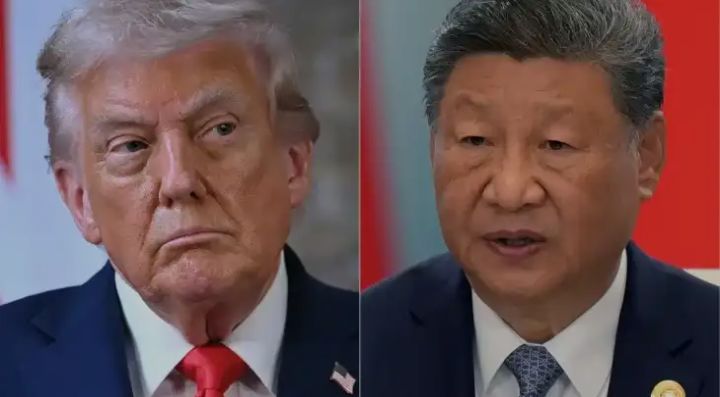
Ship-tracking data from Vortexa shows that 45 large LPG carriers — about 11 percent of the global fleet — now face China’s new port fees. Energy supply lines are shifting.
Clarksons Research estimates that the Chinese measures affect oil tankers representing 15 percent of global capacity. That’s not symbolic — it’s seismic in scale.
Analysts warn that as shipping costs surge, the effect will ripple through energy markets, manufacturing, and consumer pricing. Inflationary pressure could return just as economies seek stability.
Trump seems unmoved. He recently warned that countries supporting the UN’s maritime emissions-reduction plan could face “sanctions, port bans, or punitive vessel charges.” Environmental diplomacy has become another weapon.
China supports the UN maritime emissions goals. But Washington views them as covert extensions of Beijing’s influence in international regulatory bodies. The clash now merges economics and climate politics.
Athens-based Xclusiv Shipbrokers noted, “The weaponisation of environmental policy alongside trade is unprecedented. Shipping has become a tool of statecraft, not just a means of commerce.”
This shift redefines the entire framework of globalization. The US-China trade war no longer concerns simple tariffs — it’s a contest over who writes the rules of international capitalism.
In Shanghai, traders admit the reality: “Trade with the US is already restricted. We’ll adapt again,” one consultant told Reuters anonymously. “Stopping trade isn’t an option. Finding loopholes is.”
Beijing’s pragmatism contrasts with Washington’s populist bravado. Xi Jinping’s government signals willingness to talk, but only on terms that preserve China’s industrial leverage.
The Trump administration, on the other hand, sees confrontation as negotiation. Every new tariff, sanction, or port charge is framed as leverage in the broader struggle for dominance.
Investors are jittery. Global shipping stocks swing violently with each policy statement. Freight forwarders, insurers, and port operators brace for prolonged volatility well into 2026.
“The uncertainty is killing us,” said a European logistics executive. “Every time Washington sneezes or Beijing coughs, the shipping markets collapse for a week.”
For developing nations dependent on affordable shipping — from fuel to fertilizer — the crisis threatens economic stability. Freight inflation could hit fragile economies hardest.
The World Trade Organization has remained conspicuously silent. Diplomats privately admit they have no mechanism to resolve disputes involving direct port charges of this nature.
Trump’s critics at home accuse him of manufacturing economic disruption to rally nationalist voters ahead of the next election cycle. Yet his strategy resonates with a restless political base.
Supporters call it a necessary correction after decades of American complacency toward Chinese industrial power. “This is about sovereignty,” Trump declared at a rally. “We build, they pay.”
China interprets such rhetoric as provocation. But within Beijing’s economic circles, the response is disciplined: recalibrate, retaliate, but never show desperation. This is long-term chess, not reaction.
In Europe and Asia, governments are quietly assessing the fallout. The European Union has urged restraint, warning that escalating port fees could spark a “global freight recession.”
India and Southeast Asia, meanwhile, see opportunity. As US-China tensions rise, manufacturers are shifting production to alternative markets. Vietnam and Indonesia are already seeing record export growth.
Yet the cost of decoupling is immense. The United States and China together account for nearly 40 percent of global maritime trade. No country can easily replace that volume.
Energy shipping faces particular peril. LNG and crude carriers are now navigating not just storms at sea but political minefields at every major port of call.
With both powers weaponising trade routes, maritime neutrality — once sacred under international law — is vanishing fast. Every cargo now carries the shadow of political allegiance.
“The line between commerce and conflict has blurred,” said Omar Nokta of Jefferies Financial. “Ports are the new battlegrounds of sovereignty and strategy.”
Even within the US, corporate resistance grows. Some shipping firms are lobbying Congress for exemptions, warning that excessive regulation risks crippling America’s export competitiveness.
But for Trump’s America, confrontation defines leadership. The narrative is simple: toughness equals strength, and compromise equals decline. It’s politics cast as economic warfare.
In Beijing, the message is inverse: resilience equals honor, endurance equals power. Each fee, each sanction, each tariff becomes another test of ideological superiority.
As both sides harden their positions, global trade faces its most volatile era in decades. The US-China trade war has mutated into a geopolitical earthquake shaking every major economy.
And yet, despite the turmoil, neither side blinks. The confrontation is not an accident of policy but a reflection of irreconcilable worldviews — nationalist capitalism versus state-managed power.
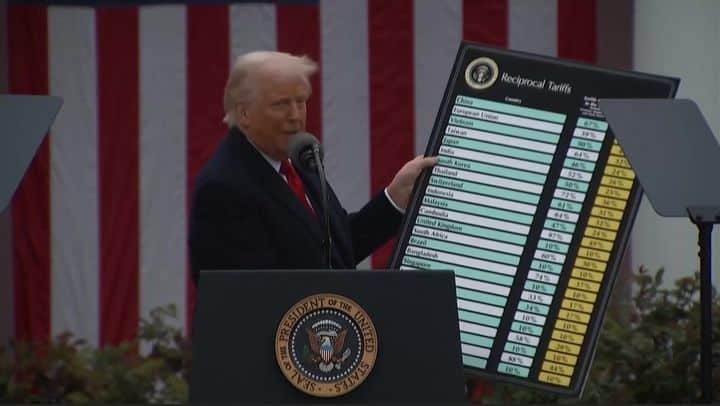
The oceans have become the frontline, ships the soldiers, and cargo the collateral. The world now sails through waters ruled less by law than by rivalry.
Whether the next wave brings negotiation or escalation, one truth remains: the world’s prosperity still drifts between Washington’s ambition and Beijing’s resolve.
About The Author