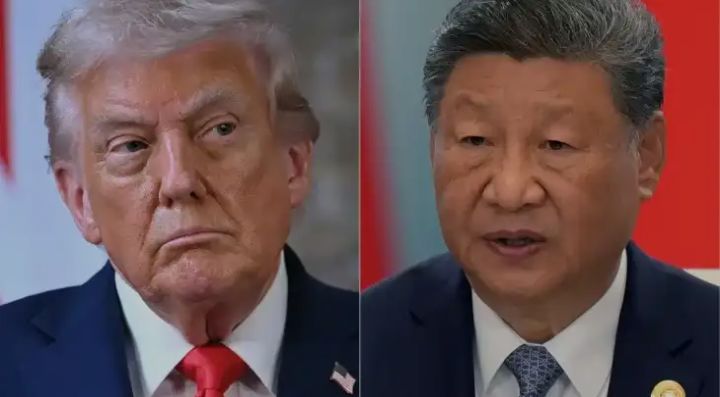
President Donald Trump announced another military operation in the Caribbean, confirming a precision strike that destroyed a vessel near Venezuelan waters and left six people dead overnight.
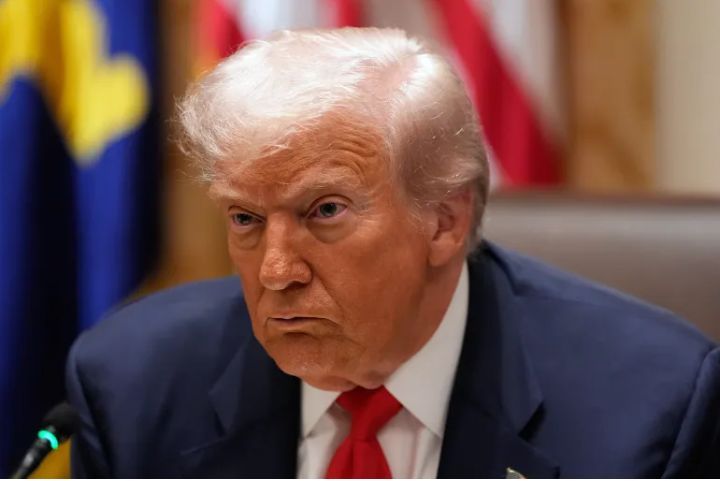
Trump declared the attack justified under his commander-in-chief authority, insisting the targeted vessel was “operated by narcoterrorists” allegedly linked to drug cartels smuggling substances into the United States.
He wrote online that “six male narcoterrorists aboard the vessel were eliminated. No American forces were harmed, and the mission was carried out flawlessly.”
The latest Trump Caribbean strike marks the fifth U.S. assault on suspected smuggling boats since early September, raising the total death toll across operations to twenty-seven.
Officials described the strike as part of a broader campaign to dismantle “foreign criminal threats,” but provided no physical evidence confirming the alleged trafficking or the boat’s cargo.
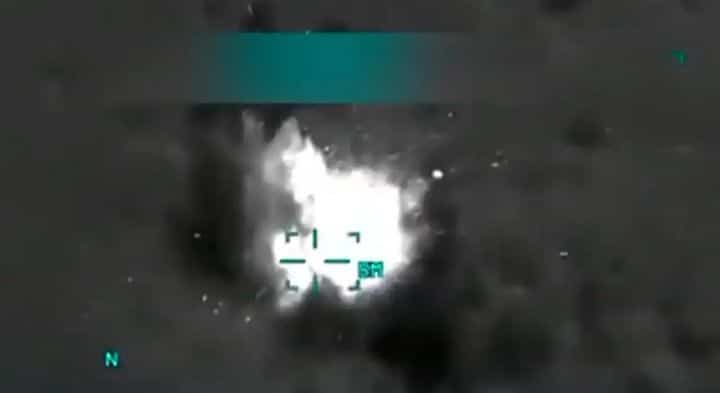
Video released by the administration showed a small, motionless vessel moments before an American missile struck, producing a massive fireball that rippled across the dark sea.
Analysts say the clip appeared to show no pursuit or engagement before impact, deepening questions over whether lethal force was necessary against a stationary target.
Trump’s aides dismissed such criticism as political. “We’re defending American lives before they’re threatened,” said Defense Secretary Pete Hegseth. “These traffickers know we mean business now.”
Rights organizations, however, condemned the repeated bombings as violations of international law, warning that the United States risks redefining criminal policing as warfare on foreign seas.
Under global maritime conventions, non-state drug networks are not recognized as combatants, yet the White House continues framing its campaign as part of a “non-international armed conflict.”
Trump has claimed these strikes fall within the scope of existing executive powers. “I don’t need Congress to authorize me to defend this country,” he told reporters defiantly.
Legal experts countered that reclassifying traffickers as terrorists grants sweeping wartime privileges inconsistent with the Geneva framework or the United Nations Charter.
Still, the administration doubled down. In early October, Trump issued a memo to Congress declaring that the United States is “in active armed conflict with transnational cartels.”
That declaration effectively allows indefinite overseas military actions against groups the president designates as “foreign terrorist organizations,” blurring boundaries between domestic enforcement and international combat.
The memo argued that drug cartels operate like insurgent forces, using violence and smuggling routes to undermine American security, a justification critics call dangerously expansive.
In August, leaked reports revealed Trump had signed a secret directive authorizing “kinetic operations” against suspected narcotics vessels anywhere in the Western Hemisphere.
According to insiders, that order emerged from internal debates about deploying naval power against “state-sheltered crime networks,” including factions allegedly operating from Venezuela and Central America.
Since February, the administration has moved to label dozens of criminal entities as foreign terrorist organizations, granting the Pentagon authority to engage them militarily abroad.
Civil rights advocates warned that such designations bypass courts, limit transparency, and risk civilian deaths under the banner of counter-terror operations.
The Trump Caribbean strike campaign follows a pattern of escalating executive dominance, reinforcing the president’s image as a leader willing to bypass international restraints for perceived national protection.
At a White House briefing, Trump again blamed Venezuela’s government, accusing it of “sending their worst criminals” northward. “We’re stopping them before they reach our shores,” he declared.
He specifically cited the Tren de Aragua gang, claiming it had “penetrated our cities.” Intelligence summaries publicly released earlier this year, however, found no proof of Venezuelan orchestration.
A May report from the intelligence community stated clearly that “no evidence indicates coordination between President Maduro’s administration and organized criminal infiltration into the United States.”
Trump brushed off the assessment. “The bureaucrats don’t see what I see,” he said. “We have people on the ground, and we know who’s sending these killers.”
The White House insisted its new maritime doctrine is defensive. “Every strike sends a message,” said a senior aide. “If you traffic poison toward our people, expect consequences.”
Yet humanitarian monitors accused Washington of escalating militarization in a region already struggling with political instability, poverty, and migration pressure.
Regional diplomats voiced alarm at the deployment of additional fighter jets and surveillance drones across Puerto Rico, the Dominican Republic, and nearby U.S. bases.
One Caribbean envoy called it “a buildup reminiscent of cold-war theatrics,” warning it could trigger confrontation with Venezuela’s armed forces or neighboring states.
Despite the backlash, Trump’s approval among conservative voters rose following each maritime strike, reflecting public support for tough measures on border and narcotics enforcement.
Polling firms noted that strong-law rhetoric resonates with his political base, particularly after years of partisan debate over immigration, crime, and drug control.
“Every time he takes decisive action abroad, his numbers climb,” observed one analyst. “His followers see it as America regaining strength under a fearless commander.”
Trump reinforced that sentiment online, writing that “weak leaders negotiate with criminals; strong leaders eliminate threats before they reach our homes.”
The Trump Caribbean strike campaign also reflects his broader transformation of U.S. military doctrine, prioritizing quick, unilateral actions without congressional review.
In recent weeks, Democratic lawmakers attempted to introduce a bill requiring legislative authorization for such operations, but the Senate blocked the proposal in a narrow vote.
Republican senators defended the president’s flexibility, arguing that rapid threats demand immediate decisions. “We can’t tie the commander’s hands during a crisis,” said Senator Tom Cotton.
However, civil society groups warned of dangerous precedents. “Unchecked power leads to unchecked destruction,” stated an open letter from the Center for Constitutional Rights.
Independent observers fear the administration may expand these operations beyond maritime targets, potentially striking suspected criminal camps within Latin American territories.
Pentagon officials neither confirmed nor denied such plans, merely asserting that “future actions will depend on evolving intelligence assessments.”
For Venezuela, the strikes symbolize deepening hostility. President Nicolás Maduro condemned the bombardment, calling it “an act of imperial aggression disguised as counter-narcotics enforcement.”
His government accused Washington of violating sovereignty and demanded international condemnation through the United Nations and the Organization of American States.
Trump replied curtly: “Maduro can complain all he wants. We will protect the American people—period.” His words drew applause at a campaign event in Florida.
Observers note that domestic politics heavily influence this renewed militarism. With elections nearing, Trump’s emphasis on toughness abroad reinforces his “law and order” narrative at home.
Critics warn such narratives could justify limitless military engagement. “Once everything becomes terrorism, there’s no peace to pursue,” said a retired U.S. general anonymously.
Despite concerns, the Pentagon confirmed ongoing surveillance over Caribbean waters and pledged “sustained maritime dominance” to deter trafficking and “foreign interference.”
Satellite data suggests at least a dozen U.S. warships are currently stationed near Venezuelan airspace, alongside reconnaissance aircraft and special operations units.
Analysts predict continued escalation unless international bodies intervene to define legal boundaries for counter-narcotics warfare at sea.
Yet few expect Washington to pull back soon. Trump views retreat as weakness. “We don’t apologize for winning,” he declared. “We hit, we move, and we protect America.”
His supporters celebrated that defiance. “Finally, a president who acts,” wrote one online commentator. “The world understands strength, not endless debate.”
But others see peril. “This is not just about drugs—it’s about rewriting global norms,” warned a law professor. “It blurs peace and war in unprecedented ways.”
Human rights monitors continue to demand accountability, urging independent investigations into the 27 reported deaths resulting from the U.S. maritime bombardments.
For now, the Trump Caribbean strike remains both symbol and strategy—projection of power through decisive, controversial action that tests the limits of international order.
As the smoke cleared over Caribbean waters after the Trump Caribbean strike, questions lingered about who the victims were, what proof existed, and how far Washington might go next in his executive power expansion voyage.
The Trump Caribbean strike exercise for the US President offered no reflection, only triumph. “The mission was successful,” he said again. “America stands safe tonight because I refused to hesitate.”
About The Author