

The human cost of Russia’s invasion of Ukraine continues to escalate at an alarming pace, with a new study estimating that close to two million military casualties from both sides have been killed, wounded, or gone missing since the war began in February 2022.
The findings underscore the scale of devastation caused by nearly four years of sustained conflict and point to Russia absorbing the largest share of the losses as fighting grinds on across multiple fronts.
According to research published by the Center for Strategic and International Studies (CSIS), a Washington-based thinktank, combined Russian and Ukrainian military casualties may already be as high as 1.8 million and could reach two million by the spring of 2026 if current trends continue.
The report describes the war as one of the most attritional conflicts of the modern era, marked by relentless artillery exchanges, drone warfare, and repeated offensives that have drained manpower on both sides.
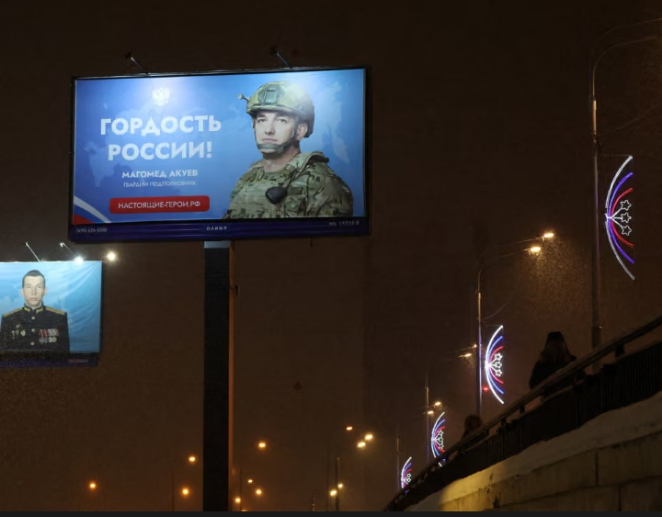
The study estimates that Russia has suffered approximately 1.2 million casualties since launching its full-scale invasion, with as many as 325,000 soldiers believed to have been killed.
Ukraine’s losses are also severe, with analysts estimating between 500,000 and 600,000 casualties, including up to 140,000 fatalities.
While precise figures remain difficult to verify due to the fog of war and limited transparency, especially from Moscow, independent researchers agree that the scale of losses is unprecedented in Europe since the second world war.
CSIS analysts noted that the conflict has evolved into what they describe as a “grinding war of attrition,” in which territorial gains are often measured in metres rather than miles and achieved at enormous human cost.
“Combined Russian and Ukrainian casualties may be as high as 1.8 million and could reach two million total casualties by the spring of 2026,” the report stated, highlighting how sustained offensives and defensive operations have steadily eroded both armies.
Ukraine’s president, Volodymyr Zelenskyy, has previously acknowledged significant losses among his country’s armed forces, though official figures from Kyiv are widely considered conservative.
In an interview with NBC in early 2025, Zelenskyy said Ukraine had lost nearly 46,000 troops since the start of the invasion, with tens of thousands more missing or held as prisoners of war.
Military analysts, however, argue that the true number of Ukrainian casualties is likely far higher, citing the intensity of combat in eastern and southern regions and the strain placed on Ukraine’s mobilisation system.
“Every number in this war represents a human life, a family torn apart,” one Western defence analyst said, speaking on condition of anonymity. “Both sides have reasons to understate their losses, but the available evidence suggests the casualty figures are staggeringly high.”
In contrast to Ukraine’s partial disclosures, Russian military losses remain a closely guarded state secret. The last official figures released by Moscow date back to September 2022, when the defence ministry claimed fewer than 6,000 soldiers had been killed.
Since then, the Kremlin has provided no comprehensive updates, despite evidence of repeated mass casualty events on the battlefield.
Independent investigations have attempted to fill the information gap. The BBC’s Russian service, working alongside the independent outlet Mediazona, has identified more than 163,000 Russian soldiers killed since the invasion by analysing publicly available data such as death notices, local media reports, and social media posts.
Even these figures, the organisations stress, likely represent only a fraction of the true toll. “The actual number of Russian dead is almost certainly significantly higher,” Mediazona said in a recent update.
Beyond military casualties, the war continues to exact a heavy toll on civilians, particularly in Ukraine. United Nations monitors report that nearly 15,000 civilian deaths have been verified since 2022, while warning that the real number is likely far greater due to underreporting in occupied areas and near active frontlines.
Repeated strikes on infrastructure, residential buildings, and transport networks have left millions without reliable access to electricity, heating, and clean water, especially during the harsh winter months.
This week, a Russian drone strike on a passenger train in north-eastern Ukraine highlighted the ongoing risks faced by civilians far from the frontlines. The attack, which occurred near a village in the Kharkiv region, killed five people and injured several others.
Ukrainian prosecutors said fragments of five bodies were recovered from the scene, underscoring the ferocity of the blast.
President Zelenskyy condemned the strike, describing it as an act of terrorism. In a post on Telegram, he said the train had been carrying more than 200 passengers at the time of the attack.
“Each such Russian strike undermines diplomacy, which is still ongoing, and hits, in particular, the efforts of partners who are helping to end this war,” Zelenskyy wrote.
The train bombing was part of a broader wave of Russian drone and missile attacks across Ukraine that left at least 10 people dead and dozens wounded in a single day.
Among the injured were two children and a pregnant woman, according to Ukrainian officials. In the southern port city of Odesa, a drone strike killed three people and wounded more than 30 others, while also causing extensive damage to a major energy facility.
Ukraine’s energy minister said that as many as 710,000 residents of Kyiv were left without electricity and heating following the attacks, raising fears of humanitarian consequences amid freezing temperatures.
“The damage is enormous, and repairs are ongoing, but the situation remains extremely difficult,” the minister said in a televised address.
As the war drags on, its international dimensions continue to widen. Poland’s foreign minister, Radosław Sikorski, has urged billionaire entrepreneur Elon Musk to take steps to prevent Russia from using the Starlink satellite internet system in its military operations.
Sikorski’s comments followed reports from the US-based Institute for the Study of War suggesting that Russian forces have been using Starlink terminals to help guide drone attacks deep into Ukrainian territory.
In a post on social media platform X, Sikorski directly addressed Musk, writing: “Why don’t you stop the Russians from using Starlinks to target Ukrainian cities? Making money on war crimes may damage your brand.”
Musk has previously denied that Starlink terminals were sold directly to Russia, stating that any equipment used by Russian forces was likely obtained through third countries or black-market channels.
Ukrainian intelligence services have echoed that assessment, saying there is no evidence of official contracts between Starlink and the Russian military, but warning that the widespread availability of the technology makes it difficult to prevent misuse entirely.
The staggering casualty figures outlined in the CSIS report have reignited debate among Western policymakers about the long-term sustainability of the war and the urgency of diplomatic efforts.

Some analysts argue that the scale of losses could eventually force both sides toward negotiations, while others warn that entrenched positions and ongoing external support make a near-term settlement unlikely.
“What we are seeing is a war that continues not because it is cheap or easy, but because both sides believe they cannot afford to lose,” said a former NATO official. “The human cost is enormous, and it will shape Ukraine, Russia, and Europe for generations.”
As Ukraine approaches the fourth anniversary of Russia’s full-scale invasion, the prospect of two million military casualties stands as a grim marker of a conflict that has already reshaped global security.
With no clear end in sight, the numbers serve as a stark reminder that behind every statistic lies a personal tragedy, and that the true cost of the war cannot be measured in figures alone.
About The Author


