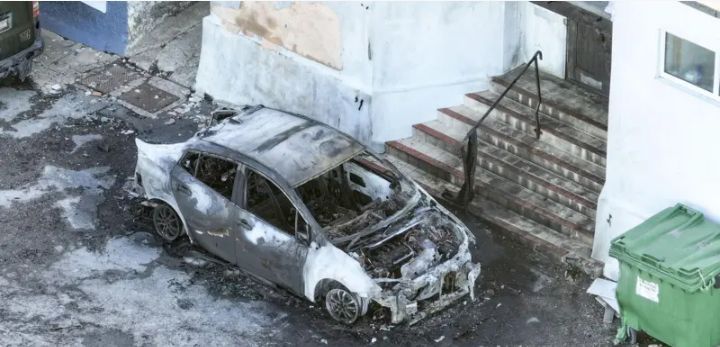
A major Russian attack slammed into central Kyiv on Friday, triggering explosions, fires, and chaos across the Ukrainian capital. Officials confirmed nine people injured, five hospitalized.
The missile and drone assault ripped into residential and energy infrastructure, sparking a blaze in a high-rise apartment building while cutting power to broad districts on Kyiv’s east bank.
Mayor Vitali Klitschko said water supplies and electricity were disrupted after the strike. “The capital of the country is under an enemy ballistic missile attack,” he declared.
Ukraine’s air force warned residents to remain sheltered, citing ongoing waves of drones and ballistic projectiles. Emergency teams struggled through debris as firefighters fought blazes amid the darkness.
President Volodymyr Zelenskyy’s office confirmed that twenty-three children and adolescents were successfully extracted from Russian-occupied areas, transported into safe Ukrainian-held territory under the government’s “Bring Kids Back UA” program.
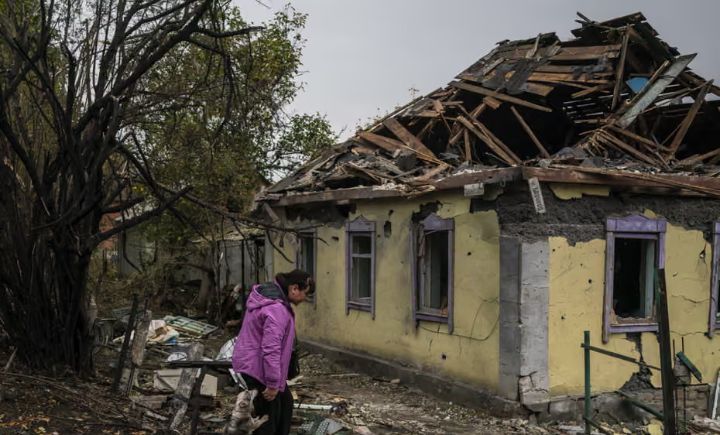
Chief of staff Andriy Yermak described the operation as urgent and vital. “Our responsibility is to return every child stolen or trapped under occupation,” he stated in a Telegram post.
The removal is part of wider efforts to rescue children deported or detained under Russian control, with Kyiv denouncing Moscow for violations amounting to war crimes against minors.
Simultaneously, Washington signaled hardened positions. President Donald Trump announced that the United States and NATO allies are “stepping up the pressure” after diplomatic overtures to Vladimir Putin yielded no ceasefire.
“Yeah, we are stepping up the pressure,” Trump told reporters alongside Finnish president Alexander Stubb. “We’re stepping it up together. We’re all stepping it up.”
Trump hinted at possible expanded sanctions against Moscow while praising NATO unity. “NATO has been great,” he said, while refusing to confirm whether troop deployments might follow.
Russia meanwhile accused Ukraine of rupturing a disused ammonia pipeline in Donetsk region, allegedly releasing toxic gas. Moscow presented the incident as Ukrainian sabotage near the frontline village of Rusin Yar.
Ukraine rejected the accusation, pointing instead to Russia’s record of shelling industrial sites. Independent verification remains absent, but the episode added to spiraling propaganda claims on both sides.
The United Nations nuclear watchdog reported that steps have begun to reconnect the Zaporizhzhia nuclear power plant to external grid supply, cut off for more than two weeks.
IAEA director general Rafael Grossi said consultations involved both Ukrainian and Russian authorities, each blaming the other for severed lines. The plant has relied on emergency generators since.
Amid this, Ukraine pressed forward with counterattacks, boasting new missile and drone capabilities. Zelenskyy announced the “Palianytsia” missile had destroyed dozens of Russian depots, crippling logistics and fuel supply chains.
Ukraine’s “Ruta” drone, recently tested, reportedly struck a Russian offshore oil platform more than 250 kilometers away. Zelenskyy hailed it as “a major success” of indigenous engineering.
Russian energy shortages are mounting. Gasoline scarcity is reported in several regions after repeated strikes against refineries, pipelines, and storage depots, forcing Russia to lean heavily on imports from Belarus and China.
At the same time, Moscow escalated its bombardment of Ukrainian energy and railway infrastructure. Zelenskyy accused Russia of deliberately sowing “chaos” ahead of winter to cripple civilians’ heating and transport lifelines.
Ukraine retaliated by striking Russia’s Korobkovsky gas processing plant in Volgograd region, hitting oil transport facilities overnight. Moscow confirmed the hit but counterclaimed successful strikes on Ukrainian port infrastructure in Odesa region.
Both sides increasingly target energy and fuel networks, a war of attrition designed to exhaust populations as winter looms. Analysts warn humanitarian suffering will mount as critical services collapse.
Zelenskyy also floated an unusual suggestion: nominating US president Donald Trump for the Nobel peace prize, should he secure a ceasefire. “Yes, he should be nominated,” he remarked.
He framed the idea pragmatically. “If Trump gives the world – above all, the Ukrainian people – the chance for such a ceasefire, then yes,” he explained.
This surprising statement comes ahead of the Nobel committee’s announcement of the 2025 laureate, selected earlier this autumn, raising speculation about Kyiv’s diplomatic balancing act with Washington.
Despite praise for NATO support, Trump has repeatedly expressed impatience with prolonged conflict. His administration emphasizes sanctions and military aid but has yet to secure major breakthroughs with Moscow.
Ukraine’s prime minister, chief of staff, and senior sanctions adviser will travel to Washington next week for intensive talks with US officials on air defense, energy, and sanctions.
Frozen Russian assets abroad, particularly within Western banking systems, will also be on the agenda. Kyiv has urged their confiscation and redirection into rebuilding Ukraine’s devastated economy.
Across Ukraine, missile and drone strikes continued overnight. Civil defense sirens echoed across central and eastern regions, while residents huddled underground as debris rained down from intercepted drones.
The humanitarian toll is rising daily. International monitors say millions of civilians face extreme vulnerability this winter amid deliberate targeting of energy grids, transport links, and water systems.
For Ukraine, evacuating children remains a critical moral and political mission. Each rescued child symbolizes resistance against forced assimilation and occupation policies condemned by human rights groups worldwide.
As the war grinds into its 1,325th day, neither battlefield momentum nor diplomatic outreach has broken the stalemate. Instead, escalation appears entrenched, with civilians carrying the heaviest burden.
About The Author