

The debate over the UK under-16s social media ban has reached a critical stage as Prime Minister Sir Keir Starmer is reportedly preparing to unveil one of the most significant child online safety policies in recent UK history.
The proposal, which could be announced within days, is designed to restrict children’s access to social media platforms amid growing fears about harmful content, algorithmic exposure, and mental health risks.
The move comes after months of consultation with experts, child protection groups, and technology regulators, and reflects increasing global momentum toward tighter digital controls for minors. Countries such as Australia have already introduced strict measures, and the UK government is now under pressure to follow suit—or go even further.
At the heart of the discussion is whether the UK should introduce a blanket social media ban for under-16s, or adopt a more flexible system targeting specific features and platforms.
UK under-16s social media ban set to be announced by government
The UK under-16s social media ban is expected to be formally outlined by Sir Keir Starmer as part of a broader online safety strategy aimed at protecting children from harmful digital environments.
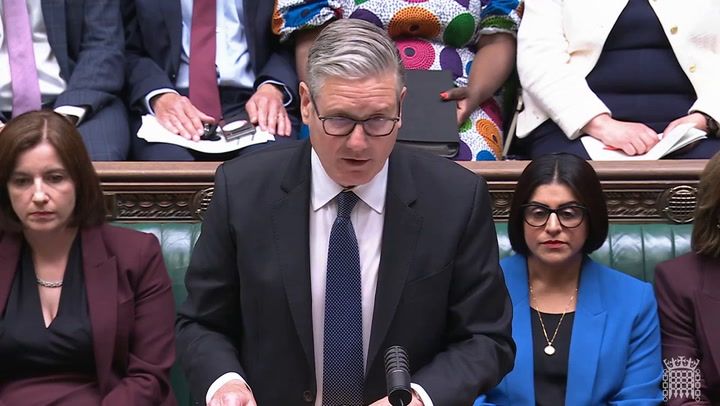
According to government sources, the announcement is likely to follow a nationwide consultation that explored multiple options for regulating minors’ access to social media platforms. The plan is expected to focus on restricting account creation for users under 16, though final details remain under discussion.
Ministers are also considering whether certain apps or features should be exempt, particularly educational tools and messaging services that are widely used by young people.
A senior government adviser said the goal is to strike a balance between protection and practicality:
“We are looking at what genuinely reduces harm without cutting children off from essential digital communication tools.”
Why the UK under-16s social media ban is being proposed
The push for a UK under-16s social media ban has been driven by growing concern over the impact of social media on children’s mental health, attention spans, and exposure to harmful content.
Parents, educators, and child psychologists have warned that algorithms used by major platforms often push extreme or addictive content, even to younger users who do not fully understand how the systems work.
Government officials argue that voluntary safeguards introduced by tech companies have not gone far enough, and that stronger legislation is now necessary.
Children’s safety advocates have pointed to rising cases of anxiety, sleep disruption, and online bullying as evidence that existing protections are insufficient.
Political pressure builds around the UK under-16s social media ban
Support for the UK under-16s social media ban has grown across political lines, with several senior figures urging decisive action.
London Mayor Sir Sadiq Khan has publicly backed the proposal, stating that technology companies should be forced to prove their platforms are safe for children or face restrictions.
He argued that responsibility should not fall solely on parents, but also on the companies designing these platforms.
Meanwhile, Children’s Commissioner Dame Rachel de Souza has called for even stronger measures, suggesting that teenagers aged 16 and 17 should not be excluded from protection policies.
She said:
“We need action to address technology companies’ unfettered access to children, often through features designed in ways that increase harm.”
Her comments highlight a growing concern among child welfare experts that age-based boundaries may not fully reflect the realities of digital exposure.
Government divided over scope of restrictions
Despite growing momentum, there is still debate within government about how far the UK under-16s social media ban should go.
Skills Minister Baroness Jacqui Smith has acknowledged that the issue is complex and that policymakers must avoid overly simplistic solutions.
She explained:
“This isn’t as clear cut as some people like to think it is, which is exactly why the government has taken the approach it’s taken.”
She added that ministers are considering whether a full ban is appropriate or whether targeted restrictions on specific features—such as algorithmic feeds, live streaming, or targeted advertising—might be more effective.
Officials have also suggested that a complete shutdown of access to all platforms may be difficult to enforce in practice, particularly given the widespread use of VPNs and alternative communication tools.
International influence on the UK under-16s social media ban
The UK’s policy direction is being shaped in part by international developments, particularly Australia’s approach to digital regulation.
Australia has introduced strict rules aimed at limiting children’s exposure to social media, and UK ministers are closely examining the effectiveness of that model.
However, some policymakers argue that the UK may need a more tailored system due to differences in digital infrastructure, education systems, and platform usage.
The government is also reviewing evidence from European regulators who have explored age-verification systems and stricter enforcement of platform accountability.
A policy adviser noted:
“International examples are useful, but the UK will need a model that fits its own legal and technological environment.”
Technology companies under pressure
The UK under-16s social media ban debate has placed major technology companies under renewed scrutiny.
Platforms such as TikTok, Instagram, Snapchat, and YouTube are expected to be significantly impacted if the ban is introduced in its strictest form.
Critics argue that these companies have not done enough to prevent children from being exposed to harmful content, despite introducing features like parental controls and restricted modes.
Advocacy groups say enforcement has been inconsistent and often dependent on user reporting rather than proactive moderation.
If the ban proceeds, companies may be required to implement stronger age verification systems or redesign platform algorithms to limit engagement from younger users.
Concerns over enforcement and effectiveness
While the UK under-16s social media ban has gained political support, questions remain about how it would be enforced.
Experts have warned that teenagers could bypass restrictions using fake accounts, VPN services, or shared devices.
There are also concerns about unintended consequences, such as isolating young people from educational resources or peer communication tools.
Digital rights groups argue that enforcement must be paired with education rather than purely restrictive measures.
One analyst commented:
“A ban alone does not solve the underlying issue of online harm—it only shifts the behaviour elsewhere.”
What happens next in the UK under-16s social media ban plan
The government is expected to formally present its proposal ahead of the summer parliamentary recess. A final decision will likely depend on internal discussions within the cabinet and feedback from regulatory bodies.
Read also: UK sanctions against Israel: Britain targets E1 West Bank settlement project
If approved, the UK under-16s social media ban could become one of the most significant digital policy changes in the UK in over a decade.
The announcement is also expected to influence Labour’s broader technology and child protection agenda heading into future elections.
The proposed UK under-16s social media ban represents a major turning point in how the UK approaches child safety in the digital age. While there is strong political momentum behind the plan, significant questions remain about enforcement, effectiveness, and potential unintended consequences.
As Sir Keir Starmer prepares to make his announcement, the UK stands at the centre of a global debate over how far governments should go in regulating children’s access to social media—and whether outright bans are the solution or just the beginning of a much larger policy shift.
Read more: Ireport247news
About The Author


