UK Exempts Nigeria From Tougher Russian Fuel Sanctions Amid Energy Security Concerns
The United Kingdom has exempted Nigeria from stricter compliance requirements under its expanded sanctions targeting fuels refined from Russian crude oil, a move that underscores growing concerns among Western governments about energy security, supply stability and rising geopolitical tensions in global oil markets.
The updated sanctions framework, which came into effect on May 20, seeks to close a major loophole that previously allowed countries to refine discounted Russian crude into products such as diesel, petrol and jet fuel before exporting them into Western markets.
Energy markets have remained highly sensitive to disruptions involving Russian oil flows because tighter fuel supply conditions could intensify inflation pressures, raise transportation costs and complicate economic recovery efforts across Europe and other major economies.
Under the revised UK rules, imports of refined petroleum products produced from Russian crude oil are now subject to tougher scrutiny and compliance obligations. However, Nigeria was among 63 countries exempted from the stricter proof-of-origin requirements because it was classified as a net crude oil exporter.
For global markets, the sanctions battle is no longer just about Russian crude — it has become a broader struggle over energy security, inflation control and geopolitical influence across international commodity markets.
The guidance, analysed by S&P Global, stated that exporters from exempted countries would generally not be required to provide additional evidence proving fuels were refined from non-Russian crude unless British customs authorities had “reasonable grounds” to suspect otherwise.
Countries granted exemptions include Saudi Arabia, Kuwait, Libya, Kazakhstan and Nigeria.
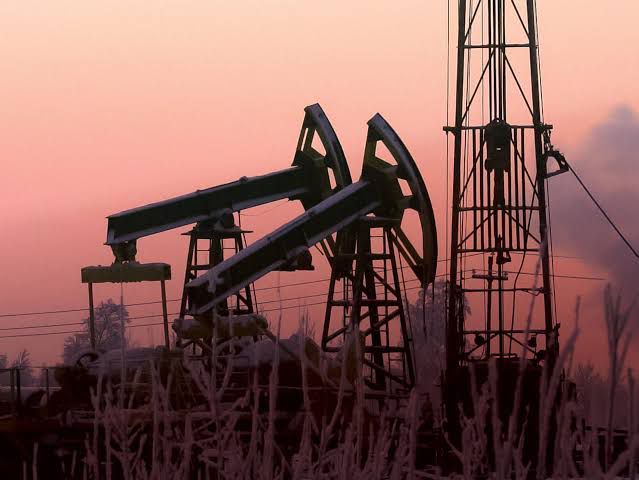
UK Tightens Russian Fuel Sanctions
Britain’s new restrictions mirror broader Western efforts to reduce Moscow’s oil revenues more than four years after the Russia-Ukraine war reshaped global energy trade.
Since the imposition of sanctions on Russian crude exports, several countries — particularly India and Turkey — dramatically increased purchases of discounted Russian oil, refined the crude domestically and exported petroleum products to Europe and other Western destinations.
Western governments increasingly viewed that process as a sanctions loophole capable of undermining broader efforts to economically isolate Russia.
Under the updated UK regime, refiners that process Russian crude can still export fuels into Britain if they can demonstrate that Russian and non-Russian crude streams were physically separated throughout transportation, storage and refining.
Where physical separation cannot be verified, suppliers must prove that their refineries had not processed Russian crude for at least 60 days before exports were shipped.
British authorities also advised importers to obtain formal assurances from suppliers confirming that imported fuel products were not derived from Russian crude.
Analysts estimate that Russia previously accounted for roughly 10 per cent of global crude oil production before sanctions and trade restrictions significantly altered export patterns.
The sanctions regime reflects how geopolitical conflicts are increasingly reshaping the structure of global commodity markets, shipping routes and refinery economics.
Why Nigeria Was Exempted
Nigeria’s exemption reflects its status as one of Africa’s major crude oil producers and a recognised net exporter within international energy trade flows.
Although Nigeria still imports substantial volumes of refined petroleum products because of domestic refining constraints, the country remains one of the continent’s largest crude exporters and an important supplier to international energy markets.
Nigeria produces roughly 1.4 million to 1.7 million barrels of crude oil daily depending on operational conditions, pipeline security and OPEC production arrangements.
The exemption could reduce compliance pressure on Nigerian exporters and traders seeking access to British markets at a time when global fuel trade flows are becoming increasingly fragmented by sanctions, tariffs and geopolitical realignments.
However, analysts note that the exemption does not eliminate broader structural weaknesses within Nigeria’s oil sector, including refining limitations, pipeline vandalism, crude theft, foreign exchange instability and regulatory uncertainty.
Nigeria has spent years attempting to reposition itself as a stronger refining hub through investments in local processing capacity, particularly following the emergence of the Dangote Petroleum Refinery.
Political pressure surrounding energy supply remains intense because fuel prices continue to carry major economic and social consequences in Nigeria, where transportation costs strongly influence food inflation, household spending and business operating expenses.
Global Energy Markets Remain on Edge
Global oil traders continue monitoring how sanctions enforcement, Middle East tensions and supply disruptions could affect crude prices and fuel availability.
Benchmark Brent crude has remained volatile in recent months amid concerns surrounding shipping security, OPEC supply management and geopolitical instability across key energy-producing regions.
Analysts estimate that global oil demand currently exceeds 100 million barrels per day, while roughly 17 million to 20 million barrels daily pass through critical maritime chokepoints such as the Strait of Hormuz.
That concentration of energy flows means even limited disruptions can rapidly trigger price spikes across global fuel markets.
The UK government’s decision to maintain temporary waivers for diesel and jet fuel imports highlights lingering concerns about supply shortages and rising energy costs.
According to S&P Global data, Britain imported about 75 per cent of its jet fuel needs and roughly half of its diesel requirements during 2025.
The United States has increasingly emerged as one of Britain’s major fuel suppliers, exporting around 144,000 barrels per day of refined petroleum products to the UK in April.
Middle Eastern producers such as Kuwait and Saudi Arabia have also become increasingly important suppliers as Europe attempts to diversify away from Russian energy dependence.
For investors, fuel sanctions are now closely tied to broader concerns involving inflation expectations, central bank policy, freight costs and industrial production.
Lower oil prices could help ease inflationary pressure globally, while tighter supply conditions could force central banks to maintain elevated interest rates for longer.
Russian Crude Reshapes Global Trade Flows
The Russia-Ukraine conflict has fundamentally altered global energy trading patterns since the first wave of Western sanctions.
Before the war, Europe relied heavily on Russian crude oil, pipeline gas and refined fuel imports.
Following sanctions, Russian exports were redirected toward Asian buyers willing to purchase discounted crude, while Europe sought alternative suppliers across the Middle East, the United States and Africa.
That restructuring significantly increased shipping distances, freight costs and refinery arbitrage opportunities.
India emerged as one of the largest beneficiaries of discounted Russian crude, sharply increasing imports before exporting refined products into Europe and other Western markets.
Turkey also became an increasingly important transit and refining hub.
Western governments have since intensified efforts to tighten enforcement mechanisms and reduce indirect access for Russian-linked petroleum products.
However, analysts warn that enforcement remains difficult because crude oil supply chains are highly complex and often involve blending, re-exporting and multiple intermediary trading structures.
Energy sanctions have also generated wider political tensions between Western governments and countries seeking to maintain flexible energy trade relationships.
Some emerging economies argue that strict sanctions compliance could increase energy costs and worsen inflation pressures domestically.
Investors Watch Oil Prices and Inflation Risks
Investors are increasingly monitoring how sanctions enforcement could influence crude prices, refinery margins, shipping markets and broader inflation trends.
Energy prices remain one of the most influential variables for global financial markets because fuel costs directly affect transportation, manufacturing, agriculture and consumer spending.
Any significant disruption in fuel supply chains could strengthen inflationary pressure globally and complicate monetary policy decisions by major central banks.
Oil traders are also closely watching OPEC production policy, US shale output and geopolitical developments involving Russia, Iran and the Middle East.
Shipping companies, airline operators and industrial manufacturers remain particularly vulnerable to prolonged energy price volatility.
European economies continue balancing sanctions enforcement against concerns over energy affordability and industrial competitiveness.
For Nigeria, developments in global oil pricing remain critically important because crude exports generate the majority of the country’s foreign exchange earnings and government revenue.
Changes in global fuel trade could also affect Nigeria’s currency stability, fiscal performance and external reserves.
Read Also: US strikes Iran missile sites as Trump faces pressure over fragile peace deal
NNPC, Dangote clash over fuel imports as monopoly fears shake Nigeria’s downstream market
Analysts Warn Enforcement Could Face Challenges
Despite the tougher sanctions framework, analysts caution that implementation challenges could weaken the effectiveness of the restrictions.
Previous sanctions regimes targeting Russian oil have repeatedly encountered issues involving cargo blending, indirect shipping routes, intermediary trading firms and limited transparency across global supply chains.
Analysts also warn that geopolitical alignment within global energy markets remains fragile, particularly as countries attempt to balance economic interests with diplomatic pressure from Western governments.
Some experts argue that aggressive sanctions enforcement could unintentionally tighten global fuel supply and increase costs for consumers.
Others note that countries with large refining industries may continue finding commercial incentives to process discounted Russian crude where compliance systems remain weak.
The growing fragmentation of global energy markets has raised concerns about the emergence of parallel trade systems operating outside traditional Western regulatory influence.
Analysts caution that previous attempts to isolate Russian energy exports have produced mixed results because global oil markets remain deeply interconnected and heavily dependent on continuous supply flows.
That uncertainty continues to create volatility across commodities, shipping and energy-sector equities.
What the Decision Means for Nigeria
Nigeria’s exemption from stricter compliance obligations could provide temporary trade advantages for exporters and refiners seeking access to British fuel markets.
However, analysts say the bigger challenge remains whether Nigeria can strengthen domestic refining capacity, stabilise oil production and reduce long-standing structural inefficiencies across its petroleum sector.
The country has historically struggled with fuel import dependence despite being one of Africa’s largest crude producers.
Energy-sector reforms, refinery expansion projects and downstream deregulation policies are all expected to shape Nigeria’s future position within global fuel markets.

At the same time, investors and policymakers are increasingly assessing whether geopolitical fragmentation will permanently alter global oil trading relationships.
For Nigeria, the evolving sanctions environment presents both opportunity and risk: opportunity through stronger positioning in international crude markets, and risk through continued exposure to volatile energy prices, foreign exchange instability and shifting geopolitical alliances.
As Western governments intensify efforts to close sanctions loopholes, global energy markets are likely to remain highly sensitive to political developments, supply disruptions and enforcement uncertainty.
The outcome could determine not only how crude oil moves across international markets, but also how inflation, investment flows and energy security evolve over the coming years.
Read more @ireport247news
About The Author