The UK government reviews police handling of US military crime cases in Britain after it emerged that local forces handed serious investigations to American authorities. Ministers say the review will establish “who should be prosecuting crimes committed on UK soil.”
The decision follows Guardian reporting that revealed multiple cases where British police ceded jurisdiction. The cases involved allegations of rape, assault and indecent conduct by US personnel stationed in the UK.
The issue became public in June with the case of Capt Jacob Wulfson. Cambridgeshire police allowed US military police to take over after a British woman, Sarah Steele, alleged rape and strangulation.
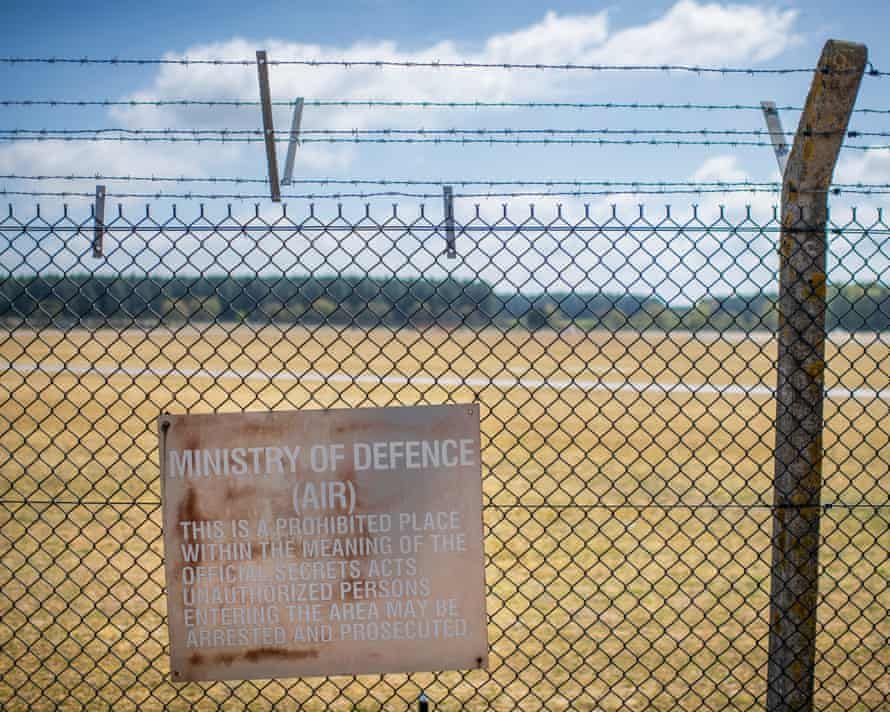
Wulfson was tried at RAF Lakenheath in a US court martial. An all-male panel of US air force officers convicted him of strangling an intimate partner but acquitted him of sexual assault. He was sentenced to six months.
Downing Street described the outcome as “very concerning.” A government spokesperson said Steele had “shown incredible bravery in coming forward” and that ministers had “committed to identifying and learning any lessons from this case to ensure that victims are supported and treated with the seriousness, dignity and compassion they deserve.”
Victims’ groups argue the US system offers weaker protections. Under the Uniform Code of Military Justice, the definition of rape is narrower than in UK law. As a result, many cases are charged as sexual assault instead.
“The British public expect crimes committed in England to be prosecuted in the English courts under English law,” said Jess Brown-Fuller, the Liberal Democrats’ justice spokesperson. “That expectation should not change simply because the accused is a member of the foreign military.”
The Guardian identified other cases. Hannes Marschalek allegedly exposed himself to a 16-year-old girl and four women in Cambridgeshire. He admitted indecent conduct at a court martial. The conviction was later quashed on technical grounds.
Tyrion Davis was accused of raping two British women in Suffolk. He was convicted of one count of sexual assault at a court martial and acquitted of 10 other counts of sexual assault and abusive sexual contact.
James Loubeau faced allegations from six women in East Anglia. He was tried for one case at a court martial and acquitted. He was later convicted in Miami over a separate allegation after an FBI investigation into his conduct in England.
Suffolk police transferred the Loubeau case to US prosecutors just 11 days after two women reported being drugged and raped. A source familiar with the discussions said ministers were “alarmed to learn that UK police forces may not be seeking advice from the CPS before handing over investigations.”
What The Review Will Examine
The Home Office and Ministry of Justice have met Steele to discuss reforms. Officials are working with the National Police Chiefs’ Council to update guidance on referring cases to the Crown Prosecution Service.
“We are working closely with the NPCC to look at the guidance in place to ensure that cases are correctly referred to the Crown Prosecution Service for advice,” a government spokesperson said.
Gavin Stephens, chair of the NPCC, has written to all chief constables in England and Wales. The letter reminds forces of their legal obligations when dealing with visiting US personnel.
Two forces have launched internal audits. Cambridgeshire police said it is “conducting a policy review being led by our investigation standards department” covering cases back to 2018.
Suffolk police said it is “in the process of reviewing the decision-making surrounding the transfer of primacy to the US air force and around case transfer practices more generally.”
Nick Timothy, the Conservative justice spokesperson, was blunt. He said Wulfson “should have been fully investigated by the English police and prosecuted in our courts.”
The Foreign Office confirmed it had “been engaging with the US on this matter” and would seek a full account of what happened in the Wulfson case.
Justice minister Sarah Sackman told parliament: “Our thoughts are with the victim, and with the other victims whose experiences have subsequently come to light.”
The Law Behind US Jurisdiction In The UK
The rules date to a 1950s agreement. The US can prosecute its own personnel if the offence was committed while on duty, or against another service member, their property, or a dependant.
In all other cases, British police have the first option to investigate. The cases uncovered suggest the US has pushed to take control even when it does not have primary jurisdiction, and UK forces have agreed.
More than 12,000 US military personnel are based in the UK across at least 15 sites. The largest concentrations are at RAF Lakenheath and RAF Mildenhall in Suffolk. Many live in Norfolk and Cambridgeshire.
Legal experts say the review must balance treaty obligations with public confidence. “If people see British courts being bypassed, trust in policing will erode,” one barrister told the Guardian.
Campaigners want a clear protocol. “Every allegation of rape or serious assault on UK soil should automatically trigger CPS advice before any transfer,” a victims’ advocate said.
Police leaders accept training is needed. “Frontline officers need to understand jurisdiction so decisions aren’t made under pressure,” a senior officer said.
For communities around US bases, the review is about accountability. Residents say they want crimes on their streets judged under British law, not elsewhere.
Read also: US launches heavy strikes on Iran after Jordan attack
The government has not set a deadline but wants recommendations within months. Officials say new guidance will go to all 43 forces in England and Wales.
The central question remains. As one minister put it, “When a crime happens in Britain, it should be the British justice system that decides what happens next.”
About The Author