Starmer crimes against humanity accusation is set to dominate a high-stakes court battle as the UK government faces legal action over plans to transfer sovereignty of the Chagos Islands to Mauritius.
The case centres on claims by Chagossians that forced displacement from their homeland constitutes a crime under international law, challenging Britain’s long-standing handling of the remote Indian Ocean territory.
At the heart of the dispute is Keir Starmer, who now faces allegations that his government’s actions repeat historic injustices inflicted on the indigenous Chagossian population.
Lawyers representing Chagossians argue that removing islanders again, decades after their original expulsion, breaches international conventions governing crimes against humanity and unlawful deportation.
The court hearing, scheduled for mid-March, is expected to scrutinise the legality of the government’s agreement to cede the islands to Mauritius.
Campaigners insist the Chagos Islands legal challenge is about fundamental rights, not geopolitics, and accuse successive British governments of prioritising strategic interests over justice.
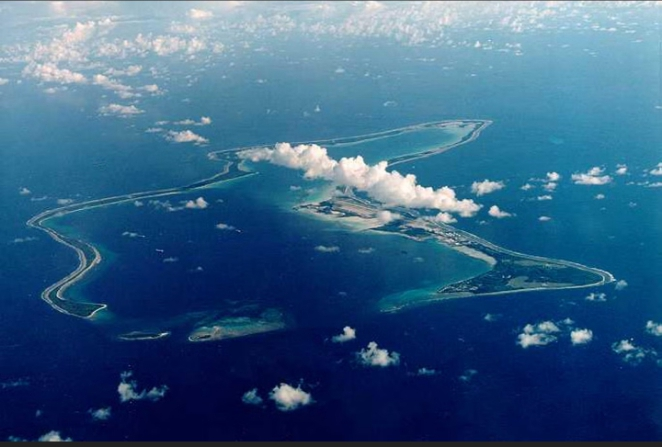
The Chagossians were forcibly removed between the 1960s and 1970s to allow construction of a strategic military facility on Diego Garcia, a move later condemned by international observers.
Many islanders were relocated to Mauritius and the United Kingdom, where they endured poverty, social exclusion, and the loss of cultural identity tied to their ancestral land.
Legal filings submitted to the court describe the original expulsion as unlawful and argue that preventing resettlement today perpetuates an ongoing violation of Chagossian human rights.
The Starmer crimes against humanity accusation hinges on whether continued exclusion constitutes a fresh legal offence under evolving interpretations of international criminal law.
Critics note that International Court of Justice rulings on Chagos are advisory, giving Britain discretion rather than a binding obligation to surrender sovereignty.
Despite this, Starmer has argued that international pressure leaves the UK with limited options, a claim disputed by legal experts supporting the Chagossian case.
They argue Britain retains legal flexibility, including opt-outs under Commonwealth arrangements, undermining the government’s insistence that the deal is unavoidable.
Adding complexity, the proposed Mauritius sovereignty deal includes provisions for resettlement, contradicting long-standing security arguments used to block Chagossian returns.
Lawyers contend this policy shift weakens the government’s defence and strengthens claims that continued exclusion is unjustifiable under present conditions.
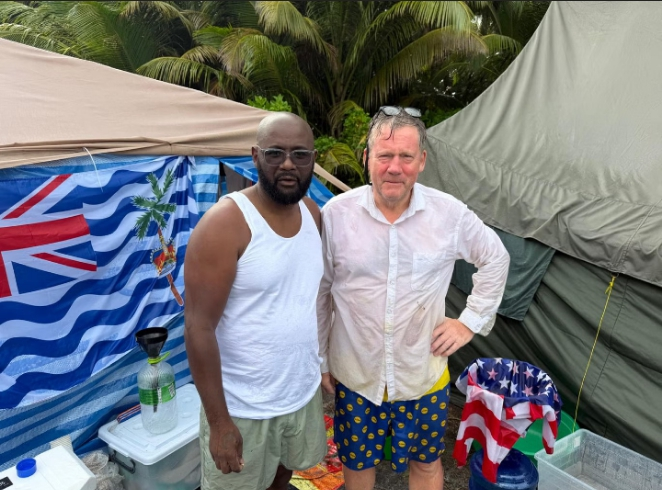
Four Chagossians recently returned to the islands in defiance of UK restrictions, prompting legal efforts by authorities to remove them once again.
Among them is Misley Mandarin, described as a leading figure in the government-in-exile representing displaced islanders.
Their presence has become central to the court case, symbolising resistance to policies campaigners say erase indigenous rights.
The injunction preventing their removal remains in place while judges consider whether eviction would amount to a second forced displacement.
Legal submissions describe such action as morally indefensible and legally equivalent to renewed deportation.
Supporters argue the Chagossian human rights issue cannot be separated from Britain’s colonial legacy and its ongoing responsibility to those it displaced.
The Starmer crimes against humanity accusation also carries diplomatic implications, as neighbouring states monitor developments closely.
The Maldives has indicated it may pursue its own legal avenues, citing maritime and sovereignty concerns linked to the archipelago.
Officials in Malé say they are reviewing international legal options, raising the prospect of parallel challenges complicating the UK’s position further.
Security considerations remain central, particularly the future of the Diego Garcia military base operated jointly by the UK and United States.
The base plays a critical role in regional operations, intelligence gathering, and global military logistics, amplifying international interest in the dispute.
US president Donald Trump has publicly criticised the Chagos deal, reportedly expressing concerns about strategic vulnerabilities.
Intelligence assessments cited by critics warn that increased foreign influence could undermine the base’s effectiveness.
These fears have contributed to delays in implementing the Mauritius sovereignty deal, despite political commitments made by the UK government.
Nevertheless, Chagossian representatives insist security arguments are being selectively applied to justify continued exclusion rather than genuine risk mitigation.
They argue that civilian resettlement on outer islands does not threaten military operations on Diego Garcia.
Legal counsel has also referenced communications sent to the International Criminal Court, outlining alleged crimes against humanity linked to displacement.
The submission claims deportation and enforced exile remain ongoing offences while islanders are barred from returning home.
Swiss lawyer Elodie Tranchez has supported the claim through filings to UN human rights bodies.
Her arguments highlight obligations under both international and domestic UK law to prevent crimes against humanity.
Government representatives reject the allegations, stating that unauthorised landings endanger lives and disrupt carefully negotiated diplomatic processes.
Officials maintain that structured resettlement under the Mauritius agreement offers the safest and most realistic path forward.
They also emphasise expressions of regret for historical removals while denying legal liability for current policy decisions.
For Chagossians, however, regret without restitution is insufficient, particularly as opportunities for voluntary return remain restricted.
Campaigners argue that true reconciliation requires recognition of sovereignty, cultural survival, and the right to self-determination.
As the court date approaches, the Starmer crimes against humanity accusation threatens to become one of the most consequential human rights cases of the decade.
The outcome could redefine Britain’s responsibilities toward displaced peoples and reshape how international law addresses colonial-era injustices.
Whatever the ruling, the case has already reignited global scrutiny of the Chagos Islands and the people whose lives were upended by strategic decisions.
For many observers, the legal challenge represents a pivotal moment in the long struggle for Chagossian justice and historical accountability.
Read also: Dubai missile attack shatters illusion of safety as Iran widens war
About The Author