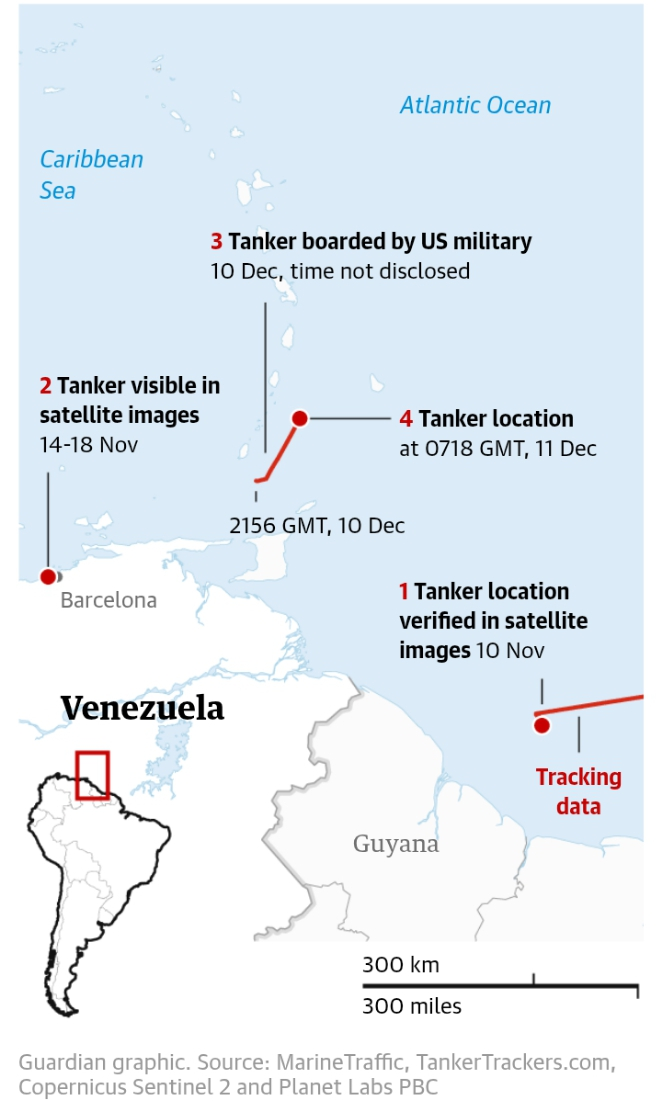

The seizure of a Venezuelan oil tanker off Caracas’ coast has ignited intense debate among U.S. lawmakers, raising fears that Trump’s administration risks escalating conflict unnecessarily.
Senior Democrats and at least one Republican criticized the operation, warning it could drag the United States into a military confrontation over Venezuela’s sovereign oil resources.
Senator Chris Van Hollen (D-Md.) said, “This shows their whole cover story — that this is about interdicting drugs — is a big lie. This is about regime change, by force.”
Republican Senator Rand Paul (Ky.) warned, “Seizing someone’s oil tanker is an initiation of war. It is not the job of the U.S. to hunt monsters abroad and start conflicts.”
Senator Chris Coons (D-Del.) said he was “fairly gravely concerned that the president is sleepwalking us into a war with Venezuela over oil,” reflecting bipartisan unease in Washington.
Attorney General Pam Bondi defended the seizure, explaining that the tanker had been transporting sanctioned Venezuelan and Iranian oil, allegedly supporting foreign terrorist organizations over an extended period.
The Trump administration confirmed the seizure, with the President declaring, “We’ve just seized a tanker on the coast of Venezuela — very large, largest one ever seized, actually.”
When asked what would happen to the oil, Trump replied, “We keep the oil, I guess!” leaving observers puzzled about U.S. intentions and the legality of the operation.
Footage shows U.S. forces rappelling onto the vessel from helicopters, securing the tanker and its cargo amid carefully coordinated Coast Guard and law enforcement activity.
Venezuelan authorities called the action “a blatant theft and an act of international piracy,” stating it proves that Washington’s interest has always been Venezuela’s oil, not counter-narcotics.
President Nicolás Maduro warned the U.S. against aggression, saying, “The empire seeks our resources. Venezuela will not allow the theft of its sovereignty or energy,” underscoring the tense geopolitical climate.
Senator Mark Warner (D-Va.) criticized the operation’s priorities, tweeting, “So they can seize an oil tanker, but not a drug boat? These mixed signals undermine credibility,” highlighting inconsistency in U.S. policy.
Senate Minority Leader Chuck Schumer (D-N.Y.) said Trump’s messaging is erratic, commenting, “You don’t even know what the heck he’s talking about. There’s no clarity on policy, only escalation.”
Senator Ted Cruz (R-Texas) supported the operation, framing it as protection of American lives, arguing the action disrupts narcotics trafficking and targets dangerous criminal networks.
Senator Adam Schiff (D-Calif.) called the seizure “a very dangerous escalation and a prelude to potential conflict,” urging Congress to assert authority through war powers oversight.
The administration has deployed the largest naval presence in the Caribbean since the Cuban Missile Crisis, reportedly aiming to target alleged narco-terrorists and prevent illegal shipments of Venezuelan oil.
Senators Tim Kaine and Chuck Schumer filed a war powers resolution to block further unilateral military action in Venezuela, citing risks of unprovoked escalation and lack of congressional approval.
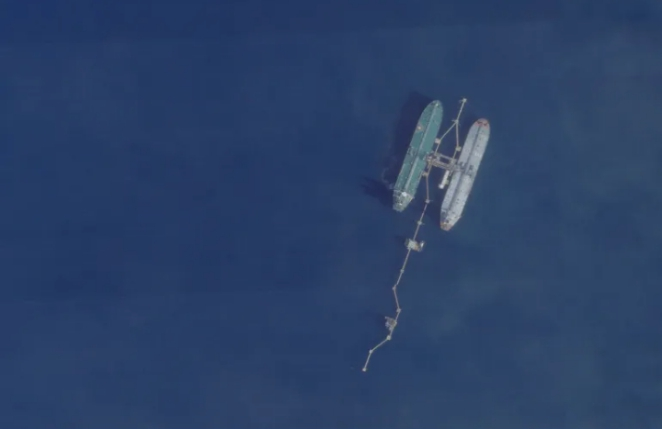
The tanker reportedly carried millions of barrels of crude oil, with documents suggesting part of the cargo was destined for Cuba, highlighting complex international oil trade and sanction networks.
Coast Guard and Homeland Security teams used helicopter insertion to seize control of the tanker, showcasing precise coordination but raising questions about legality under international maritime law.
International reaction has been critical. Russia reaffirmed support for Maduro, warning the U.S. against interference in sovereign energy resources, while Iran condemned the action as state piracy against its oil shipments.
The incident follows similar actions, including Iran’s recent seizure of a Marshall Islands-flagged tanker in the Strait of Hormuz, though the U.S. previously condemned that act as unlawful.
Analysts warn that the seizure sets a dangerous precedent, potentially destabilizing the Caribbean and increasing anti-American sentiment among Latin American nations already wary of U.S. interventions.
The operation’s focus on oil, rather than cocaine or fentanyl routes — which mainly come from Mexico, Colombia, Peru, and Bolivia — has sparked debate on whether the justification is genuine counter-narcotics.
Senator Rand Paul stressed that military involvement in foreign oil conflicts risks dragging the U.S. into war without clear national interest, emphasizing caution in overseas interventions.
Senator Chris Van Hollen added, “The cover story about drugs cannot hide that this is a step toward forcing regime change in Venezuela,” stressing transparency and congressional oversight.
Bipartisan concern has grown over whether the United States’ actions align with international law, including the United Nations Convention on the Law of the Sea, which governs maritime seizure protocols.
Experts note that while the U.S. may argue legality domestically, Venezuela and international observers are likely to dispute the authority to seize vessels in international waters, heightening tensions.
In Caracas, government officials organized rallies denouncing U.S. aggression, with Maduro warning that any attempt to claim Venezuelan oil by force would provoke resistance and strengthen national unity.
The Trump administration maintains that the seizure targets networks funding terrorist activities and narco-trafficking, but critics emphasize that the primary effect is disruption of Venezuelan oil exports.
Public opinion in the United States remains divided, with some applauding enforcement of sanctions and others fearing unnecessary escalation that could entangle America in regional conflicts.
Senator Chris Coons remarked, “I am gravely concerned about unintentional war. The lack of clear communication endangers lives and undermines American credibility abroad,” reinforcing bipartisan unease.
The Venezuelan oil tanker case has become a flashpoint for discussions about U.S. foreign policy, energy interests, and the potential risks of unilateral military operations abroad.
Experts suggest that continued escalation could destabilize the Caribbean, strain diplomatic relations, and provoke retaliatory actions from Venezuela, Iran, and allied states with vested interests.
Congressional oversight efforts, war powers resolutions, and public debate may determine whether this incident leads to further military operations or forces renewed diplomatic engagement with Caracas.
Observers stress that Venezuela’s response, combined with international scrutiny, will shape U.S. strategy, potentially prompting a reconsideration of the role of force in securing sanctioned oil resources.

The Venezuelan oil tanker seizure remains emblematic of the tension between national security, energy strategy, and international law, and will continue to dominate policy discussions in Washington and beyond.
Read more here:Venezuela tanker being brought to US as Washington Weighs More Maritime Seizures
About The Author