

The diplomatic temperature between Washington and Caracas rose sharply this week after the Venezuela tanker being brought to US shores triggered renewed global scrutiny and escalating tensions.
US officials said the oil-laden vessel was intercepted legally and would be transported to a secure American port, despite Caracas denouncing the act as “international piracy”.
White House spokesperson Karoline Leavitt insisted the operation was justified under existing sanctions, adding that Washington remained prepared to take further action if necessary.
She told reporters the US would not allow “sanctioned vessels to operate with impunity,” indicating a broader strategy aimed at dismantling black-market networks in the region.
As the Venezuela tanker being brought to US continues its journey, regional allies and adversaries are closely watching what may signal a new phase of US maritime enforcement.
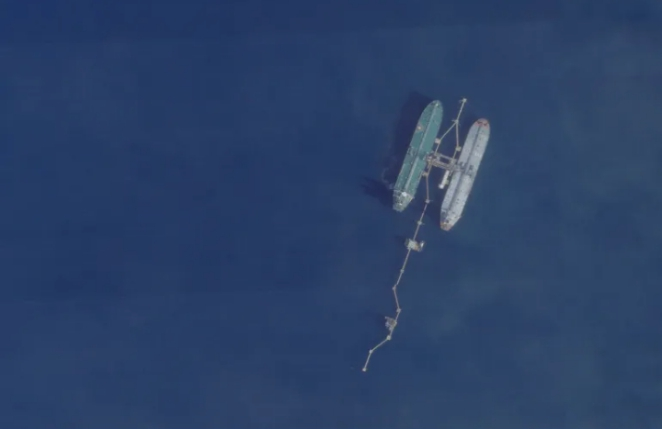
The ship is widely believed to be the crude carrier Skipper, a vessel long monitored by intelligence agencies for its alleged links to sanctioned Iranian-backed networks.
British maritime risk firm Vanguard said satellite indicators matched the Skipper’s layout, explaining that “hull markings and deck configurations aligned with known imagery”.
Washington has not publicly named the vessel, but officials privately confirmed that technical evidence supported the identification shared by independent maritime analysts.
Leavitt said the operation complied fully with US legal frameworks, though she acknowledged that diplomatic fallout with Venezuela was expected.
Caracas responded angrily, describing the interception of the Venezuela tanker being brought to US as a “flagrant violation of sovereignty” and a “premeditated act of aggression”.
Venezuelan officials accused the US of fabricating pretexts to justify broader intervention, linking it to long-running attempts to undermine Nicolás Maduro’s government.
In a televised address, Maduro said, “This is a coordinated campaign of harassment designed to strangle our economy and break our national resolve.”
The Maduro government argued that the tanker was operating within international maritime norms and had been unlawfully boarded in a calculated show of force.
US commanders, however, defended the mission as a necessary step to combat illicit oil flows they claim fund “narco-terrorist entities and destabilising actors”.
Leavitt said, “We’re not going to stand by while black-market oil enables rogue networks capable of threatening global stability.”
The tanker’s cargo—believed to be millions of dollars’ worth of crude—will remain on board until formal seizure proceedings advance through US courts.
This incident forms part of a broader pattern of US maritime seizures that have intensified under President Donald Trump’s second term.
The administration has framed these operations as a direct response to what it calls a “transnational criminal ecosystem entrenched across the Caribbean and eastern Pacific”.
Since September, US forces have conducted 22 strikes on suspected smuggling vessels, actions that critics say blur legal boundaries and risk civilian casualties.
Trump has openly embraced a more aggressive posture, telling cabinet members earlier this month, “We know where the traffickers hide. We’re going to take the fight to them.”
His remarks triggered global alarm, especially after he hinted that aerial strikes could soon target land-based infrastructure inside Venezuela.
A senior Latin American diplomat said anonymously, “The rhetoric is shifting from interdiction to pre-emptive force, and that’s what worries us the most.”
Analysts say the confrontation surrounding the Venezuela tanker being brought to US cannot be separated from escalating Caribbean military escalation.
The US recently deployed additional naval assets and surveillance aircraft to the region, reinforcing speculation that Washington is preparing for broader coercive measures.
These movements have unsettled South American governments already wary of Trump’s confrontational approach to hemispheric diplomacy.
Amid rising tensions, Russia moved swiftly to reaffirm its solidarity with Caracas, amplifying the geopolitical stakes of the confrontation.
In a call with Maduro, Russian President Vladimir Putin expressed unwavering support, saying Moscow “stands with the Venezuelan people against external pressure”.
A Kremlin statement emphasized that Venezuela–Russia strategic ties remained “strong, resilient, and firmly rooted in mutual respect for sovereignty”.
Putin praised Caracas for resisting what he called “illegitimate attempts to interfere in internal affairs through coercive force”.
The Venezuelan presidency echoed the sentiment, highlighting the “strategic and developing partnership” between the two allies.
Maduro said the conversation with Putin underscored that “our channels of cooperation remain open, permanent, and oriented toward mutual defense”.
Observers say Russia’s involvement elevates the dispute beyond a bilateral quarrel, drawing major-power dynamics into a once-regional conflict.
China, another close ally of Venezuela, has not taken as vocal a stance but reiterated that it rejects sanctions imposed “without UN authorization”.
Iran, whose networks are allegedly linked to the seized tanker, warned that further maritime raids could trigger “unpredictable consequences”.
Analysts believe Iran’s statement signals growing concern that US actions may expand toward vessels connected to Tehran’s international oil networks.
Despite these global reactions, the Trump administration insists the Venezuela tanker being brought to US is a lawful enforcement measure, not a provocation.
Critics disagree, accusing Washington of using security concerns as a cover to access Venezuela’s vast oil reserves and influence regional politics.
A European diplomat told reporters, “There is a strong perception that the US objective is regime change, not counter-smuggling.”
Trump officials deny the accusations, arguing the Maduro government has “weaponized Venezuela’s oil wealth for illicit partnerships”.
The Maduro government pressure campaign has intensified amid domestic economic collapse, political fragmentation and deep social unrest.
Opposition movements say the tanker seizure represents both a diplomatic challenge and a potential opening for renewed international negotiations.
One opposition figure remarked, “This crisis exposes the fragility of Maduro’s alliances and highlights the need for Venezuela to re-enter a rules-based global system.”
Still, many Venezuelans fear that Washington’s maritime operations could escalate into a more direct confrontation.
A university professor in Caracas said, “People worry that this is the beginning of a broader conflict that will take place on our doorstep.”
Human rights groups have raised alarms about the humanitarian consequences of any expanded military activity near Venezuelan territory.
Amnesty International warned that recent US strikes “may violate international law and put civilians at unacceptable risk”.
As the Venezuela tanker being brought to US moves closer to American jurisdiction, global markets also reacted, with oil prices experiencing brief volatility.
Energy analysts say traders are bracing for further disruptions if Washington follows through on threats of additional maritime seizures.
Economist Laura Signori explained, “Any escalation risks tightening supply routes and inflaming geopolitical uncertainty, which markets dislike.”
Meanwhile, Maduro insists Venezuela will not be intimidated, vowing to mobilize diplomatic and legal instruments to challenge the interception.
He said, “We will fight this attack through international law and through our alliances. Venezuela will not kneel.”
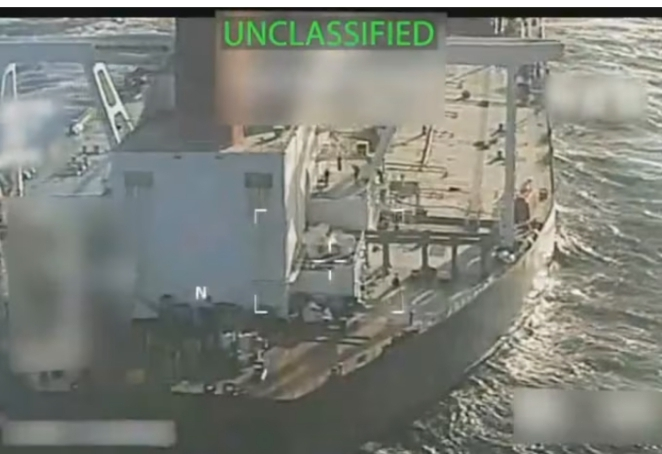
For now, the world watches as a seized oil tanker becomes the newest flashpoint in a widening confrontation involving multiple global powers.
What began as a maritime interception has evolved into a high-stakes geopolitical contest shaping the future of US-Venezuela relations.
The next steps by Washington—and the responses from Caracas, Moscow and other allies—will determine whether this crisis stabilizes or surges into deeper conflict.
About The Author


