United States President Donald Trump ignited another diplomatic storm after labeling Colombian President Gustavo Petro “a drug leader,” declaring that Trump to cut aid to Colombia effective immediately.
Trump made the announcement through his Truth Social account, alleging that Petro was encouraging illegal drug production across Colombia while accusing the United States of undermining his political agenda.
The president’s message, laden with capitalized emphasis, underscored a sudden policy shift that stunned Washington and Bogotá, with Trump asserting the aid reduction would be “total and permanent.”
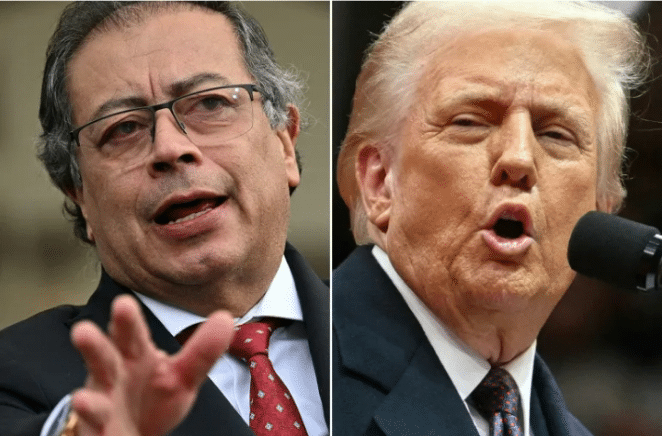
Officials in both nations scrambled for clarification after the statement, as the administration failed to specify which payments or subsidies would be affected by Trump to cut aid to Colombia.
Petro’s office swiftly condemned Trump’s remarks, calling them “reckless and defamatory,” arguing that Colombia had intensified anti-drug operations despite continued challenges tied to poverty, inequality, and cartel resurgence.
Tensions between both governments had been escalating in recent weeks following a series of United States-led strikes in Caribbean waters that Petro described as acts of murder and aggression.
On Sunday morning, Petro accused Trump’s government of violating Colombian sovereignty after a fisherman was killed in what the U.S. Navy called a counter-narcotics strike.
The Colombian president identified the victim as Alejandro Carranza, a resident of Santa Marta, who reportedly had no connection to drug trafficking but was caught in the blast radius.
Petro posted an outraged message on X, saying, “The United States has murdered one of our citizens and destroyed his family. We will not tolerate this injustice.”
He further claimed that the U.S. had invaded Colombian territorial waters, calling the strike an act of hostility inconsistent with international law, heightening the fallout surrounding Trump to cut aid to Colombia.
Washington officials maintained the Caribbean strikes were legitimate actions targeting drug-smuggling vessels, insisting the operations were conducted in neutral waters under the authority of anti-trafficking accords.
The Pentagon confirmed that two survivors of the attack were repatriated to Colombia and Ecuador, marking the sixth similar incident since September, with fatalities nearing thirty.
Despite those assertions, the Colombian government demanded explanations and justice, announcing that its attorney general’s office would pursue international legal remedies against Trump’s administration for human rights violations.
Diplomatic analysts warned that Trump to cut aid to Colombia could destabilize an already fragile partnership, undermining joint security operations and regional counter-drug coordination that had taken decades to build.
They noted that Colombia remains the world’s largest producer of cocaine, with coca cultivation rising sharply in recent years despite Petro’s promises to reform the industry through social investment.
The United Nations estimated that coca leaf production reached a record high in 2024, underscoring the enduring challenges faced by the government in rural territories controlled by criminal networks.
Trump’s decision to announce aid cuts via social media drew criticism from both Republican and Democratic lawmakers, who described it as “diplomacy by outburst,” lacking strategic consultation.
Some observers described Trump to cut aid to Colombia as a politically calculated move aimed at strengthening his “law and order” image ahead of the 2026 midterm elections in the United States.
Latin American leaders, meanwhile, reacted cautiously. Argentina’s Javier Milei called the exchange “a misunderstanding between allies,” while Brazil’s Lula da Silva urged dialogue to prevent regional polarization.
Petro’s supporters within Colombia viewed Trump’s words as an affront to national dignity, reviving memories of past U.S. interference in Latin American affairs under the guise of anti-drug policies.
Human rights advocates argued that Washington’s strikes in the Caribbean revealed an increasingly militarized approach, raising questions about the legality and moral implications of Trump’s foreign policy.
They warned that Trump to cut aid to Colombia might embolden criminal factions as security programs lose funding, jeopardizing local anti-cartel efforts dependent on U.S. financial and logistical support.
Relations between both presidents had already soured last month when the U.S. revoked Petro’s visa after he joined a pro-Palestinian rally in New York, criticizing American military policies.
During that protest, Petro called on U.S. soldiers to “disobey Trump’s inhumane orders,” sparking outrage in Washington and accusations that the Colombian leader was inciting insubordination.
Analysts at Georgetown University suggested that Trump’s unpredictable approach to Latin America could fracture decades of cooperation anchored in anti-narcotics operations, military aid, and regional intelligence sharing.
They added that Trump to cut aid to Colombia signals a turning point where ideological confrontation overrides pragmatic engagement, creating instability across the Western Hemisphere.
The move may also weaken joint missions combating illegal migration and organized crime, potentially affecting U.S. interests in the Caribbean and Central American security corridors.
Petro’s administration now faces growing domestic pressure to defend Colombia’s sovereignty without alienating a key trading partner whose economic leverage has historically shaped national priorities.
Economic experts predicted that the loss of U.S. assistance could slow development in coca-dependent regions, where aid programs fund infrastructure, education, and reintegration of ex-combatants.
Critics of Petro argue that his government’s inconsistent security policies contributed to the current crisis, making it easier for Trump to justify punitive measures to American audiences.
Others believe Trump to cut aid to Colombia was part of a broader U.S. effort to assert dominance after Petro’s alignment with progressive Latin American governments opposing Washington’s military strategies.
Petro’s allies, however, described his stance as courageous, saying Colombia must reject dependency on U.S. approval and build regional coalitions capable of defending their sovereignty.
Meanwhile, social media in both nations erupted with heated debate, with hashtags like #HandsOffColombia and #DrugWarPolitics trending as supporters and critics exchanged nationalistic arguments.
The White House declined to issue additional clarification, emphasizing that Trump’s remarks “speak for themselves,” suggesting the president’s words were intentional rather than a spontaneous outburst.
For now, Trump to cut aid to Colombia has plunged bilateral relations into uncertainty, leaving diplomats scrambling to assess whether dialogue can resume or sanctions are now politically irreversible.
What remains clear is that U.S.–Colombian relations have entered one of their most contentious phases since the 1980s, when Washington’s “war on drugs” first defined regional cooperation.
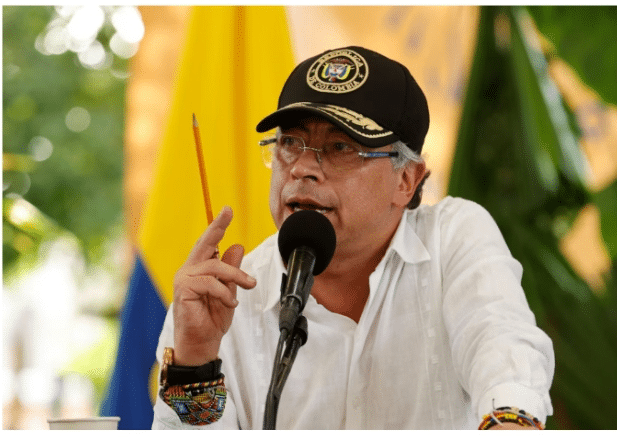
Trump’s declaration reflects his increasingly aggressive stance toward Latin America, viewing nations like Colombia, Venezuela, and Ecuador through the lens of narcotics control rather than mutual development.
As both leaders double down on rhetoric, fears grow that a full diplomatic rupture could follow, threatening decades of security partnerships that once symbolized hemispheric cooperation.
Unless cooler heads prevail, Trump to cut aid to Colombia may not only reshape bilateral relations but redefine how the U.S. engages Latin America in an era of political volatility.