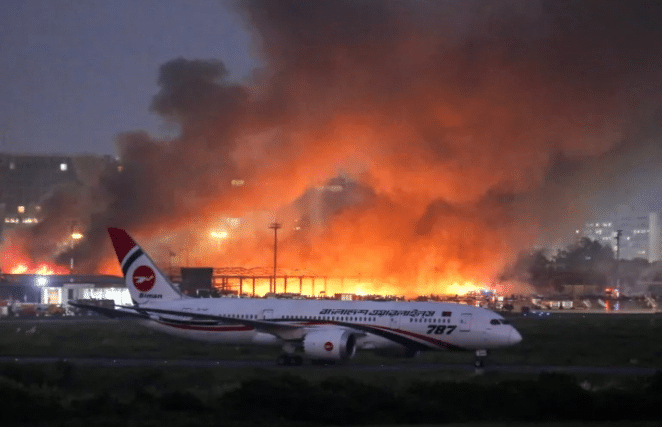
A massive fire at Dhaka’s Hazrat Shahjalal International Airport has raised alarm for Bangladesh garment exporters, destroying crucial import cargo terminals and urgent shipments vital to global supply chains.
Authorities reported that the fire engulfed the cargo import area, consuming raw materials, apparel, and product samples, creating immediate concerns for garment exporters facing losses during the peak export season.
Faisal Samad, director of the Bangladesh Garment Manufacturers and Exporters Association, described the scene as catastrophic, noting that the import section was reduced to ashes in a matter of hours.
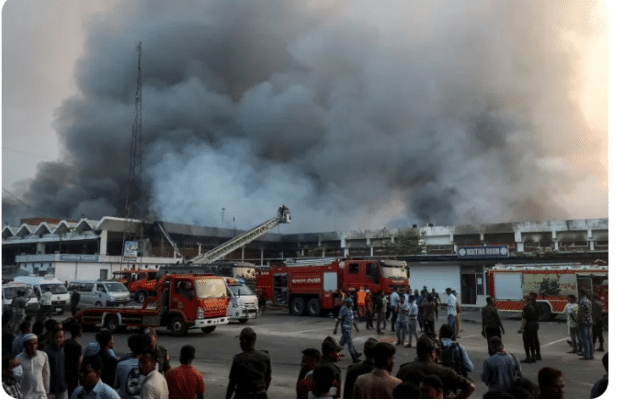
Smoke continued to rise from the burned facility as firefighters and airport officials worked around the clock, assessing the full extent of losses and potential delays for Bangladesh garment exporters.
Senior vice-president Inamul Haq Khan warned that destruction of product samples could severely compromise future business opportunities for garment exporters, particularly during the industry’s crucial October-to-December peak export season.
Bangladesh garment exporters rely heavily on timely air shipments to maintain their commitments to international clients, and the estimated $1bn losses could disrupt production schedules and delivery timelines.
The airport cargo hub handles over 600 metric tons of dry cargo daily, doubling during the peak season, highlighting why the fire represents an unprecedented logistical setback for Bangladesh garment exporters.
Approximately 200 to 250 factories send products by air each day, making delays critical. Khan emphasized that missing shipments could result in lost orders, heavily affecting garment exporters.
The cause of the blaze remains unclear, with investigations ongoing. Authorities assured swift action if sabotage or negligence is found, while Bangladesh garment exporters remain anxious about ongoing operational risks.
This fire comes after two other major incidents in Bangladesh this week, including a garment factory blaze in Dhaka killing 16 workers, increasing concerns among Bangladesh garment exporters nationwide.
Officials urged calm and assured the public that security services were thoroughly investigating all incidents while Bangladesh garment exporters prepared for delays and disruptions to supply chains.
Bangladesh’s garment sector generates about $47bn annually, employs roughly four million workers, and contributes more than a tenth of GDP, underscoring why garment exporters are critical to the country’s economy.
Losses of samples and raw materials threaten current production and the ability of Bangladesh garment exporters to secure new buyers in increasingly competitive international markets.
Exporters stressed that rapid recovery and government support are essential to mitigate damage, prevent missed deadlines, and restore confidence in garment exporters’ reliability worldwide.
Air cargo insurance and contingency plans are being reviewed, as delays could result in penalties and lost contracts, which disproportionately affect smaller Bangladesh garment exporters with fewer resources.
The government confirmed that any act of criminality or negligence resulting in such fires would be met with strong enforcement measures, providing cautious reassurance to Bangladesh garment exporters.
Supply chain analysts suggest that disruptions at Dhaka’s airport could force garment exporters to explore alternative shipping methods, including sea freight, which are slower and more expensive.
Bangladesh garment exporters already face competition from Vietnam, India, and China, making timely deliveries essential for retaining international orders and maintaining credibility during the peak export season.
Major global retailers supplied by Bangladesh garment exporters, including Walmart, H&M, and Gap, have expressed concern over shipment delays and are closely monitoring the situation to assess supply chain disruptions.
Economic experts warn that such fires could temporarily slow garment exporters’ contribution to GDP while emphasizing the need for improved fire safety measures in critical logistics hubs.
Bangladesh’s garment sector has seen rapid growth but remains vulnerable to accidents, and the recent fire highlights the operational risks facing Bangladesh garment exporters on a massive scale.
Inamul Haq Khan reiterated that the loss of product samples could affect long-term growth prospects for Bangladesh garment exporters, as these items are essential to secure new contracts abroad.
Authorities continue to investigate the fire while firefighters maintain surveillance over the damaged area, as Bangladesh garment exporters await guidance on recovery timelines and potential compensation measures.
Analysts note that the fire may influence insurance premiums and risk management strategies for Bangladesh garment exporters in the future, potentially increasing operational costs for the sector.
Efforts to restore normal airport operations are ongoing, but experts warn that Bangladesh garment exporters must prepare for lingering logistical challenges, particularly during the remaining peak season months.
The human toll and financial losses underscore the vulnerabilities faced by Bangladesh garment exporters, highlighting the importance of industrial safety and disaster preparedness across all facilities.
Exporters are collaborating with logistics providers to prioritize shipments, but experts say it may take weeks to fully recover, posing challenges for Bangladesh garment exporters’ ability to meet international delivery deadlines.
Bangladesh garment exporters emphasized that rebuilding damaged infrastructure, replacing lost samples, and securing global contracts will require coordinated efforts between the government, associations, and international buyers.
Authorities are working with insurers and airport operators to accelerate recovery, but delays may continue, reminding Bangladesh garment exporters that resilient contingency planning is essential in highly competitive markets.
Industry observers note that fires like this could reshape risk management and insurance approaches for Bangladesh garment exporters, pushing many to adopt more stringent safety measures and disaster response protocols.
The government has promised that any proven negligence or criminal activity contributing to the fire will face strict consequences, providing cautious relief to Bangladesh garment exporters concerned about recurring hazards.
Bangladesh garment exporters stress that maintaining strong relationships with global buyers is crucial, and the loss of urgent air shipments could affect their reputations and bargaining power in the global marketplace.
The incident has sparked discussions about modernizing airport cargo facilities and improving fire prevention systems, highlighting infrastructure challenges that directly impact Bangladesh garment exporters and their export efficiency.
Workers and association leaders are calling for increased safety inspections and rapid compensation mechanisms, arguing that protecting shipments is as vital as safeguarding the welfare of those employed by Bangladesh garment exporters.
The blaze at Hazrat Shahjalal International Airport underscores how a single infrastructure failure can disrupt international trade, making Bangladesh garment exporters more aware of risks and the importance of contingency strategies.
Despite the setback, Bangladesh garment exporters remain committed to fulfilling orders, while international buyers watch recovery efforts closely to ensure continuity in supply chains and maintain confidence in the country’s garment industry.
As the nation deals with both human and economic losses, Bangladesh garment exporters are at the forefront of efforts to strengthen industrial safety, improve logistics, and maintain global competitiveness in apparel exports.
The incident serves as a reminder of the vulnerability of Bangladesh garment exporters to sudden disasters, emphasizing the urgent need for coordinated responses and investments in safer, more reliable infrastructure.
About The Author