President Donald Trump has predicted that the Supreme Court may rule against him on birthright citizenship, following the court’s rejection of several of his expansive tariffs.
“The next thing you know they will rule in favor of China and others, who are making an absolute fortune on Birthright Citizenship,” Trump wrote on Truth Social.
Trump’s comment comes after the Supreme Court rejected most of his tariff policies, a move that rattled global markets and drew criticism from allies including the European Union.
The president’s executive order aimed to end automatic citizenship for children born in the U.S. if both parents lack permanent legal status, sparking significant legal challenges nationwide.
“This supreme court will find a way to come to the wrong conclusion, one that again will make China, and various other Nations, happy and rich,” Trump warned.
Critics argue that the 14th Amendment clearly guarantees citizenship to anyone born in the United States, making Trump’s executive order legally vulnerable to court challenges.
Legal experts suggest that challenging birthright citizenship would require a major reinterpretation of constitutional law, one that could have sweeping consequences for immigration policy.
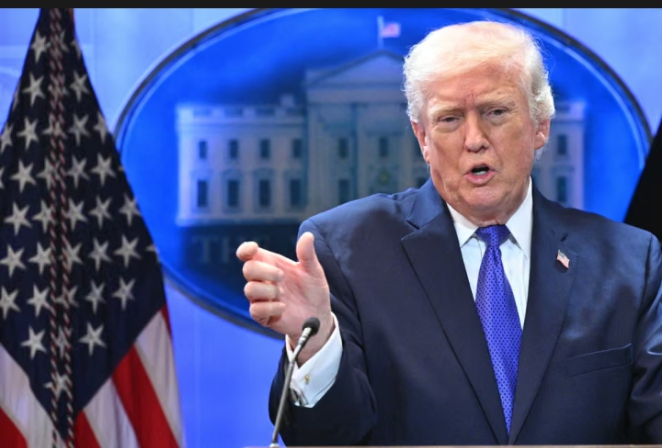
Trump’s tariffs, which were designed to protect American industries, were struck down by the Supreme Court last week, demonstrating tensions between executive actions and judicial authority.
“Let our supreme court keep making decisions that are so bad and deleterious to the future of our Nation – I have a job to do,” Trump added.
Economic analysts warn that both the tariff defeats and potential loss on birthright citizenship could fuel uncertainty in financial markets and undermine confidence among international trade partners.
Trump’s broader immigration crackdown has already drawn sharp criticism, particularly after the killing of Alex Pretti and Renee Good by federal immigration agents in Minneapolis.
The executive order, part of his second-term agenda, reflects Trump’s ongoing focus on limiting immigration and redefining the scope of citizenship in the United States.
Some legal scholars note that any ruling against Trump would uphold long-standing constitutional interpretations of the 14th Amendment, which has historically been applied broadly.
“This is about fairness and following the law, not about political convenience,” one constitutional law professor said, emphasizing the legal challenges Trump faces in court.
Trump supporters, however, argue that the president is attempting to close loopholes exploited by foreign nationals and protect American citizens’ interests.
International observers have also weighed in, with several noting that the combination of aggressive tariffs and immigration policies has complicated diplomatic relationships with allies.
The Supreme Court’s handling of Trump’s tariff policies set a precedent that may influence its eventual ruling on birthright citizenship, according to multiple analysts.
“The timing of the 14th Amendment perfectly coincided with the end of the Civil War,” Trump claimed, citing historical context to support his position on citizenship restrictions.
Opponents counter that this interpretation misrepresents historical intent, arguing that the amendment was designed to protect civil rights for all born in the U.S., including former slaves.
Political pundits suggest that Trump’s repeated clashes with the judiciary could energize his base while simultaneously fueling opposition from Democrats and moderate Republicans.
Economic uncertainty continues to grow, as markets react not only to tariff rulings but also to the possibility of broader immigration restrictions that may impact labor and commerce.
Trump’s use of Truth Social to communicate directly with the public has amplified his messaging, bypassing traditional media channels and appealing to his supporters’ sense of urgency.
“This is about making America safe and strong, and the Supreme Court must not ignore our rights,” Trump said, framing his executive order as essential to national security.
Congressional Democrats have condemned both the tariff policies and the executive order on birthright citizenship, calling for oversight and accountability in immigration enforcement.
Legal challenges surrounding birthright citizenship are expected to continue, potentially reaching the Supreme Court for a definitive ruling that could reshape American immigration law.
Observers note that any Supreme Court decision against Trump would reinforce the judiciary’s role in checking executive power and upholding constitutional protections.
“The president’s actions have real consequences for families and communities,” a civil rights advocate said, urging lawmakers to consider human rights implications alongside legal arguments.
Trump’s approach illustrates ongoing tensions between the executive branch and judiciary, highlighting the complexities of balancing national security, economic policy, and constitutional law.
Public opinion remains deeply divided, with supporters applauding Trump’s stance on immigration while critics warn of civil liberties violations and legal overreach.
Financial markets are closely monitoring developments, as investors weigh the potential impacts of judicial rulings on tariffs, trade, and immigration enforcement.
“The Supreme Court must respect the Constitution and not be swayed by political pressure,” one political analyst said, framing the upcoming decisions as critical for the rule of law.
Trump has pledged to continue pursuing both his tariff and immigration agenda, regardless of judicial setbacks, signaling an ongoing battle between presidential authority and constitutional constraints.
As the debate over birthright citizenship intensifies, the nation watches closely, aware that any ruling could have profound implications for future generations of Americans.
Read also: US-Iran nuclear talks in Geneva confirmed as Iran cites ‘encouraging signals’ and Trump escalates military pressure
About The Author