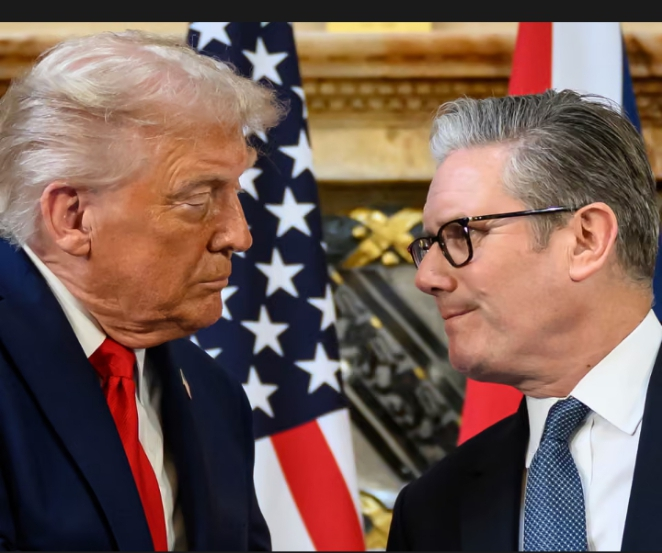
The Trump Shield of Americas summit gathered leaders from across Latin America in Miami as President Donald Trump promoted regional unity, anti-cartel coordination, and resistance to expanding Chinese political and economic influence.
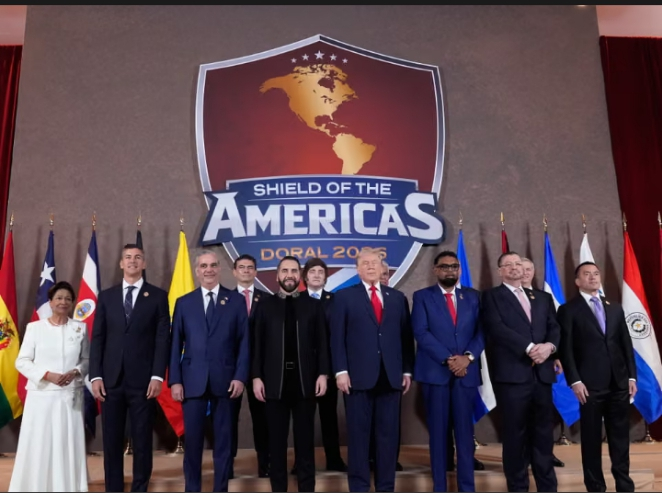
Held at Trump’s Miami-area resort, the meeting brought together twelve presidents and senior officials to discuss border security, organized crime, trade cooperation, and strategic alignment with Washington’s renewed western hemisphere foreign policy priorities.
Trump framed the summit as a decisive pivot away from Middle Eastern conflicts toward strengthening partnerships closer to home, declaring that regional stability and cooperation were now essential pillars of American national security planning.
He compared the proposed anti-cartel partnership to previous multinational coalitions targeting extremist groups, arguing that criminal networks destabilize governments, undermine economies, and threaten citizens throughout North, Central, and South America.
Calling drug cartels a hemispheric emergency, Trump emphasized that their operations fuel migration crises, corruption, weapons trafficking, and widespread violence that ripple across borders and place pressure on regional institutions.
Trump singled out Mexico as the epicenter of cartel-driven instability, arguing criminal syndicates exert growing territorial control and warning that unchecked operations could further destabilize neighboring countries.
Despite sharp criticism of cartel influence, Trump praised Mexico’s president, Claudia Sheinbaum, describing her as cooperative while insisting stronger enforcement measures were still necessary to confront escalating security threats.
A recent joint operation targeting cartel leadership was highlighted as evidence of expanding cross-border coordination, reinforcing the administration’s claim that intelligence sharing and tactical cooperation were producing tangible enforcement results.
The summit followed high-profile regional security actions, including American support for a major raid against one of the hemisphere’s most wanted traffickers, demonstrating Washington’s willingness to assist allies with complex operations.
Trump also referenced political developments in Venezuela, noting ongoing transitions and expressing optimism about cooperation with interim leadership following years of strained diplomatic and economic relations between both nations.
He mentioned detained former Venezuelan leader Nicolás Maduro, whose legal situation in the United States has remained a focal point of international political attention and regional diplomatic tension.
Speaking positively about Venezuela’s interim president Delcy Rodríguez, Trump said new channels of communication were opening, creating opportunities for security coordination, energy cooperation, and economic restructuring discussions.
Trump also predicted significant political change in Cuba, arguing economic hardship and reduced external support were pushing the country toward transformation and eventual reintegration into broader hemispheric partnerships.
Regional maritime trade routes featured prominently, with Trump stressing that foreign powers must not gain leverage over strategic waterways, specifically referencing security concerns surrounding the Panama Canal.
He warned that geopolitical rivals seek influence through infrastructure investments, loans, and technology partnerships, arguing the United States must offer stronger economic alternatives to maintain regional trust and strategic balance.
Trump informally described his approach as a modern interpretation of historic hemispheric doctrines, emphasizing sovereignty, mutual defense cooperation, and shared economic growth among democratic partners across the Americas.
The administration believes closer regional alignment can reduce dependence on distant powers while improving collective bargaining strength in global trade negotiations, digital infrastructure development, energy partnerships, and supply chain resilience initiatives.
Former Homeland Security Secretary Kristi Noem attended in a new diplomatic role after stepping down, becoming the first cabinet official to leave Trump’s second administration.
Noem emphasized sovereignty and border protection, stating that domestic enforcement successes provided a foundation for assisting neighboring countries confronting migration pressures, trafficking networks, and security vulnerabilities along porous frontiers.
She framed the coalition as a cooperative framework rather than a US-dominated bloc, insisting each member nation would retain decision-making independence while benefiting from shared resources, intelligence networks, and coordinated enforcement planning.
Noem highlighted technological tools including biometric tracking, aerial surveillance systems, and financial monitoring mechanisms designed to disrupt smuggling operations and prevent criminal networks from exploiting jurisdictional loopholes.
Secretary of State Marco Rubio praised participating governments as reliable partners, emphasizing that consistent diplomatic support strengthens alliances and ensures reciprocal commitments during security or humanitarian emergencies.
Rubio suggested dependable partnerships distinguish close allies from more distant diplomatic relationships, arguing that mutual trust encourages deeper intelligence sharing and long-term defense planning across interconnected security networks.
He stressed that economic collaboration must accompany security efforts, noting investment, manufacturing partnerships, and infrastructure financing strengthen democratic institutions while reducing opportunities for destabilizing external influence.
Defense Secretary Pete Hegseth reinforced the administration’s geographic refocus, stating that previous strategic priorities overlooked emerging threats within the western hemisphere requiring sustained military and logistical attention.
Hegseth argued that concentrating resources nearer American shores enhances rapid response capabilities during crises, improves disaster relief coordination, and strengthens maritime security across critical commercial shipping corridors.
Leaders attending represented a broad ideological spectrum, demonstrating that shared security interests can transcend political differences when confronting transnational crime, trafficking networks, and regional economic vulnerabilities.
Participating countries included Argentina, Bolivia, Chile, and Costa Rica among others seeking stronger US partnerships.
Caribbean representation featured Dominican Republic and Trinidad and Tobago, reflecting growing concern among island nations about trafficking routes, disaster resilience, and economic dependency vulnerabilities.
South American participation also included Ecuador, Guyana, and Paraguay, nations seeking expanded trade access and security technology partnerships.
Central American delegates from El Salvador, Honduras, and Panama emphasized migration pressures and cartel violence as urgent domestic political challenges.
Many leaders expressed interest in development financing, renewable energy collaboration, agricultural modernization, and digital economy expansion designed to create employment opportunities reducing crime recruitment incentives among vulnerable youth populations.
Trade incentives discussed included tariff adjustments, supply chain integration, and expanded manufacturing cooperation designed to encourage regional production networks rather than reliance on distant industrial superpowers.
Security analysts note the summit reflects Washington’s broader effort to reassert leadership influence amid intensifying global competition for strategic minerals, telecommunications infrastructure, and emerging artificial intelligence development partnerships.
Read also: Russia missile and drone strikes kill seven in Kharkiv as Ukraine issues nationwide air raid alert
Critics caution that ambitious declarations require sustained funding commitments, consistent diplomacy, and sensitivity to domestic political realities across diverse governments facing economic constraints and shifting public opinion.
Supporters argue the initiative demonstrates renewed engagement after years of perceived neglect, suggesting practical cooperation on crime prevention and economic modernization could produce measurable improvements in regional stability.
Observers also highlight symbolism, noting that hosting the summit in Miami underscored cultural and economic ties linking North America with Latin American diaspora communities influencing politics, commerce, and cross-border collaboration.
Trump concluded by emphasizing partnership over intervention, promising respect for sovereignty while encouraging joint action against shared threats undermining prosperity, safety, and democratic governance throughout the western hemisphere.
The Trump Shield of Americas summit ultimately signaled a strategic recalibration, blending security enforcement, economic diplomacy, and geopolitical competition into a unified regional agenda centered on cooperation, deterrence, and mutual development.