

As tensions across the Middle East continue to escalate, Trump rejects Iran peace proposal amid renewed diplomatic efforts to prevent a wider regional conflict. The development came after Israel and Lebanon agreed to extend their fragile ceasefire for another 45 days following talks in Washington, according to a report by The Independent.
The latest developments highlight growing uncertainty surrounding the Iran-US war, with disputes over Tehran’s nuclear ambitions, maritime security and regional alliances continuing to dominate global diplomatic discussions. Analysts warn that failure to secure meaningful negotiations could further destabilise energy markets and security across the Gulf region.
Israel And Lebanon Extend Ceasefire
The US State Department confirmed that Israel and Lebanon had agreed to prolong the 16 April cessation of hostilities for another 45 days in a bid to create room for further negotiations.
State Department spokesperson Tommy Pigott wrote on X:
“The 16 April cessation of hostilities will be extended by 45 days to enable further progress.”
The extension is viewed as a temporary diplomatic breakthrough after months of cross-border tensions involving Israeli forces and Hezbollah fighters along Lebanon’s southern frontier.
Ceasefire Offers Economic Relief
The ceasefire extension could provide limited economic relief for Lebanon, where businesses and households continue to struggle with rising inflation, reconstruction costs and weakened investor confidence after months of instability.
The World Bank previously estimated that conflict-related disruptions in Lebanon had already worsened the country’s prolonged financial crisis, with rebuilding efforts slowed by high import costs and reduced foreign investment.
Trump Rejects Iran Peace Proposal Over Nuclear Concerns
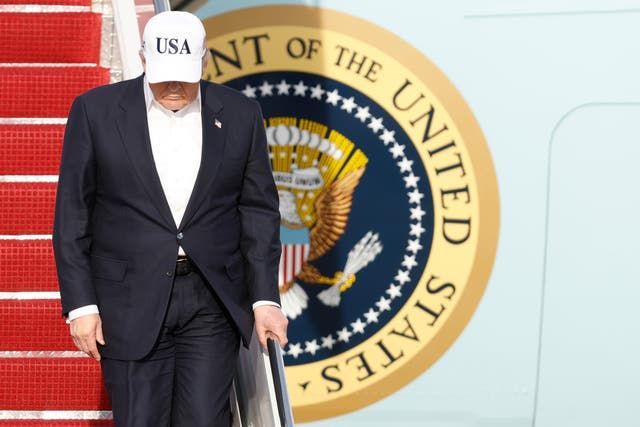
Speaking aboard Air Force One while returning from China, US President Donald Trump said he dismissed Tehran’s proposal after reading what he described as an unacceptable opening sentence related to Iran’s nuclear programme.
“If I don’t like the first sentence I just throw it away,” Trump told reporters.
He added:
“If they have nuclear in any form, I don’t read the rest.”
Trump also insisted that preventing Iran from acquiring nuclear weapons remained the central objective of US policy in the region.
Tehran Signals Distrust Of Washington
Iranian Foreign Minister Abbas Araghchi said Tehran still had “no trust” in the Trump administration despite reports that Washington was pursuing fresh negotiations aimed at ending hostilities.
Iran has reportedly outlined several conditions for future talks, including sanctions guarantees and security commitments tied to regional military activity.
Strait Of Hormuz Crisis Raises Global Concerns
The ongoing Strait of Hormuz crisis has continued to fuel fears over global energy supply disruptions, with the waterway handling roughly one-fifth of the world’s oil shipments each day.
US Energy Secretary Chris Wright expressed optimism that maritime traffic would eventually resume fully through the strategic route.
“Traffic will be flowing through the Straits of Hormuz sometime this summer at the latest,” Wright said.
Oil prices have remained volatile amid fears of attacks, seizures and military escalation involving vessels moving through the Gulf corridor.
UAE Accelerates Alternative Oil Export Plans
The United Arab Emirates has intensified construction of a major pipeline project designed to bypass the Strait of Hormuz and protect crude exports from potential blockades.
Officials believe the project could significantly reduce pressure on Gulf shipping routes while improving regional energy security if tensions with Iran continue.
Russia And China Push For Diplomacy
Russia suggested India could serve as a long-term mediator between Iran and America’s regional allies, while China criticised a proposed US-backed resolution concerning security operations in the Strait of Hormuz.
Read also:Ebola outbreak in DRC kills 65 amid fears of new virus strain
Chinese envoy Fu Cong argued that diplomacy remained the best path forward.
“What we need is to urge both sides to engage in serious and good-faith negotiations,” he said.
Global Pressure Mounts For New Talks
International powers continue to push for renewed Tehran nuclear talks as fears grow that prolonged instability could damage global trade, increase oil prices and trigger wider military confrontations across the Middle East.
Despite the Israel-Lebanon ceasefire extension, diplomatic relations between Washington and Tehran remain deeply strained, leaving uncertainty over whether meaningful progress can be achieved in the coming weeks.
About The Author
