Donald Trump has publicly suggested a controversial approach to ending the Ukraine-Russia conflict, advocating Donbas partition, a region which naturally belong to Ukraine but with most areas now under Russian control as a result of the war.
The proposal followed a tense White House meeting with Ukrainian President Volodymyr Zelenskyy, highlighting growing disagreements over military strategy, long-term sovereignty, and US foreign policy on Ukraine.
“They can negotiate something later on,” Trump said, suggesting an immediate halt to fighting along the current frontline to prevent further casualties in Donetsk and Luhansk regions.
According to sources briefed on the discussion, Trump privately encouraged Zelenskyy to cede portions of territory in eastern Ukraine, reflecting his belief in a pragmatic resolution to the conflict.
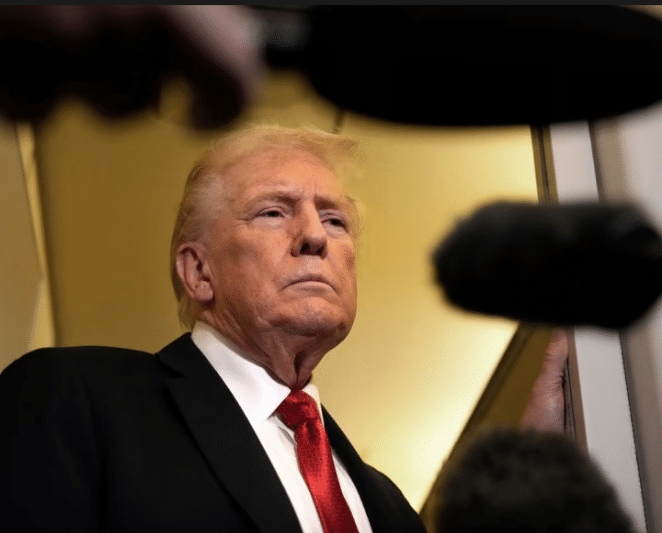
Trump’s statements mark a significant reversal from his September remarks, when he claimed Ukraine could reclaim all lost territories and even strike deeper into Russian-held areas.
During the White House meeting, Trump emphasized that the frontline in the Donbas region represents a practical baseline for temporary peace while avoiding unnecessary bloodshed.
“Let it be cut the way it is,” Trump told reporters aboard Air Force One, advocating that both sides stop fighting and negotiate later without escalating hostilities.
Zelenskyy traveled to Washington seeking Tomahawk missiles for Ukraine, long-range weapons intended to extend striking capabilities deep into Russian territory, including strategic military sites near Moscow.
Despite weeks of lobbying, the Ukrainian delegation left without approval for the missiles, marking a setback in its efforts to strengthen defensive and offensive operations in contested regions.
Trump appeared encouraged by a Thursday phone call with Vladimir Putin, in which both leaders reportedly agreed to meet in Budapest to discuss a potential resolution to the Ukraine-Russia conflict.
Sources indicated that Putin proposed a territorial swap, retaining control of Donetsk and Luhansk regions while returning small areas in Zaporizhzhia and Kherson to Ukraine.
US special envoy Steve Witkoff reportedly urged Ukrainian officials to seriously consider the swap, emphasizing US support for a negotiated end to hostilities rather than prolonged warfare.
Trump’s Fox News interview suggested that some territorial concessions may be inevitable, framing them as a practical compromise in the protracted Ukraine-Russia conflict and a step toward peace.
“Well, he’s going to take something,” Trump said of Putin, arguing that previous Russian gains make concessions necessary if both sides wish to end fighting quickly.
After meeting Zelenskyy, Trump posted on social media that talks were “very interesting and cordial” while underscoring the need to “stop the killing and make a DEAL.”
The Ukrainian delegation reportedly left frustrated, reflecting concerns that the US may prioritize a rapid ceasefire over Ukraine’s territorial integrity and sovereignty in the Donbas region.
While Trump clarified that Ukraine would not need to surrender all of Donbas, his advocacy for halting hostilities along current lines has raised eyebrows among European allies and military experts.
Zelenskyy called for decisive international support, warning that Ukraine would not reward acts of aggression or compromise on its national sovereignty, urging continued coalition backing.
“Ukraine will never grant terrorists any bounty for their crimes, and we count on our partners to uphold this very position,” Zelenskyy said on social media on Sunday.
Observers note that Trump’s plan emphasizes an immediate stop to the fighting, whereas Zelenskyy stresses the importance of maintaining military pressure and reclaiming occupied territories.
The White House meeting revealed internal debate over strategy, with some US officials advocating rapid agreement and others cautioning that concessions may embolden Russian aggression in the Donbas region.
Trump’s stance represents a potential shift in US foreign policy on Ukraine, prioritizing peace via territorial compromise rather than unconditional support for Ukrainian territorial recovery.
European leaders have reacted cautiously, balancing continued backing for Ukraine with recognition of US influence over potential peace agreements and avoiding direct escalation with Russia.
Analysts warn that partitioning Donbas could freeze conflict lines, creating long-term instability and potentially setting a precedent for territorial disputes in Eastern Europe.
Supporters argue, however, that an immediate ceasefire along current lines may save lives and prevent further destruction in the Donetsk and Luhansk regions.
Trump highlighted the need to stop fighting now, stressing that detailed negotiations on territory can occur later once hostilities are paused to reduce casualties and destruction.
Critics contend that partitioning Donbas favors Russian territorial ambitions, potentially undermining Ukrainian sovereignty and reinforcing Kremlin narratives of victory despite ongoing conflict pressures.
Ukraine’s allies stress the need for continued military support, enforcement of sanctions, and diplomatic pressure on Russia to protect sovereignty and maintain deterrence in Eastern Europe.
Trump’s comments are likely to intensify debates in Washington over the US role in the Ukraine-Russia conflict, weighing military, economic, and political implications of a Donbas partition.
The Ukrainian government faces a difficult decision: accept partial territorial compromise to save lives, or continue fighting to regain all occupied regions, with uncertain prospects and ongoing human costs.
Trump suggested that negotiations over specific territories should follow an immediate cessation of fighting at current lines, postponing detailed territorial agreements until later diplomatic discussions.
Critics fear that leaving Donbas partitioned may entrench divisions and lead to recurrent conflict, while proponents argue it may offer a pragmatic path to temporary peace in the region.
Zelenskyy faces the challenge of balancing urgent security requirements with long-term sovereignty objectives as US pressure and Russian territorial claims converge on Ukraine’s strategic decisions.
Trump’s approach also reflects broader concerns about war fatigue in the US, with political actors and public opinion increasingly focused on minimizing American involvement and avoiding escalation.
While Trump emphasizes negotiation and compromise, Zelenskyy continues to call for firm international support, stressing the stakes of Ukrainian resistance to Russian occupation of Donetsk and Luhansk.
The situation highlights the tension between achieving quick peace via concessions and defending Ukrainian territorial integrity at potentially high human and economic cost.
Trump’s remarks may shape upcoming diplomatic meetings, influencing US policy and Ukraine’s approach to negotiations with Russia and European allies in the Ukraine-Russia conflict.
Analysts stress that partitioning Donbas must consider humanitarian consequences, including displaced populations, civilian safety, and long-term regional stability, underscoring the complexity of peace negotiations.
Trump frames his proposal as a practical solution to stop immediate bloodshed, reflecting a transactional approach prioritizing ceasefire over long-term territorial justice in Eastern Ukraine.
Global attention remains on Ukraine’s response, Western support, and Russian calculations, with the Donbas region emerging as a key focal point in the conflict and diplomatic negotiations.
Partitioning Donbas illustrates challenges of modern conflicts, where military realities, political pressures, and international diplomacy converge, complicating the resolution of longstanding territorial disputes.
Zelenskyy’s decisions will be critical, balancing immediate security assistance with preserving Ukrainian sovereignty and long-term claims over contested regions like Donetsk and Luhansk.
The White House meeting demonstrates US influence on the conflict’s trajectory, with Trump’s proposals highlighting the potential power of American mediation in shaping regional outcomes.
Trump’s advocacy for partition may set a precedent for resolving territorial disputes elsewhere, raising questions about international norms, sovereignty, and the principles guiding conflict resolution.
While both sides express willingness to negotiate, fundamental disagreements over territorial concessions suggest any resolution will require extensive diplomacy, compromise, and sustained international engagement.
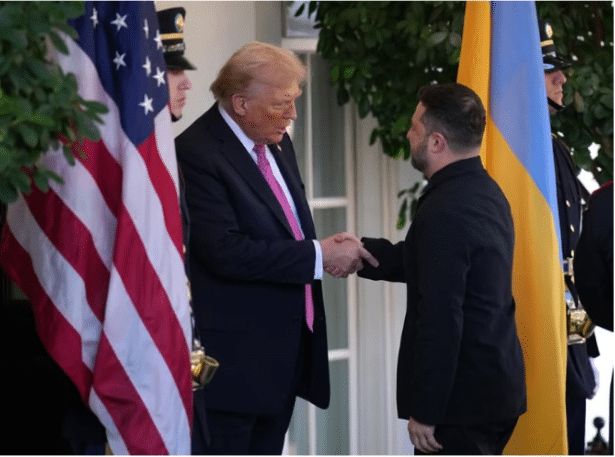
As Ukraine evaluates its options, global stakeholders are closely watching, with Donbas partition representing both a possible end to immediate hostilities and a source of long-term tension.
The stakes remain high, including human lives, regional stability, and international credibility, as Trump’s proposal challenges traditional approaches to conflict resolution in Eastern Europe.
About The Author