Yet in both tone and timing, the Trump-Putin phone call once again underscores how one conversation between two powerful men can redefine the fate of an entire nation.
The recent Trump-Putin phone call has significantly altered diplomatic momentum between Washington, Moscow, and Kyiv, with Ukrainian officials expressing frustration and concern over potential delays in promised Western weaponry.
According to sources close to the White House, the Trump-Putin phone call lasted more than two hours and centered on Russia’s warnings against supplying Tomahawk missiles to Ukraine.
Russian President Vladimir Putin reportedly urged his American counterpart to “avoid unnecessary escalation,” describing the Tomahawk missiles as “a direct threat to Russian security interests” if deployed in Ukrainian hands.
The Trump-Putin phone call came just as Ukrainian President Volodymyr Zelenskyy prepared to visit Washington, a trip initially expected to secure Kyiv’s long-sought approval for Tomahawk missiles.
But after speaking with Putin, President Donald Trump appeared to soften his stance, telling reporters, “We have many Tomahawks, but we need them for America too.”
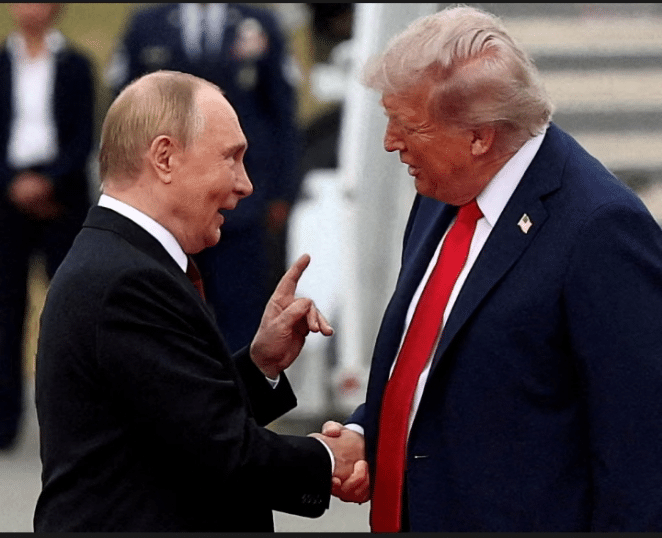
That brief comment, delivered from the Oval Office, instantly dampened Kyiv hopes that the White House would finally authorize the delivery of the long-range missiles to Ukraine’s military.
A senior US official, speaking anonymously, said the Trump-Putin phone call “definitely changed the temperature of the discussion,” signaling a pause in Ukraine’s request for strategic weapons.
“We could feel the hesitation creeping in,” the source explained. “Before the call, the president was leaning toward approval. Afterward, the tone was completely different.”
Ukrainian diplomats had seen the proposed weapons package as vital to leveling the battlefield, believing Tomahawk missiles could give them unprecedented reach against Russian positions deep inside occupied territory.
“The entire defense strategy was pinned on that deal,” one Kyiv official said. “Now everything is uncertain again, and our soldiers feel betrayed.”
Analysts say the Trump-Putin phone call reflects a familiar pattern in Trump’s foreign policy, where personal rapport often trumps geopolitical consistency or allied expectations.
“Each time Trump appears ready to side with Kyiv, Putin calls, and suddenly the message changes,” remarked John Foreman, a former British defense attaché to Moscow.
In the wake of the Trump-Putin phone call, Trump also announced plans to meet Putin in Budapest for what is being described as an informal Hungary summit.
The proposed Hungary summit would mark the second direct Putin-Trump meeting since Trump began his second term, the previous one in Alaska ending without any major diplomatic breakthrough.
Hungarian Prime Minister Viktor Orbán confirmed he had spoken with both leaders, saying, “Preparations for the USA-Russia peace summit are under way, and Budapest stands ready to host.”
Orbán, known for his warm relations with both Moscow and Washington, has long promoted Hungary as a bridge between East and West, despite EU unease over his close ties to Putin.
During the Trump-Putin phone call, the Russian president is said to have proposed concrete discussion points for the Hungary summit, focusing on ceasefire mechanisms and sanctions relief.
Putin’s spokesperson, Dmitry Peskov, later hinted that the Putin-Trump meeting might occur “within weeks,” though logistical issues remain, especially regarding Putin’s travel under EU sanctions.
As a signatory to the International Criminal Court, Hungary would technically be obliged to arrest Putin upon arrival, though Orbán has publicly dismissed that possibility.
“There is no question of arrest,” Hungarian Foreign Minister Péter Szijjártó told reporters. “We are a sovereign nation, and we will receive the Russian leader respectfully.”
Zelenskyy, who landed in Washington hours after the Trump-Putin phone call, avoided public comment, though aides admitted privately that the news from Budapest had “sapped morale” in Kyiv.
“The president knows the optics are terrible,” one Ukrainian aide said. “The Hungary summit now overshadows his entire visit to Washington and undercuts his negotiating leverage.”
A Western intelligence source described the Trump-Putin phone call as “another masterclass in psychological timing” from Moscow, noting that the Kremlin contacted Trump precisely as Kyiv prepared new requests.
“Putin plays the long game,” the source said. “Every Putin-Trump meeting, even when informal, serves to reposition Russia in the global conversation and weaken Ukrainian expectations.”
Trump, however, painted the conversation in lighter tones, telling journalists, “I asked him, half-jokingly, ‘Would you mind if I gave a few Tomahawks to your opposition?’”
“He didn’t like that idea,” Trump added with a smile. “You have to joke sometimes. It’s a serious world, but humor helps.”
Inside Kyiv, officials struggled to hide disappointment. “We had Kyiv hopes tied directly to this administration,” said Andrii Sybiha, Ukraine’s foreign minister. “But our patience is not infinite.”
Sybiha later posted on X that “the very fact Putin called shows his fear of Ukraine’s potential with Tomahawk missiles,” adding, “strength creates peace, weakness invites war.”
Despite public optimism from some Ukrainian quarters, military commanders privately admitted the setback could delay long-range strike plans by several months or more.
“The Trump-Putin phone call effectively froze momentum,” one defense officer said. “Our air defense units were already planning integration protocols for Tomahawk missiles.”
Meanwhile, Washington insiders said Vice-President JD Vance cautioned against overestimating the immediacy of any peace deal, telling Newsmax that “the two sides remain far apart in expectations.”
Vance explained that while Trump’s diplomacy could “open channels,” the Putin-Trump meeting would “require more groundwork before any meaningful progress toward a settlement can occur.”
European diplomats reacted warily to news of the Hungary summit, with some privately warning that Trump’s unilateral approach risked undermining NATO unity and emboldening the Kremlin.
A senior EU official in Brussels remarked, “Whenever there’s a Trump-Putin phone call, European cohesion trembles. The alliance spends weeks recalibrating its collective message.”
The White House, however, insists that Trump remains “fully committed” to ensuring European security and that the Hungary summit aims only to “pursue lasting peace and stability.”
Critics in Washington accused the president of allowing personal relationships to cloud strategic judgment, arguing that every Putin-Trump meeting tends to leave allies more uncertain.
Former National Security Council staffer Fiona Hill observed, “Putin understands Trump’s psychology. Flattery and familiarity go a long way, often at Kyiv’s expense.”
As diplomatic circles prepare for the Hungary summit, questions remain about whether Putin will physically attend, given ongoing arrest warrants and airspace restrictions across much of Europe.
Peskov said, “The route is still under discussion,” but insisted the Putin-Trump meeting “will happen one way or another because dialogue is essential for world peace.”
Some observers speculate that Putin may travel via non-EU states to circumvent sanctions, using the opportunity to frame himself as a pragmatic negotiator rather than a pariah.
“The Trump-Putin phone call was stage one,” said a European analyst. “Stage two will be Budapest, and that’s where the real theater begins.”
Trump allies describe the president’s move as “bold diplomacy,” while critics see a pattern of concession cloaked in charisma, especially when Kyiv hopes depend on uncertain promises.
“It’s classic Trump,” said a Republican strategist. “He wants to be the dealmaker who ends the war, even if that means rewriting established commitments to Ukraine.”
Whether that ambition materializes remains unclear, but for now, Ukraine stands on edge, watching each Trump-Putin phone call and Putin-Trump meeting with anxious anticipation.
“The outcome of that call will echo for months,” said one Western diplomat. “Every phrase, every pause, reshapes the battlefield more than any missile ever could.”
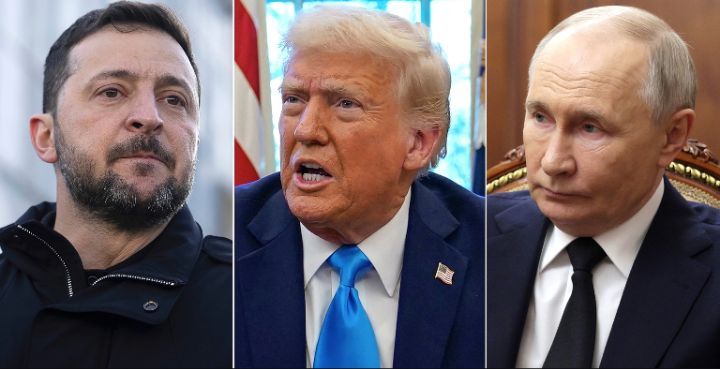
As Zelenskyy continues his Washington visit, he faces the unenviable task of reigniting American enthusiasm while the world’s attention shifts toward Budapest’s upcoming Hungary summit.
For Ukraine, the immediate challenge lies in maintaining Western confidence despite fading Kyiv hopes, ensuring its allies see the cause as essential to global stability.
About The Author