Trump prescription drug prices claim sparks political controversy
The Trump prescription drug prices claim has triggered fresh controversy after the White House celebrated a major fall in medication costs, while experts pointed instead to a policy introduced during Joe Biden’s presidency.
The dispute centres on data showing prescription drug prices fell by 3.1% in July, representing the sharpest year-over-year decline in more than 60 years, according to Consumer Price Index figures.
Trump presented the development as evidence that his administration’s policies were delivering cheaper medicines for Americans, publicly displaying a Washington Post headline during a staged interaction with reporters.
The president appeared eager to ensure the headline received maximum attention, holding up a printed copy and repeatedly encouraging journalists to capture the moment on camera.
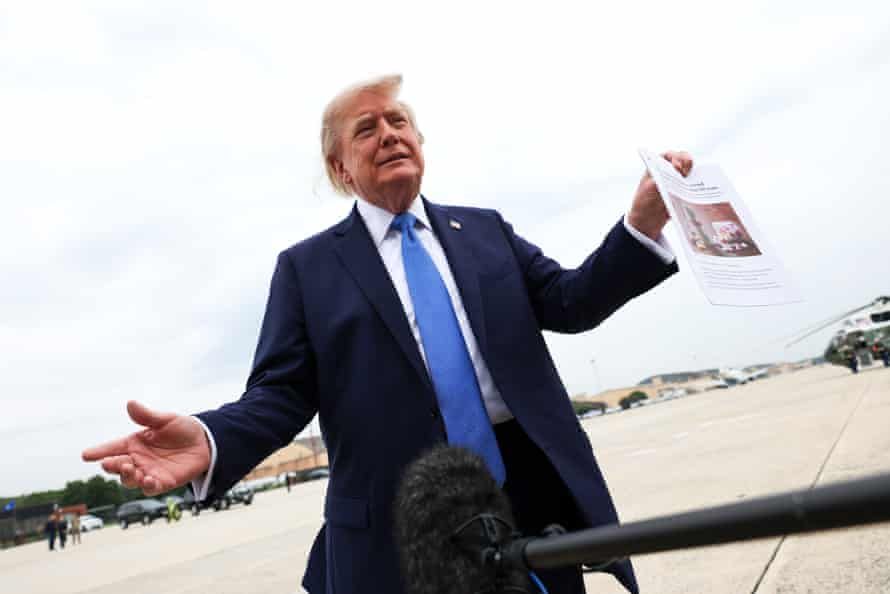
“The headline today is exactly that,” Trump said, before reading the headline aloud and asking reporters: “Did you see it?”
White House celebrates the reported price drop
The White House subsequently circulated an image of Trump holding the newspaper report across social media, presenting the headline as confirmation of his administration’s success on prescription costs.
The official White House caption accompanying the photograph declared: “POV: you bring the receipts.” Press secretary Karoline Leavitt also shared the image, reinforcing the administration’s message.
However, the newspaper article itself contained important context that was absent from the White House presentation, raising questions about whether Trump could reasonably claim responsibility for the decline.
According to experts quoted in the report, the stronger explanation was a Medicare drug-price negotiation programme created under Biden’s Inflation Reduction Act, which became law in 2022.
Biden-era Medicare policy enters the debate
Experts question Trump’s interpretation
The Inflation Reduction Act introduced negotiations between Medicare and pharmaceutical companies over prices for selected expensive prescription medicines, with the first negotiated reductions taking effect this year.
Only 10 medicines initially had their prices negotiated under the programme, but experts said their widespread use meant the changes could influence broader prescription-drug price measurements.
Richard Frank, a Harvard health economics professor emeritus, questioned whether Trump’s policies were responsible for the decline and pointed towards the earlier legislation instead.
“If I was a betting guy on what mattered most, it would be probably stuff around the Inflation Reduction Act,” Frank told the Washington Post, adding that Trump’s measures would not be where he would place his money.
Stacie Dusetzina, a health policy professor at Vanderbilt University, similarly argued that Biden’s legislation offered a more convincing explanation for the falling prices than initiatives introduced by Trump.
The disagreement illustrates an important distinction between announcing lower prices and establishing which government policy actually caused those prices to fall.
While the Trump administration may welcome the economic development, determining its cause requires examining when policies were introduced, when they became effective and which medicines were affected.
What the drug-price data shows
Consumer Price Index data released by the Bureau of Labor Statistics showed prescription drug prices fell 3.1% in July, according to the report.
That decline represented the largest year-over-year fall in prescription drug prices in more than six decades, making it politically significant for an administration seeking to demonstrate progress on healthcare affordability.
Trump has repeatedly made lower healthcare costs a political priority, particularly prescription medicines, which remain a major financial burden for millions of American households.
The July figures therefore provide the White House with an attractive statistic, even though economists cited in the reporting have challenged the administration’s interpretation of what caused the decline.
The distinction matters because prescription prices can be influenced by several factors, including government negotiations, pharmaceutical pricing decisions, market competition, insurance arrangements and changes in the medicines included in official price measurements.
Trump administration doubles down on its message
White House officials promote Trump’s role
Steven Cheung, the White House communications director, also shared the Washington Post headline on X without providing the full article’s context.
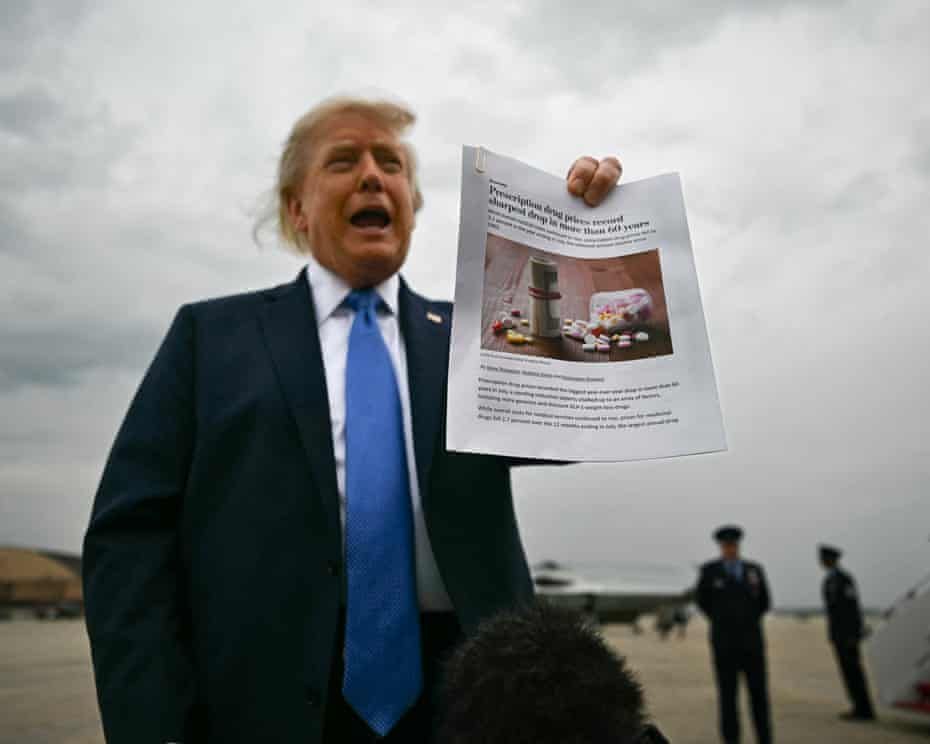
“All thanks to President Trump!” Cheung wrote alongside the screenshot, presenting the reported price reduction as an achievement directly attributable to the president.
That framing contrasts sharply with the assessment offered by independent experts, who pointed to the Inflation Reduction Act as the more likely explanation for at least part of the decline.
The political disagreement is therefore not primarily about whether prescription medicines became cheaper in July. The available data confirms that prices declined.
Instead, the dispute concerns credit, timing and causation, with the Trump administration seeking political recognition while economists highlight the delayed impact of legislation enacted several years earlier.
For Trump, the issue offers an opportunity to argue that his economic policies are producing tangible benefits for Americans. For critics, however, the episode demonstrates the danger of claiming credit for developments that may have originated under previous administrations.
Why Medicare negotiations matter
The Medicare negotiation programme represents one of the most significant changes to prescription-drug pricing introduced by the federal government in recent years.
Under the Inflation Reduction Act, Medicare began negotiating prices for selected medicines commonly used by older Americans, with negotiated prices taking effect at the beginning of 2026.
Experts cited in the report said the selected medicines are sufficiently common that their lower prices could be reflected in the prescription-drug component of national inflation measurements.
That means the timing of the July decline is particularly important. Although Trump is now president, the policy responsible for some of the reduction was created before he returned to the White House.
The situation demonstrates how economic policies frequently produce effects months or years after legislation is passed, making political attribution considerably more complicated than simply comparing dates.
What the figures could mean for Americans
Lower prescription costs would nevertheless represent positive news for American consumers regardless of which administration receives the political credit.
Families struggling with expensive medicines could benefit from falling prices, while older Americans relying heavily on prescription drugs could potentially experience meaningful savings if the trend continues.
The key question now is whether July’s decline represents the beginning of a sustained reduction or a temporary movement influenced by particular medicines and market conditions.
The Trump administration will likely continue highlighting the figures as evidence of progress, particularly because prescription-drug affordability was an important part of the president’s healthcare agenda.
Meanwhile, supporters of Biden’s Inflation Reduction Act can point to the implementation of Medicare negotiations as evidence that policies introduced during his administration are now producing measurable effects.
The competing narratives are likely to continue as more monthly inflation data becomes available and economists assess whether the decline can be sustained.
Trump faces a battle over credit
The Trump prescription drug prices claim ultimately highlights a broader political battle over economic achievements and who deserves recognition for changes experienced by American consumers.
Trump’s public presentation of the Washington Post headline was designed to communicate a simple message: prescription drugs are falling sharply and his administration deserves credit.
Read also: USS Abraham Lincoln sailors face growing mental health concerns
But the evidence presented by experts introduces a more complicated explanation, particularly because Medicare’s negotiated prices only recently began taking effect.
The episode could therefore become another example of how political messaging can simplify economic developments that are shaped by policies from multiple administrations.
For consumers, however, the most important issue may be whether lower prescription costs continue. If prices keep falling, the political argument over responsibility could become increasingly intense.
For now, the figures provide good news for Americans facing high medication bills, while the question of who deserves credit remains firmly contested between Trump’s White House and supporters of Biden’s healthcare reforms.
Read more: Ireport247news
About The Author