

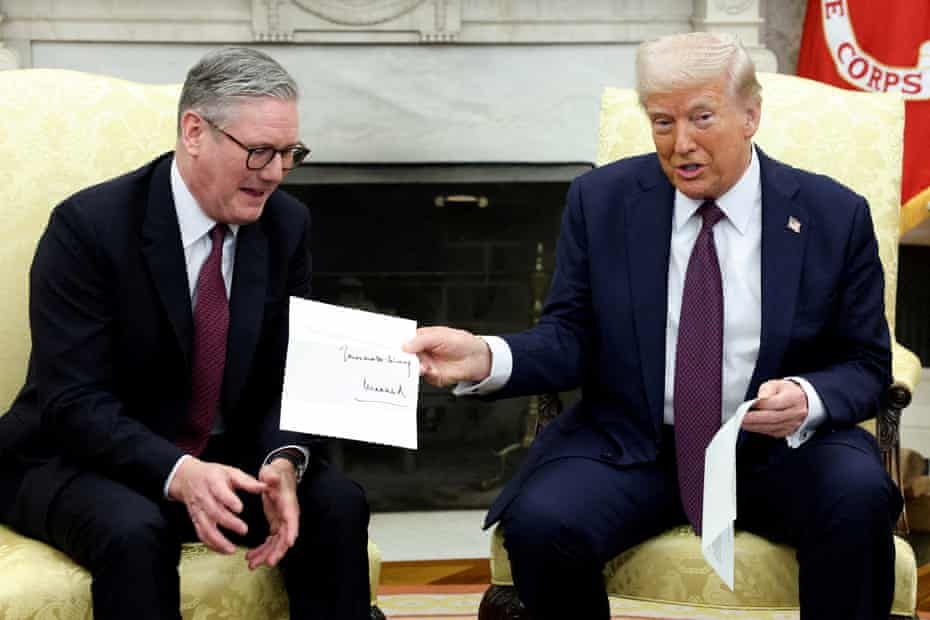
The Trump mocks Starmer episode has intensified diplomatic tensions, as the US president criticised Britain’s response to the Hormuz crisis during a private White House Easter gathering.
In the remarks, Donald Trump mocks Keir Starmer, portraying the British leader as hesitant over deploying naval assets to the Middle East amid escalating tensions with Iran.
Trump reportedly impersonated Starmer, claiming the UK prime minister said he needed to consult advisers about sending “two old broken-down aircraft carriers” to the region.
The comments reflect ongoing frustration in Washington over Britain’s cautious stance, particularly as London leads diplomatic efforts to reopen the strategically vital Strait of Hormuz shipping route.
During the private event, Trump remarked, “Britain should be our best ally, but they haven’t been,” signalling dissatisfaction with the UK’s reluctance to engage militarily.
The Trump mocks Starmer controversy has drawn attention to differences in transatlantic approaches, with the UK prioritising diplomacy while the US has taken a more assertive posture.
British officials have emphasised the importance of de-escalation, arguing that military involvement could further inflame tensions in an already volatile region.
Analysts suggest Trump’s remarks may resonate with critics of the UK’s defence capabilities, particularly regarding the readiness and effectiveness of its aircraft carriers.
This is not the first time Trump has criticised British naval power, previously dismissing UK carriers as “toys” and questioning their operational value.
The Trump mocks Starmer narrative underscores broader concerns about defence spending and military preparedness within the United Kingdom.
Supporters of the UK government argue that diplomatic leadership, rather than military escalation, remains the most effective path to resolving the crisis.
They point to Britain’s role in coordinating international discussions aimed at ensuring safe passage through the Strait of Hormuz.
Meanwhile, critics contend that stronger military backing may be necessary to deter further disruptions to global shipping routes.
The remarks also highlight personal tensions between Trump and Starmer, adding a political dimension to an already complex geopolitical situation.
Observers note that such public criticism can strain alliances, particularly when coordination is crucial in addressing shared security challenges.
The Trump mocks Starmer incident comes at a time when unity among Western allies is seen as essential in managing the fallout from regional instability.
Energy markets remain sensitive to developments in the Strait of Hormuz, given its importance as a key oil transit corridor.
Any prolonged disruption could have significant economic implications, affecting oil prices and global supply chains.
The UK’s measured approach reflects concerns about unintended consequences, including the risk of escalation into a wider conflict.
Trump’s comments, however, suggest a preference for a more robust show of force to protect strategic interests.
The Trump mocks Starmer episode may influence public debate in the UK regarding defence policy and international engagement.
Political opponents could use the remarks to question the government’s handling of the crisis and its commitment to national security.
At the same time, supporters may argue that resisting external pressure demonstrates strategic independence and sound judgement.
Diplomatic efforts to reopen the shipping lane continue, with Britain playing a central role in negotiations involving multiple stakeholders.
The situation remains fluid, with ongoing discussions aimed at balancing security concerns with the need to avoid further escalation.
The Trump mocks Starmer controversy illustrates how rhetoric can shape perceptions and influence policy debates during times of crisis.
It also highlights the challenges of maintaining strong alliances while navigating differing strategic priorities.
Experts warn that public disagreements between allies can embolden adversaries and complicate coordinated responses.
Nevertheless, both the US and UK share a common interest in ensuring stability and protecting global trade routes.
Read also:Ukraine-Russia war latest: Trump’s threat to withdraw from Nato ‘is Putin’s dream plan’, says Tusk
The incident has sparked renewed scrutiny of military capabilities and the role of diplomacy in addressing modern security threats.
As tensions persist, the Trump mocks Starmer narrative is likely to remain a focal point in discussions about leadership and alliance dynamics.
Ultimately, the effectiveness of diplomatic and military strategies will determine how the crisis unfolds in the coming weeks.
For now, the episode serves as a reminder of the complex interplay between politics, security, and international cooperation.