

Trump Iran war powers clash: A quiet procedural move inside Washington has triggered a louder constitutional storm, as lawmakers clash over authority, accountability, and the limits of executive military action in modern America.
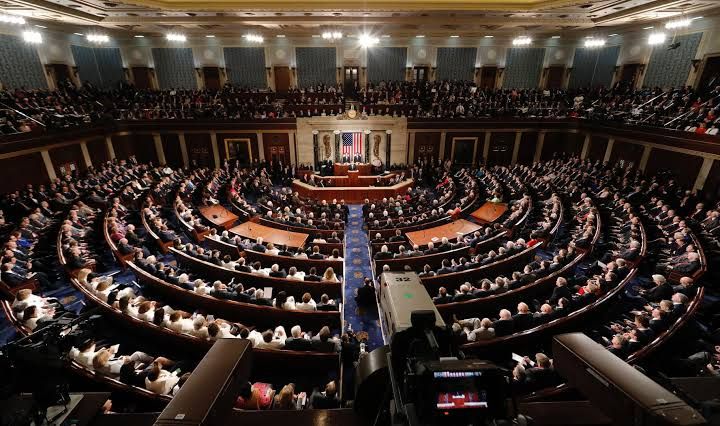
In a near-empty chamber, decisions made within seconds are now echoing globally, raising urgent questions about democracy, war legitimacy, and whether institutional safeguards still function under intense political pressure.
The Trump Iran war powers clash intensified Thursday after Republicans blocked a Democratic attempt to halt ongoing U.S. military operations targeting Iran without explicit congressional approval from lawmakers.
Democrats described the maneuver as a “procedural ambush,” warning it undermines constitutional balance, while Republicans defended it as a necessary protection of presidential authority during fast-moving global security crises.
The blocked resolution sought to compel the president to seek authorization before launching further strikes, reflecting mounting concern over unilateral decisions shaping international conflict without legislative oversight or broader accountability.
Representative Sara Jacobs declared, “Threatening genocide is not a negotiating tactic,” referencing escalating rhetoric that has alarmed lawmakers concerned about humanitarian law and the global implications of unchecked military escalation.
A Procedural Block with Strategic Consequences
The House session, described as “pro forma,” ended abruptly before Democrats could introduce their motion, effectively shutting down debate and preventing a vote on limiting executive war powers authority.
Republican leadership insisted the move followed established rules, but critics argue it reflects a broader pattern of avoiding substantive scrutiny over military engagements initiated without transparent congressional consultation or approval.
Despite the setback, Democratic leaders pledged to revisit the issue, promising renewed legislative action aimed at forcing a formal vote once Congress reconvenes after its Easter recess period.
They argue repeated failures to pass such resolutions reveal systemic weaknesses, where political alignment often overrides institutional responsibility, especially when the presidency and congressional majority share partisan loyalty.
Constitutional Questions and Political Calculations
At the heart of the dispute lies a constitutional tension: while Congress holds the authority to declare war, presidents retain powers to conduct limited military operations without prior approval under certain conditions.
The White House maintains that current actions fall within those limits, framing them as defensive and necessary responses to immediate threats posed by Iranian activities and regional instability concerns.
However, critics insist that such interpretations stretch executive authority beyond its intended scope, effectively allowing prolonged military campaigns without democratic endorsement or meaningful legislative oversight mechanisms.
Representative Madeleine Dean argued, “Impeachment is a constitutional provision to rein in an unscrupulous, thoughtless president,” signaling a dramatic escalation in rhetoric from previously cautious Democratic leadership circles.
The Return of Impeachment Talk
For months, many Democrats avoided discussing impeachment, wary of political backlash and historical precedent, particularly given previous failed attempts during earlier phases of Donald Trump’s political career.
That restraint is now eroding rapidly, with lawmakers openly debating constitutional remedies, including invoking the 25th Amendment, amid concerns about decision-making processes and the broader implications of military escalation.
Dean added, “There is literally a list of high crimes and misdemeanors,” suggesting that future electoral outcomes could determine whether such measures transition from rhetoric into actionable legislative proceedings.
This shift reflects growing confidence among Democrats that public sentiment may now support stronger institutional checks, especially amid fears of escalating conflict and potential humanitarian consequences.
War Abroad, Pressure at Home
Beyond constitutional debates, Democrats are linking the conflict to domestic economic pressures, arguing that military engagement is contributing to rising costs affecting everyday American households nationwide.
Representative James Walkinshaw highlighted the disparity, stating, “We’re spending millions of dollars on Patriot missiles,” while citizens face healthcare challenges and rising living expenses across multiple sectors.
He contrasted expensive defense systems with “drones that cost ten or twenty thousand dollars,” emphasizing concerns about resource allocation and the broader economic impact of sustained military involvement overseas.
These arguments aim to reframe the debate, shifting focus from abstract constitutional principles to tangible consequences experienced by voters, particularly in areas already struggling with affordability challenges.
Republican Unity and Strategic Silence
Republicans, holding narrow majorities in both chambers, have largely united behind the president, offering consistent support for his foreign policy decisions and resisting efforts to impose additional legislative constraints.
This cohesion has proven decisive in blocking Democratic initiatives, underscoring how partisan alignment can shape outcomes even in matters traditionally associated with bipartisan concern, such as war powers and national security.
Supporters argue that unity is essential during international crises, warning that internal divisions could weaken the United States’ strategic position and embolden adversaries on the global stage.
Critics counter that such unity risks enabling unchecked authority, eroding democratic safeguards designed to prevent unilateral decision-making in matters with far-reaching global and humanitarian consequences.
Ceasefire Claims and Lingering Uncertainty
Complicating the narrative, the president recently announced a ceasefire agreement related to the broader U.S.-Israel conflict involving Iran, claiming a temporary halt in hostilities had been achieved successfully.

However, military officials indicated readiness to resume operations if necessary, suggesting the situation remains fluid and far from resolved despite official statements emphasizing progress and strategic success.
Iran, meanwhile, continues to assert that its nuclear program is “peaceful,” rejecting accusations used to justify military actions and framing the conflict as unjustified aggression by external powers.
This divergence in narratives highlights the complexity of the situation, where competing claims and strategic messaging shape both domestic perception and international diplomatic dynamics simultaneously.
Global and Political Fallout
Beyond Washington, the Trump Iran war powers clash is being closely watched by allies and adversaries alike, raising concerns about the reliability of U.S. decision-making processes in critical moments.
European leaders may question whether future cooperation can depend on predictable institutional frameworks, particularly if congressional oversight appears weakened during periods of heightened geopolitical tension and uncertainty.
Domestically, political analysts suggest the controversy could reshape upcoming elections, providing Democrats with a rallying issue while testing Republican messaging around national security and executive authority.
There is also the question of voter fatigue: will Americans view continued foreign engagement as necessary protection, or as costly overreach disconnected from pressing domestic priorities and economic realities?
Strategic Implications for Future Elections
The political consequences of this clash could extend far beyond immediate legislative battles, potentially influencing campaign narratives and voter alignment in upcoming congressional and presidential elections nationwide.
Democrats appear increasingly willing to frame the issue as one of accountability, emphasizing constitutional principles while connecting foreign policy decisions to everyday economic struggles faced by constituents.
Republicans, on the other hand, may double down on themes of strength and decisiveness, portraying opposition efforts as undermining national security during a period of heightened global uncertainty and risk.
The outcome may ultimately depend on public perception: whether voters prioritize stability and strong leadership, or demand stricter checks on power amid concerns about escalation and long-term consequences.
A System Under Strain
The unfolding confrontation reflects deeper tensions within the American political system, where institutional norms are increasingly tested by evolving geopolitical realities and shifting domestic political dynamics.
What was once a clear separation of powers now appears more fluid, shaped by political calculations, partisan loyalty, and the pressures of responding quickly to complex international developments.
Read also: Trump issues NATO ultimatum as U.S. troops stand at crossroads amid Middle East ceasefire tensions
As debates continue, the central question remains unresolved: can the system effectively balance the need for swift action with the principles of accountability and democratic oversight embedded in its foundation?
The answer may define not only the trajectory of current conflicts but also the future relationship between Congress and the presidency in matters of war, peace, and global responsibility.
About The Author
