

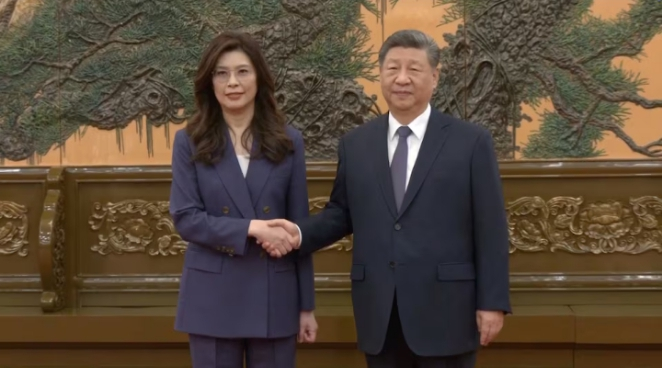
Xi Taiwan Independence warning: Diplomacy often unfolds in grand halls, but its consequences ripple far beyond polished floors, shaping futures, testing identities, and redefining the fragile boundaries between peace, power, and political destiny.
A handshake in Beijing has stirred more than symbolism, igniting debates across continents about sovereignty, strategic patience, and whether dialogue can truly soften positions hardened by decades of mistrust.
The Xi Taiwan independence warning took center stage as Xi Jinping declared China would “absolutely not tolerate” any moves toward independence during talks with Taiwan’s opposition leadership in Beijing.
Meeting Cheng Li-wun at the Great Hall of the People, Xi emphasized “one China,” framing reunification as both historical necessity and future inevitability.
Cheng described her visit as a “peace mission,” seeking to reduce tensions as Beijing increases military pressure on the island it considers part of its sovereign territory.
She stressed “mutually beneficial” engagement, noting that people on both sides of the Taiwan Strait desire “exchange, cooperation, and development” despite persistent political disagreements and unresolved historical divisions.
A Meeting Framed as Family, Viewed as Strategy
Xi’s language leaned heavily on unity, describing both sides as “people of one family,” adding that “when the family is harmonious, all things will prosper” across shared cultural and historical ties.
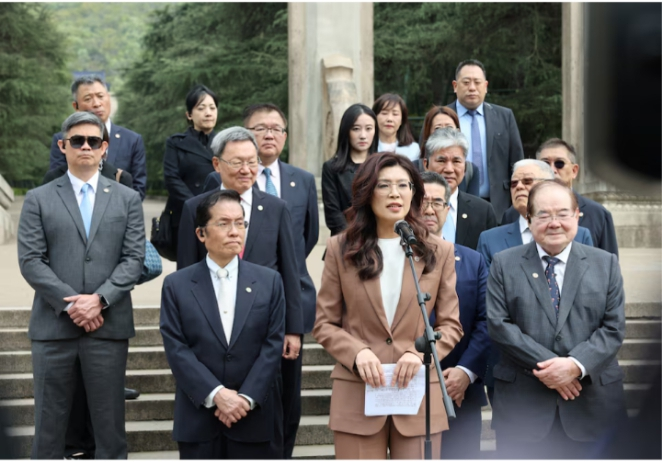
Yet beneath the rhetoric lies a firm warning: “Taiwan independence is the chief culprit,” he said, insisting Beijing would not “tolerate or condone” any such moves under any circumstances.
This dual messaging reflects a familiar strategy—pairing conciliatory language with unmistakable red lines, ensuring that diplomacy does not dilute China’s long-standing position on territorial integrity.
For Beijing, the meeting was not merely symbolic; it reinforced its preference for engaging Taiwan’s opposition while isolating leaders it views as pushing separatist agendas.
Political Divide Across the Strait
China has refused dialogue with Lai Ching-te, labeling him a “separatist,” a stance that deepens political divisions and complicates efforts toward meaningful cross-strait engagement.
Taiwan’s government, however, insists legitimacy lies with its democratically elected leadership, urging Beijing to engage directly rather than bypass official channels through opposition figures.
This divide highlights a core contradiction: Beijing seeks unity under its terms, while Taiwan’s leadership emphasizes sovereignty, democracy, and the right to determine its own future independently.
Cheng’s visit, therefore, sits at a delicate intersection—part diplomacy, part political signaling, and part strategic maneuvering within Taiwan’s internal political landscape.
Echoes of History and Unfinished War
The roots of the dispute trace back to 1949, when the Chinese civil war ended without a peace treaty, leaving both sides with competing claims and unresolved legitimacy.
Mao Zedong established the People’s Republic of China, while the Republic of China government retreated to Taiwan, maintaining its own political system.
Decades later, the absence of a formal resolution continues to shape every interaction, ensuring that even routine diplomatic gestures carry profound historical and geopolitical weight.
This legacy explains why terms like “reunification” and “independence” are not mere policy options but deeply charged concepts tied to identity, sovereignty, and national narrative.
Dialogue or Diplomatic Chessboard?
Cheng warned against the Taiwan Strait becoming a “chessboard for outside forces,” reflecting concerns about increasing involvement from global powers, particularly the United States.
Her remarks suggest a desire to reduce external influence, advocating for “institutionalised and sustainable mechanisms” to manage cross-strait relations through direct engagement rather than confrontation.
However, the reality remains complex, as Taiwan relies heavily on international partnerships to maintain its security and strategic balance against growing military pressure from Beijing.
The United States, though lacking formal diplomatic ties, continues to play a crucial role as Taiwan’s primary security partner and arms supplier.
The Strategic Role of Global Powers
Washington’s involvement adds another layer to the Xi Taiwan independence warning, transforming a regional dispute into a focal point of global geopolitical competition and strategic alignment.
Beijing has repeatedly demanded that the United States cease arms sales to Taiwan, viewing such actions as interference in its internal affairs and a threat to regional stability.
Conversely, U.S. policymakers argue that supporting Taiwan is essential to maintaining balance, deterring aggression, and upholding commitments to democratic partners in the Asia-Pacific region.
This triangular dynamic ensures that any shift in cross-strait relations reverberates far beyond Asia, influencing global markets, security alliances, and diplomatic strategies worldwide.
What Comes Next?
The meeting raises a critical question: can opposition-led dialogue create meaningful progress, or does it risk deepening divisions by sidelining Taiwan’s current government leadership?
Some analysts argue such engagements may build trust gradually, offering alternative channels for communication when official ties remain frozen or politically constrained.
Others warn it could legitimize Beijing’s strategy of selective engagement, weakening Taiwan’s unified negotiating position and complicating internal political cohesion ahead of future elections.
The effectiveness of this approach will likely depend on whether it leads to tangible de-escalation or merely reinforces existing narratives on both sides.
Domestic and International Implications
Within Taiwan, Cheng’s visit may influence political dynamics, shaping perceptions of the opposition’s role in managing cross-strait relations and addressing voter concerns about security and stability.
In China, the meeting reinforces leadership messaging around unity and national rejuvenation, aligning with broader narratives promoted by Xi’s administration domestically and internationally.
Globally, observers are watching closely to see whether such interactions signal a shift toward dialogue or remain part of a broader strategic contest for influence and legitimacy.
Ultimately, the stakes extend beyond immediate outcomes, touching on fundamental questions about governance, identity, and the future of one of the world’s most sensitive geopolitical flashpoints.
A Delicate Balance Between Peace and Pressure
The Xi Taiwan independence warning underscores the fragile balance between maintaining peace and asserting power, where every statement, meeting, and gesture carries layered meaning and potential consequences.
While both sides speak of “peace” and “cooperation,” their definitions diverge sharply, reflecting fundamentally different visions for the future of Taiwan and its relationship with China.
As tensions persist, the world is left to consider whether dialogue can bridge these divides or whether entrenched positions will continue to define the trajectory of cross-strait relations.
The answer may shape not only regional stability but also the broader contours of global order in an increasingly multipolar and uncertain international landscape.
Aooow, a galera tá curiosa sobre o 555winlol! Bom, pelo que andei vendo, o negócio é entrar no site e ver o que te chama mais atenção. Tem de tudo um pouco, pra todos os gostos. Dá uma espiada lá! 555winlol
E aí, pessoal! Ouvindo falar muito do Shbetgame? Pra saber mais detalhes, o melhor é dar um pulo no site deles! Lá vocês encontram informações sobre os jogos e como se divertir por lá. Fica a dica! shbetgame
Fancy a flutter? Heard good things about jljl333casino. Seems like a decent spot for a punt. Have a look here: jljl333casino. Good luck!