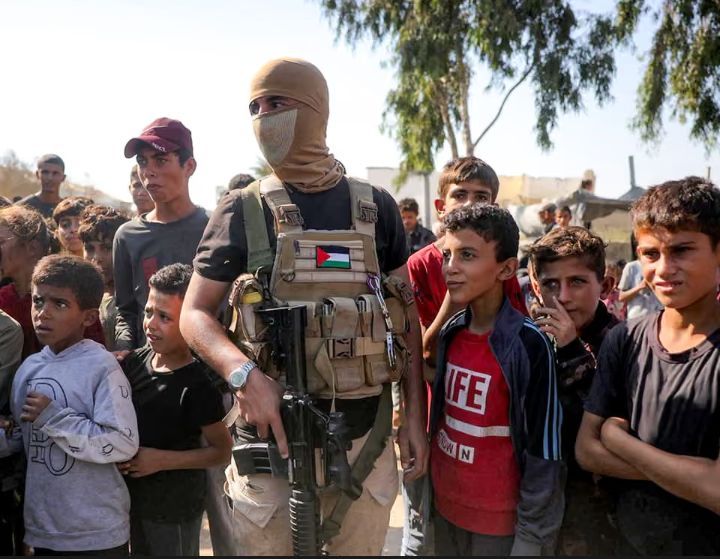
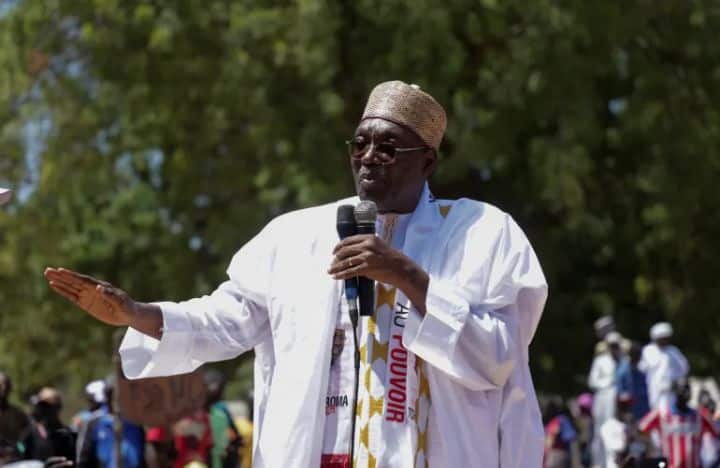
Donald Trump vowed to use presidential influence to solidify Israel’s military gains while charting a course toward regional cooperation, potentially extending Middle East peace initiatives to Iran.
Addressing the Israeli Knesset, Trump described the recent hostage releases from Gaza as marking a “historic dawn of a new Middle East” and an end to suffering.
“This is not only the end of war – this is the end of an age of terror and death,” Trump asserted during his address.
Trump emphasized Israel’s military victory was complete, aiming to reassure Arab states he would prevent renewed conflict or Hamas reconstitution within Gaza’s borders.
He then traveled to Egypt to meet over twenty world leaders at a summit endorsing his peace plan, Gaza’s reconstruction, and limited Palestinian self-governance initiatives.
Summit guarantors—the US, Turkey, Qatar, and Egypt—signed a comprehensive agreement clarifying responsibilities for peacekeeping and delineating a path toward Palestinian self-rule.
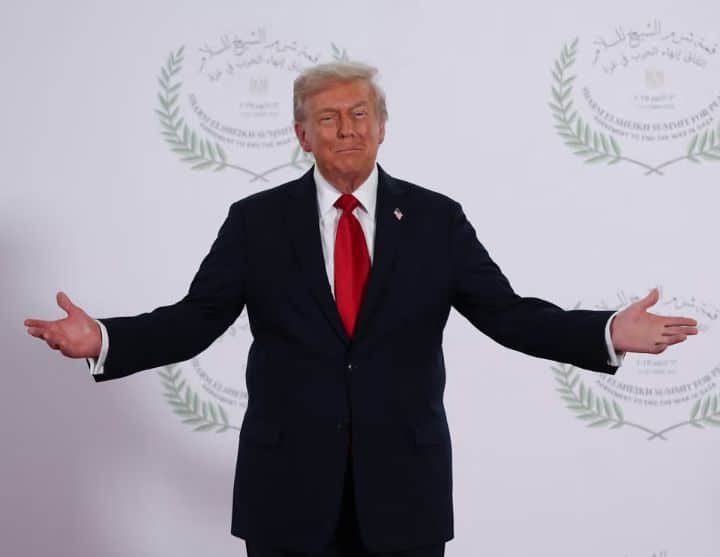
The Red Sea resort of Sharm el-Sheikh hosted the summit, jointly chaired by Trump and Egyptian President Abdel Fatah al-Sisi, underlining international cooperation ambitions.
Trump told reporters phase two of Gaza reconstruction had already commenced, noting overlapping phases and immediate cleanup efforts across devastated urban zones.
“The phases are all a little bit mixed in with each other. You can start cleaning up. You look at Gaza, it’s a lot of clean-up,” he said.
The US requested wealthy Arab nations commit substantial funds to Gaza, which Trump described as “debris times ten,” with reconstruction costs estimated beyond $30 billion.
Trump confidently projected, “Gaza will be demobilized, Hamas will be disarmed, and Israel’s security will no longer be threatened,” signaling a long-term stabilization goal.
He further indicated that Israel’s international support had been eroding due to its reliance on force, framing the timing of ceasefire as strategically advantageous.
“There was getting to be a period of time when the world wanted peace and Israel wanted peace,” Trump stated, emphasizing timing and leadership judgment.
Trump also signaled intentions to accelerate Arab recognition of Israel under the Abraham Accords, noting Iran’s readiness to engage in regional peace initiatives.
European diplomats warned that the ceasefire’s speed requires rapid deployment of international stabilization forces and a Palestinian civil police contingent to disarm Hamas effectively.
Hamas, governing Gaza since 2007, expressed conditional willingness to disarm but refused participation in a new technocratic government unless specific Palestinian-led security arrangements were guaranteed.
Israel has maintained that its Defense Forces will not fully withdraw while Hamas retains tunnels and weaponry, emphasizing security concerns remain paramount for regional stability.
France, the US, and the UK offered to act as backstops for international forces, though credibility hinges on troop contributions from Muslim-majority nations such as Indonesia and Turkey.
French officials pressed for UN-mandated authority, mirroring the structure of Lebanon’s UN force, to legitimize and enforce the stabilization plan within Gaza’s boundaries.
A separate Palestinian National Authority police unit, trained in Egypt and Jordan, awaits deployment to Gaza, though European diplomats caution delays could precipitate clashes with resurgent Hamas forces.
Trump insisted he would chair the oversight board for Gaza reconstruction, supervising the largely Palestinian technocratic government while coordinating with regional and international stakeholders.
He proposed Egyptian President Sisi join the board and floated the possibility of involving Sir Tony Blair, testing regional sentiment for experienced international guidance.
For the first time in eight years, Trump met with Palestinian Authority President Mahmoud Abbas, exchanging a handshake and thumbs-up, signaling renewed engagement after a recent diplomatic freeze.
French President Emmanuel Macron praised Abbas’s attendance, noting, “It’s a recognition of the role the Palestinian Authority has to play as a legitimate entity in governance reforms.”
Macron stressed Europe’s support for the Palestinian Authority in executing administrative reforms and ensuring the two-state framework remains a viable pathway for lasting peace.
He also emphasized integrating Gaza and the West Bank, highlighting the critical link between territorial governance and broader regional stability initiatives over the coming months.
On security, Macron affirmed European efforts to expand Palestinian police training, though France will abstain from direct participation in the proposed international stabilization force.
Regional contributions, potentially including Indonesia and other nations, will operate within an international UN framework, ensuring legitimacy and minimizing conflicts of interest during deployment.
Macron announced plans for a joint humanitarian aid conference with Egypt to mobilize resources for Gaza, scheduled within the upcoming weeks to support rebuilding efforts.
Trump reiterated US commitment to guiding reconstruction, noting extensive debris removal and infrastructure rehabilitation as foundational steps toward long-term peace and Palestinian self-rule.
He emphasized that demobilizing Hamas and securing Israeli borders are prerequisites for a prosperous, stable Middle East, projecting confidence in the phased implementation strategy.
Diplomatic sources suggest international patience and cooperation will be critical to prevent escalations during transitional governance and enforcement of security protocols across Gaza.
Observers noted Trump’s approach blends assertive military oversight with ambitious political objectives, aiming to convert battlefield victories into sustainable diplomatic outcomes.
Analysts argue that the speed and scope of the peace plan present both an opportunity and a risk, depending on regional compliance and enforcement efficacy.
Trump’s emphasis on cooperation, reconstruction, and regional consensus seeks to redefine US influence in Middle East peace efforts while addressing humanitarian imperatives.
The Abraham Accords, a cornerstone of the peace initiative, require swift recognition from Arab states, framing diplomatic pressures alongside reconstruction incentives to ensure adherence.
Hamas’s potential disarmament remains conditional, with leaders demanding guarantees for a Palestinian-led police force and assurances against unilateral military action in Gaza’s territory.
The international stabilization force, backed by UN authorization, is expected to bridge gaps between Israeli security priorities and Palestinian administrative authority during early implementation.
Trump’s engagement with Abbas reflects a calculated diplomatic recalibration, signaling renewed US involvement in Palestinian governance and international peace negotiations.
French, American, and regional actors continue coordination, recognizing that reconstruction and security must progress in tandem to prevent relapse into conflict cycles.
Observers note Macron’s insistence on integrating Gaza and the West Bank as essential for sustaining two-state solution viability and averting fragmentation of Palestinian governance.
Trump’s overarching message at Sharm el-Sheikh underscores US commitment to long-term regional stability through reconstruction, security cooperation, and multilateral oversight mechanisms.
The political and humanitarian stakes remain high, as reconstruction of Gaza presents logistical, financial, and security challenges demanding coordinated international responses.
Experts suggest monitoring Hamas compliance and ensuring timely deployment of trained Palestinian forces are critical to prevent power vacuums that could destabilize the fragile post-conflict environment.
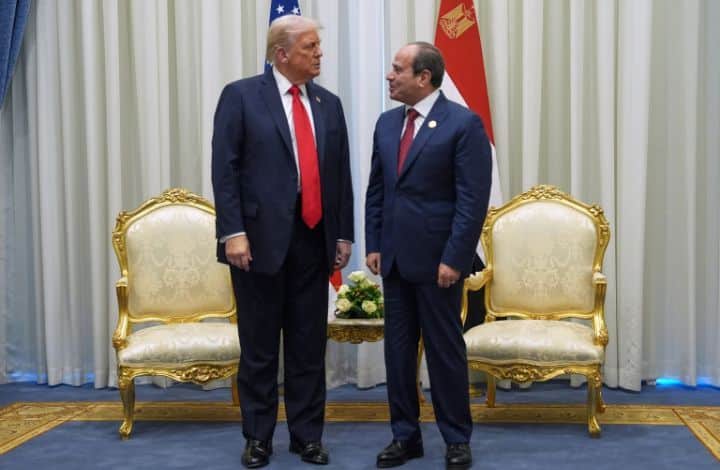
Trump’s peace initiative reflects a strategic fusion of military success, diplomatic pressure, and regional cooperation, aiming to convert cessation of hostilities into sustainable political agreements.
Macron, Trump, and regional leaders emphasized a phased approach to governance, security, and humanitarian assistance, prioritizing tangible outcomes to reinforce credibility and public confidence.
As Gaza reconstruction progresses, international attention remains focused on political reforms, humanitarian relief, and the enduring challenge of ensuring Israeli and Palestinian security needs align.
Trump concluded by reiterating commitment to peace, reconstruction, and regional cooperation, asserting that success will depend on disciplined coordination between US, regional partners, and Palestinian authorities.