

Meta description: Saudi Arabia Houthi attacks have intensified as Saudi Arabia, Turkey and Pakistan prepare an urgent defence meeting while Iran distances itself from the Houthis and regional tensions rise.
Saudi Arabia Houthi attacks have intensified as Yemen’s Iran-aligned Houthis target Saudi-backed forces and launch missiles and drones toward the kingdom, prompting Saudi Arabia, Turkey and Pakistan to prepare an urgent high-level defence meeting.
The escalation comes as the wider Middle East war continues to disrupt energy supplies, maritime traffic and regional security, placing renewed pressure on Saudi Arabia as fighting spreads through several interconnected theatres.
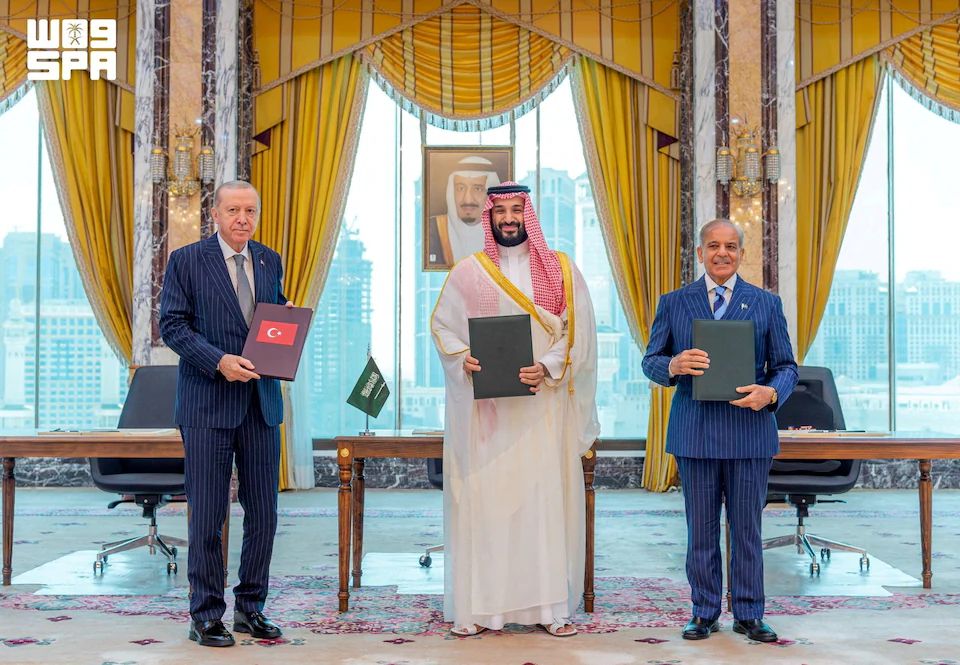
The three countries are expected to discuss ways of supporting Saudi Arabia under the Mecca Joint Defence Agreement, which provides for collective action when one member comes under attack.
According to Reuters, Saudi, Pakistani and Turkish foreign ministers met under the framework of the agreement and condemned attacks targeting Mecca and other civilian locations while affirming Saudi Arabia’s right to defend itself.
Saudi Arabia mobilises allies against Houthi attacks
The planned meeting between Saudi Arabia, Turkey and Pakistan follows a sharp increase in Houthi military activity across Yemen and toward Saudi territory.
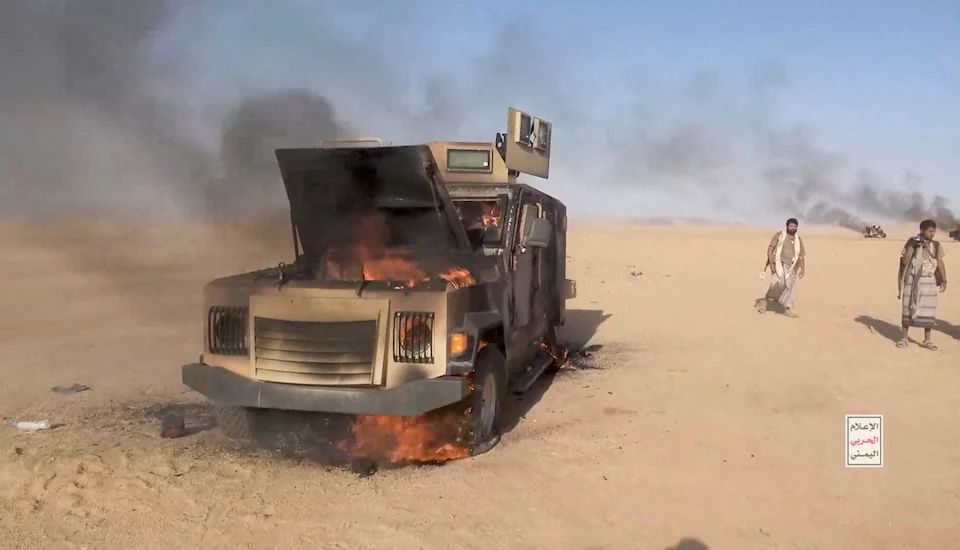
The Houthis said they fired dozens of missiles and drones at Saudi targets on Thursday, while Saudi authorities reported intercepting six ballistic missiles launched by the Iran-aligned group.
Saudi authorities had earlier issued emergency alerts covering several areas, including Mecca, Jeddah and Yanbu, a major oil port on the Red Sea.
The developments have heightened concern in Saudi Arabia because the attacks are occurring alongside fighting affecting shipping routes, energy infrastructure and military positions across the broader region.
Mecca and other Saudi areas placed on alert
The inclusion of Mecca in the emergency alerts has added particular sensitivity to the situation because the city is home to Islam’s holiest site and attracts millions of Muslim pilgrims from around the world.
Saudi Arabia has accused the Houthis of threatening civilian areas while the group continues its campaign against Saudi-backed forces in Yemen.
The Saudi response has combined military preparedness with diplomatic coordination, as Riyadh seeks support from countries linked to its joint defence arrangement.
The planned chiefs-of-staff meeting could therefore become an important mechanism for determining how the three countries coordinate their response if attacks continue or expand.
Saudi Grand Mufti urges troops to prepare for sacrifice
Saudi Arabia’s top religious authority has also issued a strong message to the country’s armed forces as the confrontation with the Houthis intensifies.
The Grand Mufti called on Saudi soldiers to be prepared to “lay down their lives” in fighting the Houthis until the group is removed from power, according to a statement carried by Saudi state media.
The statement demonstrates the seriousness with which Riyadh is treating the latest escalation, particularly as Houthi operations are occurring alongside a wider regional confrontation involving Iran and its allies.
The religious authority’s message came as Saudi officials were coordinating with Pakistan and Turkey over the defence agreement and the protection of Saudi territory.
Iran distances itself from the Houthis
While Saudi Arabia and its partners have been preparing for a stronger response, Iranian President Masoud Pezeshkian has sought to distance Tehran from direct responsibility for Houthi military decisions.
In an interview with Fox News on Thursday, Pezeshkian said: “The Houthis are responsible for their own actions.”
The statement came during an already complicated diplomatic period, with the United States and Iran having largely paused direct fighting while efforts to explore possible negotiations continued.
Iran has longstanding political and military ties with the Houthis, but Tehran has faced international scrutiny over the extent of its involvement in the group’s military operations.
Security experts have debated how much direct control Iran exercises over the Houthis, while Yemeni, Iranian and regional sources cited by Reuters have said that Iran’s Islamic Revolutionary Guard Corps provided direct guidance during the Houthis’ advance along Yemen’s Red Sea coast.
That competing picture makes Iran’s latest statement particularly significant as regional governments assess whether the conflict could widen further.
Strait of Hormuz crisis adds pressure
The Strait of Hormuz crisis is another major factor shaping the regional security situation, with shipping movements through the strategic waterway significantly reduced.
Iranian Foreign Minister Abbas Araqchi said Tehran had presented Washington with a proposal under which the Strait of Hormuz would be reopened if Iranian conditions were accepted.
According to Araqchi, the proposal would require hostilities to end across the region, including in Lebanon, within seven days, while Washington would lift its blockade on Iranian ports, release frozen Iranian funds and waive oil sanctions.
“The Strait of Hormuz will be reopened on the last day,” Araqchi said, according to the Reuters report.
He added that negotiations on other issues, including Iran’s nuclear programme, could then begin.
The proposal illustrates how interconnected the region’s military and economic crises have become, with developments in Yemen, Saudi Arabia, Iran, Lebanon and the Gulf affecting international energy markets.
Oil markets watch developments closely
The possibility of a truce contributed to lower oil prices on Friday, although shipping activity through the Strait of Hormuz remained severely reduced.
Ship traffic through the waterway fell to nine vessels on Thursday, according to ship-tracking data cited by Reuters, representing about half of the 10-day average.
The Strait is strategically important because it carried roughly 20% of global oil exports before the war began, meaning prolonged disruption could have consequences well beyond the Middle East.
Saudi Arabia is particularly exposed to regional disruption because it is one of the world’s largest oil exporters and depends heavily on secure maritime and infrastructure networks to move energy supplies.
The Houthis have also disrupted shipping around the mouth of the Red Sea, adding another layer of pressure to global maritime trade.
Wider Middle East war continues
The escalation involving the Houthis is taking place against the backdrop of a wider Middle East conflict that began after US and Israeli strikes against Iran in February.
Although Washington and Tehran have largely stepped back from direct combat, several Iran-aligned groups remain active across the region.
Hezbollah is confronting Israel in Lebanon, while the Houthis have continued their campaign in Yemen and attacks connected with Saudi-backed forces.
The conflict has already affected oil exports, shipping routes and critical infrastructure, demonstrating how military developments in one part of the region can quickly produce consequences elsewhere.
An attack by Iranian-backed militias in Iraq also temporarily disrupted Saudi Arabia’s East-West Pipeline, according to Reuters, adding another vulnerability to the kingdom’s energy network.
US sanctions increase pressure on Iran
The United States has meanwhile shifted some of its strategy toward expanding financial pressure on Iran through so-called secondary sanctions.
The approach targets companies in third countries that conduct business with Iranian firms, increasing the potential economic cost for businesses and governments maintaining commercial relationships with Tehran.
Iranian airlines were barred from neighbouring countries including the United Arab Emirates and Oman on Thursday following the announcement of new US sanctions.
If maintained, the flight restrictions could further isolate Iran and deepen an economic crisis already affected by restrictions on the country’s access to international trade and maritime routes.
The pressure comes as Tehran continues examining Washington’s response to proposals aimed at reducing hostilities and potentially reopening important regional transportation routes.
What happens next for Saudi Arabia?
The immediate focus will be on the planned meeting of military chiefs from Saudi Arabia, Turkey and Pakistan and whether the three countries agree on concrete measures under their joint defence arrangement.
The agreement states that an attack against one participating party constitutes an attack against all parties, giving the proposed meeting significant strategic importance.
For Saudi Arabia, the priority is likely to remain the protection of its territory, civilian areas, oil infrastructure and key maritime routes.
For Turkey and Pakistan, the discussions could require balancing their defence commitments with the rapidly changing diplomatic and military environment surrounding the wider Middle East conflict.
Meanwhile, the Houthis have shown no indication in the information provided by Reuters that their campaign against Saudi-backed forces is ending.
The group’s ability to launch missiles and drones toward Saudi territory means the kingdom must contend simultaneously with military threats, economic risks and the possibility of further regional escalation.
Regional tensions remain closely connected
The developments demonstrate the increasingly interconnected nature of the Saudi Arabia Houthi attacks, the Iran-US confrontation, the Red Sea shipping disruption and the crisis surrounding the Strait of Hormuz.
Read also:Trump Xi summit ends with national archives tour as Taiwan tensions remain
A reduction in direct US-Iran fighting could create diplomatic space, but continued Houthi operations and other regional conflicts could undermine efforts to achieve a broader de-escalation.
Iran’s claim that the Houthis are responsible for their own actions also leaves open questions about the degree of coordination between Tehran and the Yemeni group.
At the same time, Saudi Arabia’s decision to coordinate with Turkey and Pakistan shows that Riyadh is seeking a broader regional security response rather than relying solely on its own military capabilities.
With oil markets watching every development and maritime traffic already under pressure, the consequences of the conflict extend far beyond the countries directly involved.
For now, the urgent defence meeting involving Saudi Arabia, Turkey and Pakistan will be closely watched as Riyadh responds to the latest Houthi attacks while diplomatic efforts involving Iran and the United States continue.
Keyphrases: Saudi Arabia Houthi attacks, Houthi attacks Saudi Arabia, Saudi Arabia Turkey Pakistan defence pact, Strait of Hormuz crisis, Iran Houthi relations

