Russia strikes Ukraine datacentres in a widening campaign against the country’s digital infrastructure, with Kyiv reporting attacks on internet providers, telecommunications facilities and other key components of its digital economy.
The latest attacks have raised concerns that Russia is opening a new front in the war by targeting infrastructure that keeps businesses, financial institutions, government services and millions of civilians connected.
According to The Guardian, around 100,000 households in Kyiv and the surrounding region experienced temporary internet outages after Russian strikes on Wednesday and Thursday.
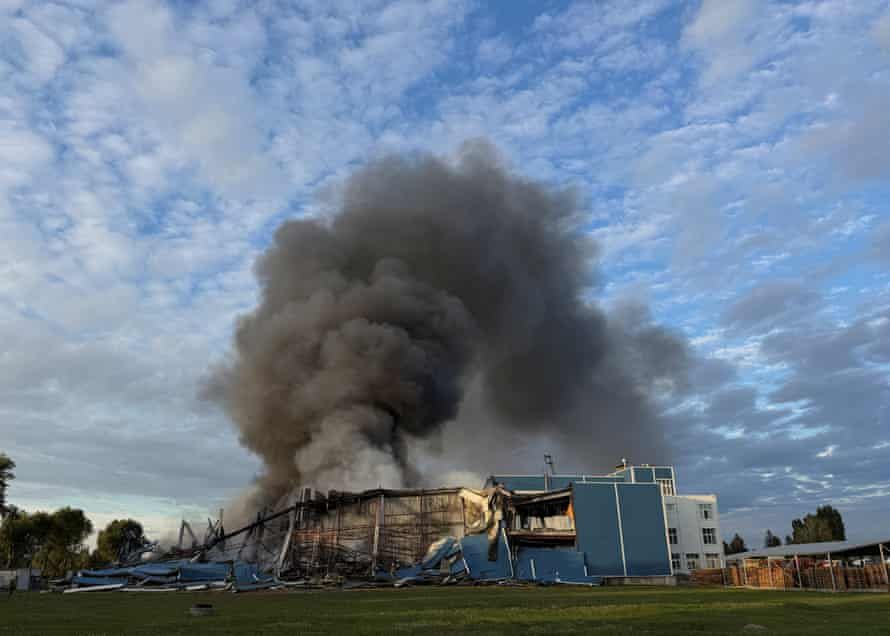
Russia Targets Ukraine’s Internet Infrastructure
The attacks have focused attention on Ukraine’s dependence on a decentralised but increasingly vulnerable communications network, which has remained critical to the country’s ability to function during the war.
Ukraine’s Ministry of Digital Transformation said the outages affected households in Kyiv and nearby areas, although services were subsequently restored in many locations.
100,000 Households Hit by Internet Outages
The scale of the disruption has increased concerns about what could happen if similar attacks are repeated during the winter months, when Ukraine is already preparing for further strikes on energy and other critical infrastructure.
Internet connectivity has become particularly important during the war because Ukrainians rely on digital services for banking, communications, payments, public services and business operations.
The decentralised structure of the network has helped limit the impact of individual attacks. However, officials and technology experts have warned that sustained strikes against multiple facilities could create wider disruptions.
Datagroup Offices Hit in Kyiv
One of the most serious incidents occurred on Friday when a Russian drone struck the offices of Datagroup, one of Ukraine’s largest telecommunications companies.
Four people were reportedly killed in the attack, highlighting the human cost of strikes against commercial and communications infrastructure.
Ukraine’s Foreign Minister Andrii Sybiha said Russia had deliberately targeted major digital facilities.
“Russia has targeted major Ukrainian datacentres, seeking to disrupt the flow of information,” Sybiha said.
The statement reflects Kyiv’s concern that attacks on digital infrastructure could affect much more than internet access, potentially interfering with services that depend on reliable data storage and communications networks.
The latest attacks come after Russia had already struck Ukrainian datacentres in previous stages of the war. However, Ukrainian officials and technology experts say the scale of the latest campaign represents a significant escalation.
Starlink Station Fire Raises Further Concerns
Concerns about Ukraine’s communications resilience also spread beyond the country after Polish authorities reported that a Starlink satellite station in central Poland serving Ukraine had been set on fire.
Local officials described the incident as an act of sabotage and linked it to Moscow, although such attribution remains a matter for investigation.
The incident has attracted attention because satellite communications have played an important role in maintaining Ukraine’s connectivity during the war.
Ukrainian forces, government agencies, businesses and civilians have relied on alternative communications systems whenever conventional telecommunications infrastructure has been damaged or disrupted.
Serhii Sternenko urged residents of Kyiv to prepare for possible communications disruptions during the winter.
“I recommend Kyiv residents gradually prepare for winter … by getting Starlink terminals or other means of maintaining communications,” Sternenko said.
He added: “The goal of the Russians is not only to strike at the capital’s energy infrastructure but also to destroy all datacentres and internet operators.”
Russia Expands Attacks on Ukraine’s Economy
The latest attacks form part of a broader Russian campaign against Ukrainian economic infrastructure, with warehouses, petrol stations, ports and other commercial facilities increasingly coming under attack.
Russian forces have also deployed newer jet-powered drones, adding another challenge for Ukraine’s air-defence network.
A Friday strike outside Kyiv also hit a warehouse used by McDonald’s, demonstrating how attacks are affecting commercial facilities away from traditional military targets.
Ukraine’s industrial sector has suffered heavily during the war, with energy shortages, damaged infrastructure and attacks on production facilities placing additional pressure on businesses.

A senior Ukrainian industry official said the country produced no steel during the month, which would represent the first such occurrence in a century if confirmed.
The damage to heavy industry adds another dimension to the pressure on Ukraine’s economy, as the country attempts to maintain production while simultaneously repairing infrastructure damaged by Russian attacks.
Jet-Powered Drones Test Ukraine’s Air Defences
Ukraine is also confronting an expanding threat from Russian jet-powered drones, including the Geran-5, which can travel at greater speeds and are considered more difficult to intercept.
Reuters reported that Ukraine’s air-defence forces have faced increasing difficulty intercepting the newer drones, with interception rates reportedly falling compared with earlier stages of the conflict.
The development has increased pressure on Ukraine’s stock of air-defence missiles, particularly Patriot interceptors that are regarded as important for defending major cities and critical infrastructure.
Patriot Missile Production Plan
Ukrainian President Volodymyr Zelenskyy said President Donald Trump had approved licences allowing Ukraine to produce Patriot air-defence missiles domestically.
Such an arrangement could eventually reduce Ukraine’s dependence on imported interceptors, although experts have cautioned that establishing domestic production would take considerable time.
The issue is particularly significant because the United States is also facing pressure on its own weapons stocks amid other international military commitments.
Ukraine’s air-defence requirements have therefore become closely connected to its ability to protect infrastructure from increasingly sophisticated Russian attacks.
Winter Could Test Ukraine’s Digital Resilience
The prospect of another difficult winter has intensified concerns about whether Ukraine can protect the interconnected systems that support everyday life.
Repeated attacks on energy facilities could already threaten electricity supplies, while simultaneous strikes on internet providers and datacentres could make it more difficult for businesses and public institutions to operate.
Read also: Lula accuses Trump of Brazil election interference over natural resources
Banks, payment platforms, government agencies and emergency services all depend heavily on communications and data infrastructure.
A prolonged disruption could therefore have consequences extending well beyond households that temporarily lose internet access.
Ukraine’s strategy of decentralising its digital infrastructure has helped the country maintain connectivity despite repeated attacks. But the latest strikes suggest that Russia is increasingly seeking to put pressure on the systems supporting that resilience.
The Guardian reported on September 26 that the attacks represent a new level of pressure on Ukraine’s digital economy, as Russia combines strikes on communications infrastructure with attacks on wider commercial and industrial facilities.
For Kyiv, protecting datacentres and internet providers is consequently becoming part of the broader effort to keep essential services operating during the war.
The latest attacks demonstrate how the conflict continues to expand beyond conventional military targets, with Ukraine’s digital economy increasingly exposed to the consequences of missile and drone warfare.