The Trump administration is again testing the boundaries of presidential authority, as growing domestic unrest pushes the White House to contemplate invoking the controversial Trump Insurrection Act.
The Insurrection Act 1807, an aged but potent legal tool, would permit Donald Trump to deploy US military forces on American soil to quell widespread instability and violence.
For weeks, unrest in several cities has fueled concerns of collapsing public order, prompting internal discussions on whether the Trump Insurrection Act might restore calm or unleash deeper division.
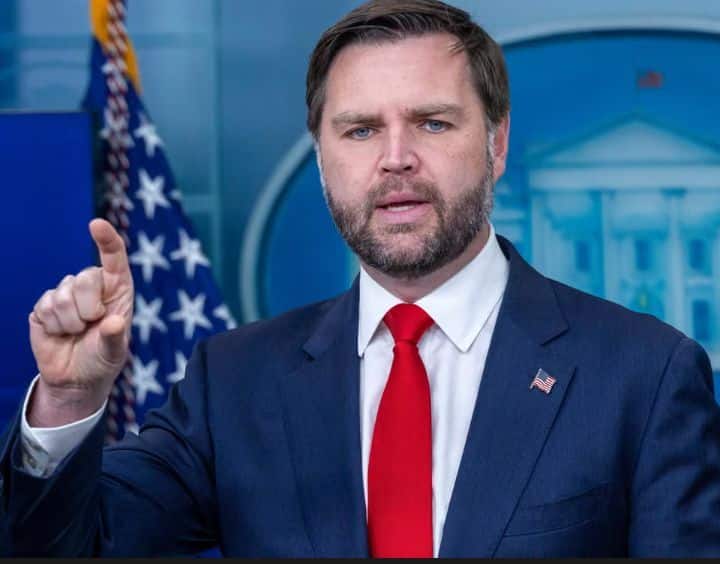
Vice-president JD Vance, a close ally and policy messenger for the president, confirmed the debate, describing it as “one of several emergency powers under careful consideration.”
He told reporters that “the president’s looking at all his options,” a JD Vance statement that echoed growing concern within the administration about the scale of domestic unrest nationwide.
The Trump Insurrection Act conversation arrives amid broader anxieties over security, as the nation navigates post-pandemic instability, ongoing labor protests, and rising violent crime in major metropolitan centers.
Inside the White House, aides are reportedly divided. Some advisers believe invoking the Insurrection Act 1807 could stabilize cities plagued by lawlessness, while others fear it risks political catastrophe.
One senior official, speaking privately, described Trump’s thinking as “pragmatic, not provocative,” adding that he views the Trump Insurrection Act as “a last resort, not a campaign weapon.”
Yet critics argue that invoking military authority on home soil could threaten civil liberties and deepen polarization, especially if perceived as a tool to silence political dissent.
Legal scholars have pointed out that the Insurrection Act 1807 grants presidents wide latitude, but its use is historically rare and almost always met with fierce public scrutiny.
“The power exists for emergencies, not for politics,” one constitutional lawyer remarked, cautioning that the Trump Insurrection Act could “redefine the relationship between the citizen and the state.”
The renewed debate over the Trump Insurrection Act surfaced after months of rising demonstrations and confrontations between protesters and law enforcement in several US cities.
Scenes of burning vehicles and looted storefronts have become symbols of frustration, but also evidence of a nation struggling to manage its own domestic unrest effectively.
Trump, meanwhile, appears undeterred by criticism. “When law and order breaks down, leadership must step up,” he declared before boarding Air Force One bound for Jerusalem on Sunday.
The trip, centered on Middle East peace, underscored a dual narrative — a president negotiating global calm abroad while facing escalating domestic unrest at home.
In Jerusalem, Trump celebrated a new era of “stability and normalization” in the region, calling the Gaza ceasefire “a model for how peace can be won, not demanded.”
Observers note the irony: a president hailed abroad for ending conflict, yet at risk of reigniting internal divisions through the Trump Insurrection Act consideration.
Back in Washington, the policy debate has intensified. The Pentagon reportedly requested clarification on the chain of command should US military deployment become a reality.
Analysts warn that such deployment could place soldiers in volatile civilian environments, testing both discipline and public trust amid already fragile national unity.
JD Vance sought to downplay fears of martial law, stating that “nobody’s talking about tanks on the streets,” insisting the Trump Insurrection Act talk was “preventive, not punitive.”
Still, skepticism persists. Democrats and civil rights advocates argue that even discussing the Insurrection Act 1807 sets a dangerous precedent for political militarization.
They point to prior moments in American history — from the Civil War to the 1992 Los Angeles riots — when presidential military action on home ground left lasting scars.
“America doesn’t need soldiers to solve social pain,” one activist said. “It needs justice, investment, and leadership that heals, not divides.”
For Trump’s supporters, however, the conversation signals strength and resolve. “We voted for a president who acts, not apologizes,” a campaign volunteer remarked.
This divide mirrors America’s larger ideological fracture, where law-and-order rhetoric collides with demands for reform, and where domestic unrest becomes both a symptom and weapon.
Political strategists believe the Trump Insurrection Act debate could rally his conservative base, framing Trump as a decisive leader unafraid to confront urban chaos and legal pushback.
Others see a calculated distraction — a way to shift media focus from economic strain, tariffs, and the administration’s controversial plan to privatize parts of student loan debt.
Yet in typical Trump fashion, controversy and momentum intertwine. “Every crisis is an opportunity to define leadership,” a former aide said, describing the president’s approach as “chaotic precision.”
White House insiders acknowledge that the president views the Insurrection Act 1807 as leverage — a warning to governors and mayors reluctant to confront unrest decisively.
According to those briefed on the matter, Trump believes the threat of US military deployment alone could compel local governments to restore order independently.
Meanwhile, constitutional experts are divided over how far the executive branch can go without congressional consent or judicial oversight in applying such emergency powers.
“The line between enforcement and overreach is razor-thin,” one professor noted, “and the Trump Insurrection Act sits squarely on that line.”
Trump’s political allies argue the current crisis — marked by looting, rising crime, and confrontations — demands stronger federal coordination to secure neighborhoods and businesses.
The phrase “law and order” has returned to the heart of Trump’s political vocabulary, a rallying cry that once propelled him to the presidency and may define his second term.
But invoking the Insurrection Act 1807 carries unpredictable consequences. The sight of American troops confronting American citizens could ignite a backlash even among some conservative voters.
Still, the administration insists it is acting within constitutional limits. “This is about protection, not politics,” a senior aide maintained, describing the Trump Insurrection Act as “a shield, not a sword.”
Whether the nation perceives it that way remains uncertain. Each mention of US military deployment evokes fears of authoritarian drift, even as supporters hail the president’s courage.
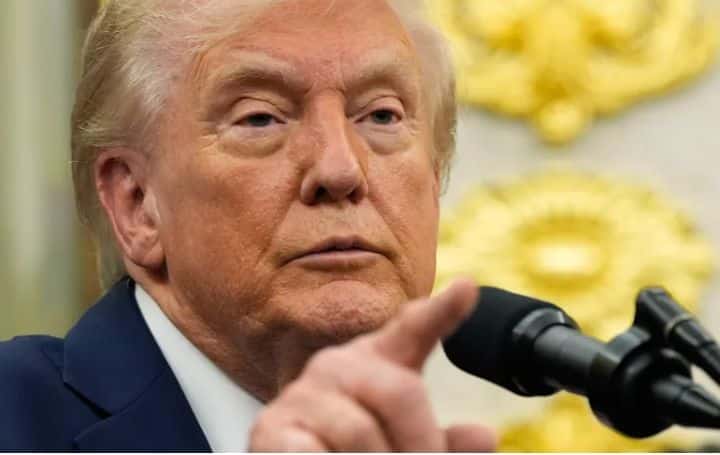
In public appearances, Trump continues to project confidence, blending defiance with reassurance. “I’ll do whatever it takes to protect Americans,” he declared, “even when it’s not popular.”
That sentiment encapsulates the paradox of Trump’s presidency — a leader both revered and reviled, decisive yet divisive, bold enough to act and reckless enough to risk everything.
As America watches, the Trump Insurrection Act stands as both a possibility and a warning — a symbol of strength to some, and of overreach to others.
For now, the decision remains pending, suspended between caution and confrontation, between constitutional authority and political ambition, between order and unrest.
And in that balance, the future of American democracy — and Trump’s legacy — may ultimately be defined.