The record number of foreign babies born in Japan has triggered a new wave of political tension, forcing the government to confront its uneasy relationship with migration.
While demographers see opportunity in the changing social landscape, conservatives warn of cultural erosion, turning the issue into a lightning rod in the Japan migration debate that is reshaping national politics.
According to government data, more than 20,000 foreign babies born in Japan were registered last year, representing a record 3.2% of all newborns in the country.
That growth contrasts sharply with the steep decline among Japanese-born children, underscoring the nation’s deepening Japanese birthrate crisis and its long struggle to sustain population stability in an ageing society.
Officials say the number of foreign parents in Japan has steadily risen over the last decade, with Chinese, Filipino, and Brazilian residents forming the largest share of non-Japanese households.
“The children being born today represent a new chapter in Japan’s story,” said one demographer. “They are not a threat but a promise of continuity.”
But not everyone agrees. Critics argue that the surge of foreign babies born in Japan signals an erosion of national identity and a weakening of social cohesion in traditional communities.
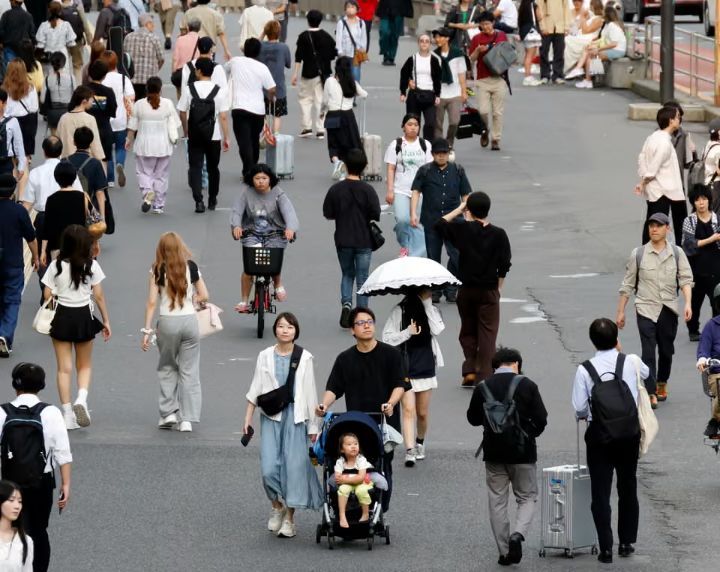
The Japan migration debate has now become one of the most polarizing issues ahead of upcoming parliamentary elections, dividing voters along generational and ideological lines.
Prime Ministerial hopeful Sanae Takaichi has pledged to tighten immigration policy in Japan, claiming that uncontrolled inflows of foreign workers could destabilize social harmony and weaken domestic job opportunities.
However, business leaders insist the opposite, pointing to Japan’s shrinking workforce and the urgent need for migrant labour to fill gaps in construction, care services, and manufacturing sectors.
“Without immigration, we simply cannot sustain our economy,” one Tokyo-based employer said. “Foreign parents in Japan are part of the solution, not the problem.”
The issue extends far beyond economics. Japan’s population fell to roughly 125 million last year, continuing a decade-long Japan population decline that experts call irreversible without substantial demographic change.
The government’s own projections suggest that by 2040, the number of elderly citizens will double, while working-age adults will fall below 50% of the population.
That decline has put intense pressure on the country’s ageing social systems, from pensions to healthcare, forcing leaders to reconsider their long-standing resistance to large-scale immigration.
As more foreign babies born in Japan enter classrooms, local communities are grappling with questions of integration, language, and cultural adaptation.
Some rural towns that once resisted immigration now find it a lifeline. In Ōizumi, a small town famous for its diversity, foreign families account for more than a quarter of the population.
“There’s a kind of quiet revolution happening,” said a community volunteer. “These children speak Japanese, study here, dream here — they are already part of our future.”
Still, many municipalities lack the policies and infrastructure to support foreign parents in Japan, from language assistance to healthcare access and early education services.
Experts warn that without inclusive measures, Japan risks creating a two-tier society where foreign-born children grow up marginalized and unable to thrive equally.
“The danger is not diversity itself,” said sociologist Toshihiro Menju. “It’s neglect. If we fail to integrate, we breed alienation and resentment in future generations.”
The government’s limited efforts to modernize immigration policy in Japan have drawn criticism from both sides — conservatives call them too lenient, while progressives say they remain deeply restrictive.
Under the current system, most foreign workers enter through temporary visa programs, with few pathways to permanent residency or citizenship for their families.
This legal uncertainty weighs heavily on thousands of households with foreign babies born in Japan, where parents fear that bureaucratic barriers could separate them from their children’s futures.
Meanwhile, polls reveal that the Japan migration debate is shifting. Younger voters are increasingly supportive of multiculturalism, while older generations remain cautious, citing fears of rising inequality and crime.
In the business community, the tone is pragmatic. As Japan’s economy stagnates, industries increasingly depend on foreign talent to sustain competitiveness and innovation.
For many observers, the Japanese birthrate crisis and the rise in foreign parents in Japan are not separate phenomena but two sides of the same demographic coin.
Japan’s failure to address its fertility problem, they argue, has opened the door to a more diverse, interconnected society that could redefine what it means to be Japanese.
“National identity isn’t a fixed thing,” one Tokyo University professor observed. “It evolves. The children born today will shape a Japan that looks outward, not inward.”
As migration transforms schools, workplaces, and neighbourhoods, the Japan population decline is being partly offset by the vitality of new families from abroad.
This trend challenges deeply ingrained notions of cultural purity and social order, but it also injects new energy into a country long haunted by economic stagnation.
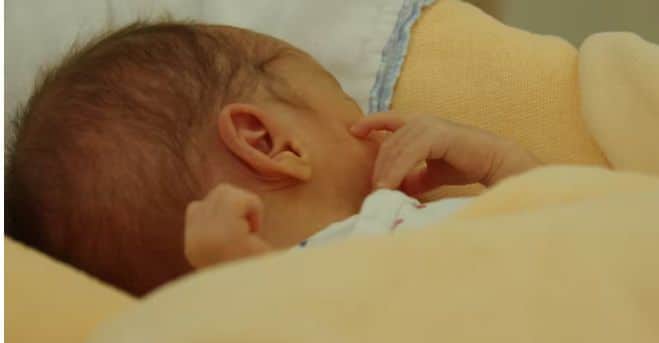
Analysts believe that embracing the demographic shift could help Japan maintain its global influence and foster a more inclusive, dynamic economy.
For others, however, the surge in foreign babies born in Japan remains a political flashpoint — a mirror reflecting national anxieties about the balance between tradition and transformation.
The coming years will test whether Japan can reconcile these competing visions: preserving its cultural identity while embracing the diversity essential for its survival.
One veteran lawmaker captured the dilemma succinctly: “We are at a crossroads. We can either fear change or shape it into a new national strength.”
Whatever course the government chooses, the voices of foreign parents in Japan are becoming impossible to ignore, reshaping not only policy but also the country’s social fabric.
Japan’s story, once defined by homogeneity, is quietly being rewritten in maternity wards and classrooms — where foreign babies born in Japan now symbolize a nation in transformation.
Japan faces a growing migration and identity debate as record numbers of foreign babies born in Japan highlight shifting demographics and the urgent need for inclusive immigration reform.