Trump attends Dover ceremony as Donald Trump joined grieving families at Dover Air Force Base to honor American troops killed in a Kuwait drone strike.
The US president stood beside relatives during the solemn return of six service members whose remains were transported home under strict military honors protocols.
A dignified transfer ceremony is conducted when fallen personnel return to American soil, marking one of the most solemn traditions observed by the US military.
The soldiers were killed in a drone strike targeting a command facility in Kuwait, highlighting rising regional instability and operational risks.
Trump stood silently with relatives as uniformed honor guards carried flag-draped transfer cases from the aircraft positioned on the runway.
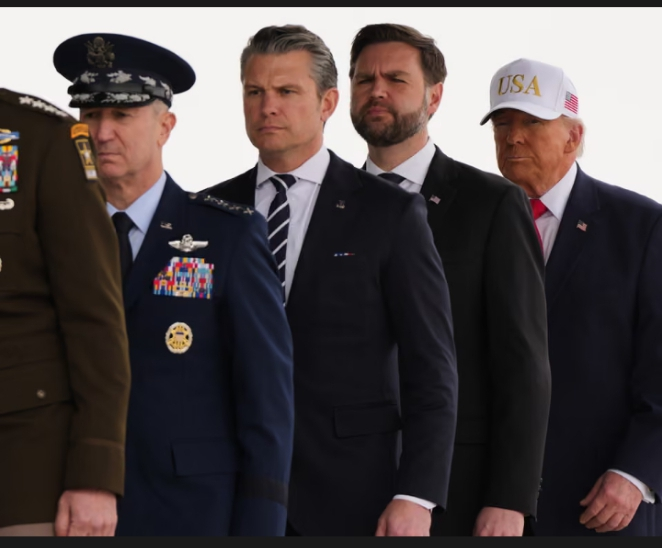
Strict ceremonial rules prohibited mobile phones while synchronized military movements reflected discipline, precision, and national respect for fallen personnel.
The president wore a white “USA” cap while privately consoling families before proceedings began under tight ceremonial control.
Senior officials attended, including Vice-President JD Vance, Defense Secretary Pete Hegseth, and Attorney General Pam Bondi.
Before traveling, Trump spoke at a leaders’ summit in Miami, calling the fallen troops heroes returning home “in a different manner.”
He described the incident as “a very sad situation” and pledged efforts to keep American military casualties “to a minimum” amid intensifying overseas operations.
Military authorities confirmed the victims belonged to a reserve sustainment unit responsible for logistics, fuel movement, equipment transport, and supply coordination.
The attack highlighted increasing risks faced by support personnel operating beyond traditional frontlines but exposed to evolving drone warfare threats.
Ceremonies like this follow longstanding traditions designed to ensure each fallen service member receives equal honor regardless of rank or assignment.
Families watched quietly while chaplains stood nearby offering prayers as ceremonial teams maintained precise, synchronized movements.
Relatives remembered the fallen as devoted parents, disciplined soldiers, loyal friends, and professionals committed to service and family responsibilities.
Several grieving family members described the loss as devastating, emphasizing emotional shock following deaths during routine overseas deployment conditions.
One relative said their loved one had expected to return home within days, making the tragedy especially painful for children and close family.
Another described their family member as dependable and compassionate, saying the soldier’s absence leaves a lasting emotional void.
Loved ones highlighted lifelong ambitions to serve in uniform, emphasizing dedication, discipline, and pride associated with military careers.
Military analysts say drone warfare has reshaped conflict risks, allowing remote strikes far from conventional battlefield frontlines.
Unmanned aerial systems now threaten logistics hubs and command facilities once considered relatively secure under layered defense systems.
Defense planners continue reviewing protection strategies for non-combat units, including hardened structures and electronic countermeasure technologies.
The Dover ceremony proceeded in near silence, interrupted only by aircraft engine noise and formal commands directing movements.
Flag-draped cases symbolized national gratitude as personnel saluted during the careful transfer to awaiting vehicles.
Each case was moved with deliberate coordination before transportation to the base mortuary facility for identification and preparation procedures.
The ritual reflects decades of military tradition ensuring fallen personnel are returned with dignity, precision, and national recognition.
Presidents from both political parties have attended dignified transfers, though some families choose private ceremonies away from public visibility.
Trump previously attended similar ceremonies, reinforcing symbolic links between civilian leadership and military sacrifice.
Observers note such appearances demonstrate solidarity with families while underscoring the human costs associated with overseas military operations.
The Kuwait strike occurred amid widening regional tensions involving allied forces and escalating strategic confrontations.
Security experts warn advanced drone systems reduce response times and increase vulnerability even at fortified installations.
Pentagon officials continue investigating the strike to identify defensive gaps and operational vulnerabilities requiring procedural adjustments.
Military family advocacy groups renewed calls for stronger protective infrastructure for reservists deployed in high-risk regions.
They argue modern warfare increasingly blurs distinctions between frontline combat personnel and logistical support units.
Honor guards maintained rigid formation as aircraft doors opened and transfer teams executed synchronized ceremonial procedures.
Clergy offered private prayers while families observed salutes marking the formal return of their loved ones.
No speeches were delivered on the tarmac, preserving tradition that prioritizes solemn respect over public political messaging.
Trump later met relatives privately, offering condolences and listening to personal tributes describing the lives and service of the fallen.
The White House said support services would assist families with travel arrangements, counseling resources, benefit coordination, and memorial planning.
Read also: Iranian ambassador warns UK to be ‘very careful’ as Iran-UK war tensions escalate
For grieving relatives, the ceremony marked both farewell and remembrance, honoring sacrifice while beginning long-term healing processes.
Military officials reiterated commitments to honoring the fallen and supporting survivors affected by operational losses.
About The Author