

The Iranian ambassador warns UK to be ‘very careful’ as regional fighting intensifies, delivering a pointed message to British officials about deeper involvement in the expanding conflict across the Middle East theatre.
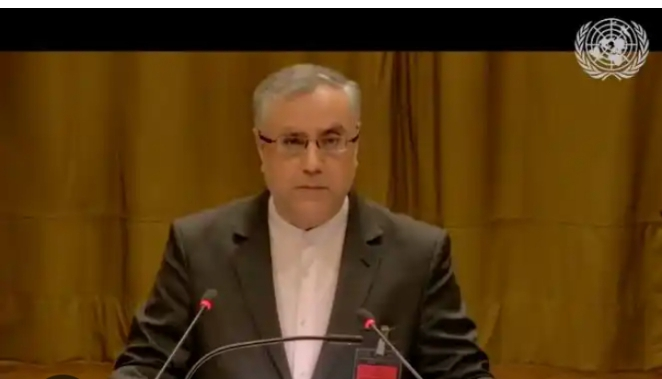
Speaking during an interview with BBC programme Sunday with Laura Kuenssberg, envoy Seyed Ali Mousavi stressed Tehran’s right to self-defence if Britain directly supports American or Israeli military operations.
Mousavi urged British authorities to act with restraint, saying Iran expects London “to be very delicate, very careful” amid fears the confrontation could widen into a broader regional war.
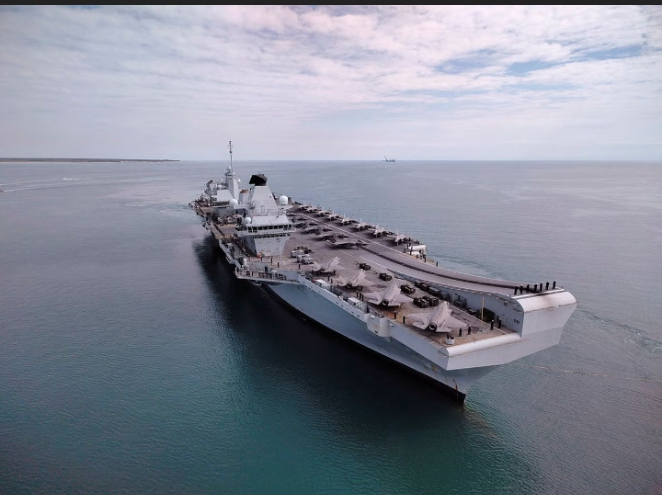
His remarks come after Britain permitted the United States to use certain military facilities on British territory for what ministers described as defensive operations targeting Iranian infrastructure.
However, London has not confirmed participation in direct strikes, attempting to balance strategic alliances with concerns about being drawn into another prolonged Middle Eastern conflict.
The Iranian diplomat described Britain’s current non-combat role as “good,” adding that UK leaders appeared to have learned painful lessons from the 2003 Iraq War and its aftermath.
He suggested that avoiding another large-scale intervention would prevent further destabilisation across already fragile Gulf security networks and diplomatic relationships.
Despite conciliatory language toward Britain, Mousavi confirmed Iran would continue striking foreign bases used in attacks against its territory, warning they would be treated as legitimate military targets.
Iranian leaders maintain their operations are defensive responses to coordinated offensives by the United States and Israel that began more than a week ago.
Tehran argues it is reacting proportionately to protect national sovereignty, though Western governments accuse it of escalating violence across multiple countries simultaneously.
Mousavi said Iran shows “willingness… not to strike our neighbours,” yet insisted that military facilities assisting attacks cannot expect immunity from retaliation.
He emphasised that responsibility for further escalation rests with Washington and Israeli authorities, saying Iranian actions “depend on the activities of the Americans and the Israeli regime.”
“If the aggression continues there is no doubt we will defend ourselves,” Mousavi said, reiterating Tehran’s position that deterrence requires visible and sustained responses.
Regional security has deteriorated rapidly, with missile and drone exchanges disrupting transport routes, commercial aviation corridors, and energy infrastructure throughout the Gulf.
Several countries including Qatar and the United Arab Emirates reported intercepting projectiles, highlighting the growing geographical reach of Iranian retaliatory operations.
Military analysts warn that continued exchanges risk miscalculation, particularly where international bases host multinational personnel from allied states.
The conflict’s expansion has raised alarms in European capitals worried about energy supply disruptions and threats to civilian populations living near strategic installations.
Iran’s government insists it does not seek wider confrontation but refuses to halt operations while foreign strikes continue against targets inside its territory.
Diplomatic channels remain active, though mediation efforts face difficulty as both sides publicly harden rhetoric and expand military readiness.
President Masoud Pezeshkian recently apologised to neighbouring states affected by regional instability, an unusual step that signalled concern about diplomatic fallout.
However, internal critics reportedly view the apology as overly conciliatory, arguing it risks projecting weakness during an active military confrontation.
Despite the apology, fresh strikes and interceptions suggest operational momentum has not slowed, complicating efforts to present a unified diplomatic message.
Mousavi’s interview marked a rare public engagement by an Iranian representative with Western media during a period of intense geopolitical strain.
He invited journalists into the Iranian embassy in London, a symbolic setting reflecting decades of turbulent relations between Tehran and Western governments.
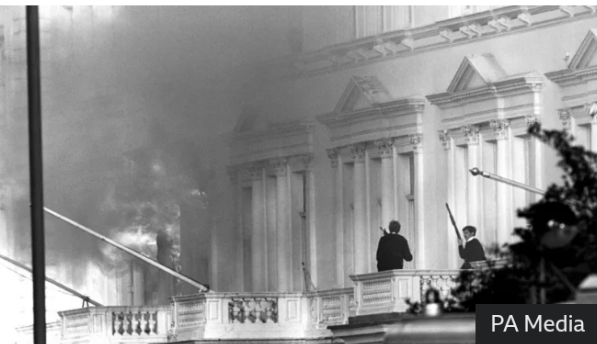
The embassy building stands near Hyde Park and remains historically significant due to a dramatic hostage crisis decades earlier.
In 1980, armed militants seized the mission, triggering a six-day siege that ended when elite units from the Special Air Service stormed the premises.
Most hostages survived, though casualties occurred during the operation, leaving a lasting mark on British security history and diplomatic memory.
The militants were linked to opposition movements resisting revolutionary leadership under Ayatollah Khomeini, whose rule reshaped Iran’s political system.
That episode still influences perceptions of Iranian diplomatic facilities in Britain and underscores the sensitive symbolism surrounding embassy security.
Against this backdrop, Mousavi sought to frame Iran as a state responding reluctantly but firmly to sustained external aggression.
He rejected claims that Tehran initiated the confrontation and dismissed demands from American leaders calling for Iranian capitulation.
Iranian officials argue surrender would undermine sovereignty and encourage further pressure, framing resistance as essential to national defence doctrine.
Western governments counter that Iran’s multi-country strikes risk civilian harm and widen instability beyond original theatres of conflict.
Security experts say retaliatory cycles are becoming faster, reducing space for diplomatic pause and increasing chances of unintended escalation.
Economic repercussions are spreading, with shipping insurers raising premiums and airlines rerouting flights to avoid contested airspace corridors.
Energy markets remain sensitive as traders monitor potential threats to production facilities and maritime transport chokepoints.
British policymakers face pressure to protect national interests without deepening combat involvement that could expose personnel and assets.
Defence planners continue contingency assessments should allied operations require expanded logistical or intelligence cooperation.
Public opinion in Britain remains cautious, reflecting memories of lengthy overseas campaigns that produced complex humanitarian and political consequences.
Mousavi’s comments appear calibrated to reinforce deterrence while discouraging London from shifting toward direct military engagement.
Analysts say Tehran hopes diplomatic signalling might limit coalition expansion while maintaining pressure on active combatants.
Nonetheless, continued missile launches and airstrikes indicate both sides are preparing for prolonged confrontation rather than rapid settlement.
Regional governments are strengthening air defence systems and reviewing civil protection procedures amid fears of infrastructure disruption.
International organisations have urged restraint, warning that broader conflict could strain humanitarian systems already stretched by displacement crises.
Iran maintains it will halt operations if foreign offensives cease, presenting its actions as conditional rather than expansionist strategy.
British officials have reiterated calls for de-escalation while avoiding commitments that could be interpreted as operational alignment.
The evolving situation leaves diplomatic space narrow, with each military development reshaping negotiation dynamics and political calculations.
As tensions persist, Mousavi’s warning that Britain must be “very careful” highlights how rapidly regional conflict can entangle external powers.
Whether deterrent messaging succeeds may determine if the crisis remains contained or expands into a wider multinational confrontation.
About The Author


