The long-anticipated US-China trade deal has entered a decisive stage as officials from Washington and Beijing hailed remarkable progress in trade negotiations that could transform the global economy.
Both sides confirmed over the weekend in Kuala Lumpur that a preliminary framework for a US-China trade deal has been reached, raising hopes of a historic accord when Donald Trump and Xi Jinping meet in South Korea this week.
“This is a significant moment for our nations and the world,” said US Treasury Secretary Scott Bessent, describing the US-China trade deal discussions as “the most productive in recent years,” according to newsmen present at the summit.
The upbeat mood follows years of tariff disputes that strained relations between the world’s two largest economies. The prospect of a finalized US-China trade deal sent shockwaves through financial markets, driving major Asian indexes to record highs on Monday.
Japan’s Nikkei 225 climbed 2.1 percent and South Korea’s KOSPI rose 2.3 percent, while Hong Kong’s Hang Seng index gained nearly 1 percent amid renewed investor confidence in the global economy.
Bessent said negotiators had built a “framework for mutual growth” that both leaders will refine during their upcoming summit. He emphasized that the US-China trade deal aims to deliver “real benefits for workers, farmers, and manufacturers.”
According to Chinese Vice Premier He Lifeng, Beijing and Washington have reached “a basic consensus” on addressing each other’s concerns. He confirmed that both governments would soon begin domestic approval processes for the emerging US-China trade deal.
He Lifeng praised the talks as “constructive and forward-looking,” saying the outcome would “strengthen cooperation in agriculture, manufacturing, and technology.” His comments echoed statements reported by newsmen covering the diplomatic discussions.
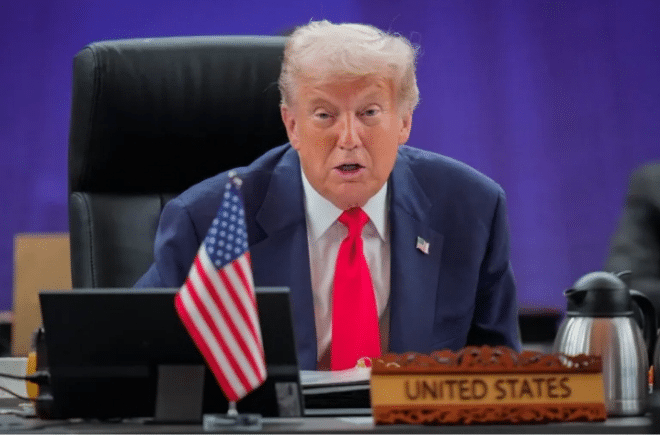
Bessent, speaking to newsmen in Kuala Lumpur, revealed that China had agreed to expand purchases of American agricultural products — a move that could boost US farmers significantly. “This US-China trade deal makes our soybean farmers feel very good,” he said.
The proposed agreement also includes steps to ease Beijing’s threatened export restrictions on rare earth materials, vital to the global supply chains of high-tech industries like semiconductors, smartphones, and electric vehicles.
The renewed diplomatic spirit marks the first major breakthrough since Donald Trump returned to the White House and revived his aggressive trade agenda. The US-China trade deal framework, officials say, represents a deliberate pivot toward “cooperation with accountability.”
Trump, departing Kuala Lumpur after the ASEAN summit, said, “We’re very close to something truly great. President Xi and I are working toward fairness, balance, and prosperity.”
The two leaders will meet in Gyeongju, South Korea, marking their first face-to-face encounter since 2019. Analysts see the meeting as pivotal in shaping the global economy for the next decade.
“The symbolism of the Trump-Xi meeting extends far beyond tariffs,” said a trade analyst speaking to newsmen. “It reflects a reset in how both powers intend to navigate the complexities of 21st-century trade negotiations.”
Recent months saw rising tensions after China announced new licensing requirements for rare-earth exports, triggering fears of disruption across global supply chains. The United States responded with tariff threats, escalating uncertainty among investors and businesses.
However, the tone shifted dramatically during this weekend’s US-China trade deal talks, with both sides signaling mutual respect and urgency. “This shows diplomacy still works, even between rivals,” the analyst added, echoing the sentiments of several observers.
Experts believe the emerging US-China trade deal could provide stability to industries struggling with post-pandemic inflation and geopolitical uncertainty. “A clear agreement can bring predictability back to global investment,” said economist Daniel Torres to newsmen.
In Beijing, government representatives described the talks as “a triumph of mutual understanding and shared progress.” Officials emphasized that the US-China trade deal would prioritize “peaceful cooperation and long-term growth.”
Meanwhile, Bessent said the agreement would create new mechanisms to monitor tariff compliance and enforce intellectual property protections — areas that previously caused friction in trade negotiations.
“Implementation is key,” Bessent told reporters. “The US-China trade deal is not just about lowering tariffs; it’s about ensuring that both sides follow through on commitments.”
Trump’s Asia tour, which includes Japan and South Korea, reflects his broader strategy to realign trade partnerships and strengthen the global economy. In Tokyo, he is set to meet Japan’s new Prime Minister, Sanae Takaichi, to discuss trilateral trade cooperation.
Asian markets continued to surge on optimism surrounding the US-China trade deal. Analysts in Seoul and Singapore noted increased investor appetite for technology and manufacturing stocks tied to global supply chains.
The positive sentiment extended to Europe and Wall Street, where pre-market trading pointed to modest gains. Economists said that clarity from a finalized US-China trade deal could add up to $500 billion to global GDP over the next five years.
“This is a win for consumers, workers, and industries on both sides,” said a senior member of the US Chamber of Commerce, speaking with newsmen. “Predictable trade fosters innovation and prosperity, especially when nations like the US and China lead responsibly.”
Xi Jinping also struck an optimistic tone, calling the US-China trade deal “a foundation for mutual prosperity.” He said the progress proved that “dialogue and respect can overcome competition and confrontation.”
For Donald Trump, success in securing a stable US-China trade deal could represent one of the defining achievements of his presidency. It also aligns with his campaign pledge to protect American jobs while restoring economic balance with Beijing.
“The stakes couldn’t be higher,” said trade policy scholar Linda Cheung in an interview with newsmen. “If both leaders can lock in this agreement, it will shape not just bilateral relations but the architecture of global trade itself.”
As the countdown begins to the Gyeongju summit, optimism continues to swell. Diplomats from both countries have been fine-tuning the US-China trade deal text, focusing on dispute-resolution frameworks and enforcement timelines.
Markets, policymakers, and corporations around the world await the outcome. “Every major economy is watching this meeting,” Torres added. “The US-China trade deal could stabilize prices, boost exports, and rebuild investor confidence.”
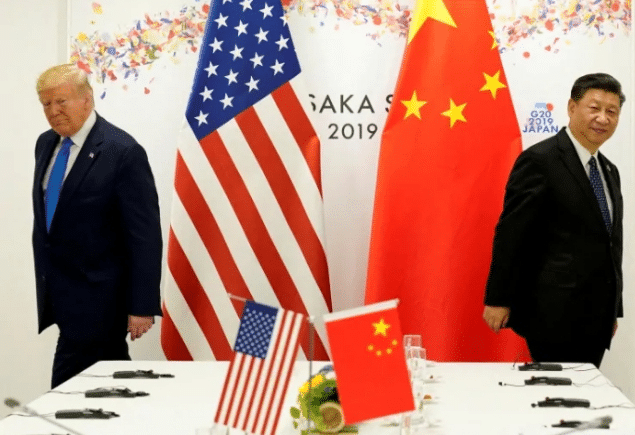
The positive energy surrounding the talks has restored faith in diplomacy’s ability to deliver practical solutions in an era defined by rivalry. For now, the world’s eyes remain fixed on South Korea, where Trump and Xi may finally seal the long-sought US-China trade deal.