Argentina midterm elections delivered a stunning mandate for President Javier Milei, as his La Libertad Avanza party secured 40.84 percent of votes, reshaping Argentina’s turbulent political and economic future.
“This is a turning point for our nation,” Milei declared, celebrating the Argentina midterm elections outcome that reinforced his libertarian ideology and radical Argentina economic reforms agenda despite persistent social resistance.
The Argentina midterm elections served as a referendum on Milei’s austerity and free-market policies, reflecting widespread frustration with decades of inflation, inefficiency, and political stagnation across provinces.
Voters in Buenos Aires province, traditionally dominated by Peronists, shifted allegiance toward La Libertad Avanza, signaling a nationwide desire for structural economic change under Javier Milei’s administration.

“The people chose freedom, not dependence,” Javier Milei told supporters after the Argentina midterm elections, underscoring that citizens had endorsed his economic transformation vision despite hardship warnings.
With 101 lower house seats and 20 Senate seats, La Libertad Avanza gained the leverage to advance Argentina economic reforms and sustain presidential vetoes against opposition attempts.
Javier Milei now holds enough congressional influence to push through deregulation laws, privatization plans, and fiscal adjustment programs without severe obstruction from traditional parties long controlling Argentina’s legislature.
The Argentina midterm elections solidified Milei’s dominance, positioning his administration to navigate both domestic resistance and international negotiations tied to the US financial bailout commitments.
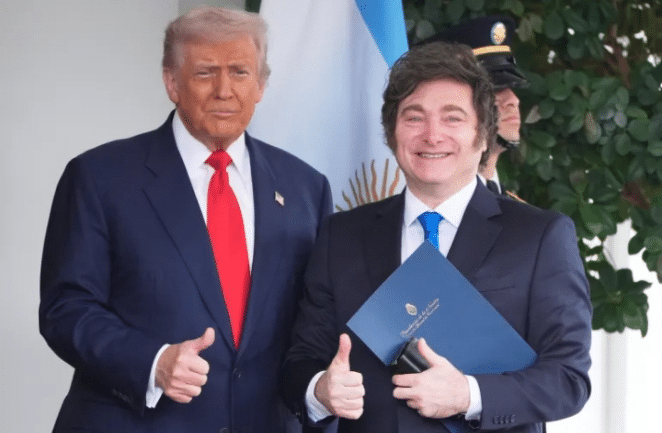
Washington extended a $40 billion support package, including a $20 billion currency swap, which bolstered confidence in Argentina’s markets following the Argentina midterm elections.
Former US President Donald Trump publicly endorsed Milei, stating, “If Milei doesn’t win, we’re not going to waste our time,” signaling geopolitical significance in Argentina’s changing policies.
Milei’s economic reforms emphasize spending cuts, deregulation, and market liberalization. Inflation fell from 289 percent in 2024 to 32 percent this year, validating his controversial austerity measures.
Electricity and transport costs rose nationwide, sparking protests but also demonstrating Milei’s commitment to fiscal responsibility amid Argentina midterm elections debates over the cost of reform.
Despite corruption allegations involving La Libertad Avanza officials, public trust in Milei remained strong. “The triumph is unquestionable,” he asserted, framing victory as moral justification for reforms.
Economic instability had previously eroded public confidence. “People wanted continuity to avoid chaos,” Milei explained, acknowledging that Argentina midterm elections voters prioritized stability over political sentiment.
The Argentina midterm elections mark a dramatic ideological pivot from decades of protectionist governance toward a libertarian framework emphasizing efficiency, entrepreneurship, and global economic integration.
“Argentina has chosen freedom over decadence,” Javier Milei proclaimed, vowing to maintain his agenda even against opposition warnings of growing inequality and social discontent.
International analysts emphasized that US financial bailout commitments and external loans strengthened Argentina’s capacity to sustain economic reform during post-election fiscal adjustments.
“Confidence in reforms and external backing encouraged participation,” Milei noted, linking Argentina midterm elections turnout to renewed optimism about long-term national recovery and foreign investment.
Critics argue austerity measures disproportionately burden low-income citizens as subsidies diminish. However, Milei insists, “We need bold action to restore credibility and save Argentina’s economy.”
The government must now balance reform momentum with social stability, as rapid policy shifts risk unrest despite the strong mandate from Argentina midterm elections results.
Javier Milei’s electoral success tripled his lower house representation from 37 to 101 seats, enabling La Libertad Avanza to dominate legislative debates on labor and taxation reform.
Supporters celebrated across Argentina, waving libertarian flags. “The people have chosen progress over stagnation,” Milei declared, emphasizing that Argentina midterm elections ended decades of political paralysis.
The Argentina economic reforms introduced under Milei target pension restructuring, labor flexibility, and public-sector downsizing to make Argentina globally competitive.
“These steps are necessary for our long-term prosperity,” Milei said, reinforcing his conviction that sacrifices are inevitable but will eventually stabilize national finances and attract investment.
Despite controversy, Milei’s monetary strategy stabilized the peso, while the $20 billion US financial bailout currency swap reassured investors and prevented market collapse.
“We avoided chaos, and investor confidence is returning,” he affirmed, celebrating the Argentina midterm elections as validation of disciplined macroeconomic management and external partnership.
Economists warn, however, that rapid liberalization may deepen short-term inequality even as Argentina midterm elections strengthen policy continuity and attract foreign capital inflows.
“The government now has the mandate to pursue market-friendly policies,” Milei said, underscoring that electoral legitimacy would help counter institutional inertia resisting economic change.
The US financial bailout provided a crucial safety net, allowing Argentina to maintain reform momentum amid political turbulence and limited foreign reserves.
Milei’s alliance with Washington ensured credibility. “Victory guarantees investor confidence,” he said proudly, linking Argentina midterm elections success with restored global financial reputation.
The president’s economic blueprint focuses on privatizing inefficient state firms, reducing bureaucratic barriers, and promoting exports through deregulated trade and foreign investment channels.
“Our mission is to restore efficiency and attract international capital,” Milei emphasized, adding that structural reforms would anchor Argentina’s position in global markets.
Still, public opinion remains divided over austerity’s toll. “Life has become harder, but we finally see discipline,” one Buenos Aires shopkeeper commented after the Argentina midterm elections.
Javier Milei maintains that short-term pain is necessary. “There’s no easy way out. Fiscal order precedes prosperity,” he said, defending sustained Argentina economic reforms.
Analysts predict the Argentina midterm elections could permanently reshape the nation’s economic philosophy toward a leaner state, efficiency-driven markets, and reduced fiscal dependency.
Milei’s victory also improved Argentina’s diplomatic leverage, demonstrating reliability to international lenders and solidifying the partnership behind the US financial bailout framework.
“The country is ready to embrace reform fully,” he declared, assuring foreign investors that Argentina’s transformation would continue regardless of internal resistance.
Political observers caution that high expectations could backfire. “Managing success is harder than winning,” said political analyst Laura Gómez, referencing Argentina midterm elections dynamics.
The government’s majority ensures authority, yet rapid implementation without cushioning mechanisms could provoke social unrest, especially among workers impacted by subsidy cuts and job restructuring.
Still, Javier Milei framed his Argentina midterm elections win as a popular referendum for freedom, fiscal discipline, and a break from Argentina’s post-Peronist stagnation.
“Argentina voted for ideas that make the country great again,” he said, echoing populist tones that resonate with his libertarian narrative and US allies.
Supporters anticipate economic stabilization and foreign investment growth. “We finally have leadership unafraid to act,” said one Mendoza voter celebrating the Argentina midterm elections outcome.
Analysts agree challenges remain but emphasize that Milei’s clear mandate grants him unprecedented latitude to execute structural Argentina economic reforms without legislative obstruction.
In conclusion, the Argentina midterm elections signify a historic endorsement of Javier Milei, La Libertad Avanza, Argentina economic reforms, and the stabilizing influence of the US financial bailout.
Argentina’s future now hinges on whether Milei can translate his sweeping victory into sustainable growth, social balance, and enduring prosperity under his libertarian economic vision.