The Gaza crisis is deepening as Israel continues blocking UN staff and humanitarian aid, defying a World Court ruling. “Civilian lives hang in the balance,” said the UN spokesperson.
Hamas has expanded its search for the 13 remaining bodies of Israeli captives, collaborating with the Red Cross and Egyptian teams. “We are committed to finding every victim,” an official said.
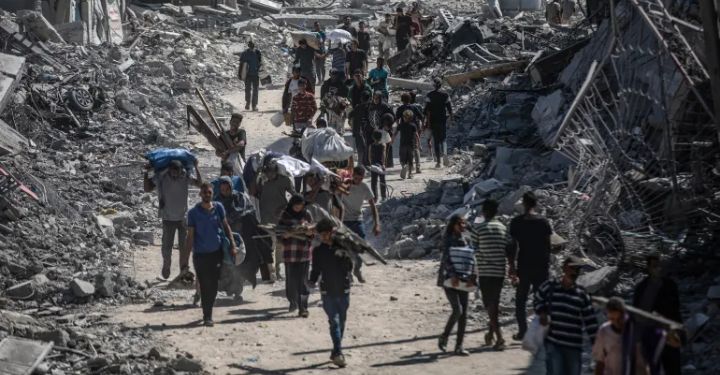
Palestinians returning home in Gaza face deadly unexploded ordnance left by Israeli military strikes. At least 53 civilians have died, and hundreds were injured clearing bombed neighborhoods, witnesses reported.
Israeli Prime Minister Benjamin Netanyahu emphasized, “We will decide which foreign forces enter Gaza,” asserting control over any international team meant to monitor the ceasefire and secure humanitarian access.

Since October 2023, Israel’s war on Gaza has claimed at least 68,519 lives and injured 170,382. “The scale of devastation is unprecedented in modern conflicts,” humanitarian observers said.
The Gaza crisis is exacerbated by Israel denying aid supplies. “Hospitals cannot operate, and food deliveries are blocked,” the UN agency spokesperson explained, highlighting civilian suffering and growing despair.
Hamas insists that the recovery of captives remains a priority. “Families deserve closure, and we will safely return every missing person,” a senior official stated during rescue operations.
Explosive remnants pose ongoing dangers in Gaza. Families encounter bombs in kitchens, courtyards, and bedrooms. “Every step carries risk, and children are especially vulnerable,” a resident said, reflecting widespread fear.
International agencies call for urgent coordination with Israel. “Thousands of lives depend on timely medical aid, demining, and humanitarian relief,” the Red Cross emphasized, warning of escalating casualties without intervention.
Netanyahu’s insistence on controlling foreign force entry has drawn criticism. Analysts warn, “Restricting neutral observers may threaten ceasefire enforcement and slow humanitarian operations,” highlighting the tension between security and aid.
The October 7, 2023, attacks in Israel killed 1,139 people and left about 200 in captivity, prompting retaliatory strikes in Gaza that continue to fuel the Gaza crisis.
Despite global appeals, Israel’s blockade persists. “Our teams are constrained and frustrated, unable to reach civilians in urgent need,” the UN agency spokesperson stressed, noting growing human suffering.
Hamas’ coordination with Egyptian and Red Cross teams shows cautious progress amid conflict. “This is about saving lives, not politics,” a spokesperson emphasized, stressing the humanitarian mission’s priority.
Unexploded ordnance threatens Gaza’s recovery long-term. Mines and shells remain hidden across neighborhoods. “Children risk stepping on deadly remnants; homes cannot be safely rebuilt,” a humanitarian worker reported.
Calls for a neutral international force to monitor Gaza’s ceasefire have intensified. Experts warn, “Without impartial observers, fragile peace may collapse, prolonging suffering for civilians,” highlighting the urgency of intervention.
Hospitals and aid centers are overwhelmed. Medical staff report shortages, malnutrition, and psychological trauma among survivors. “We are running out of options to protect lives,” one doctor admitted.
Efforts to recover captives are painstakingly slow but ongoing. Hamas emphasizes that collaboration with international teams is “essential for humane recovery,” reflecting the operation’s complexity near military lines.
Aid restrictions worsen the crisis, leaving civilians without clean water, food, or medicines. UN officials warn, “Delays cost lives, and political disputes cannot obstruct basic human rights.”
Netanyahu’s control over foreign forces has raised questions about impartiality. Critics insist, “Neutral monitoring is crucial for ceasefire enforcement and humanitarian credibility,” underscoring the need for transparency.
The October attacks’ aftermath continues to shape Israeli and Palestinian narratives. “We are haunted by losses and captives still missing,” an Israeli official said, highlighting the ongoing trauma.
Humanitarian teams warn that unexploded ordnance will claim lives long after the fighting ends. “Every home cleared may conceal new dangers,” a UN demining expert explained cautiously.
Hamas stresses that the recovery mission is humanitarian, not strategic. “Our goal is to return loved ones safely,” a spokesperson explained, acknowledging pressure from affected families and observers.
Medical and aid shortages persist due to Israel’s denial of entry. “Hospitals are overwhelmed, and relief is slow. Civilians continue to suffer,” the UN refugee agency said, emphasizing urgent needs.
International pressure for Gaza access is mounting. Human rights advocates demand, “Let aid reach those in desperate need, honoring court rulings and moral obligations,” a coalition spokesperson urged.
Amid destruction, families attempt to rebuild while fearing hidden explosives. “We cannot live normally with death lurking in our homes,” one resident shared, reflecting the long-term psychological impact.
The recovery of captives and demining operations highlight Gaza’s fragile post-conflict landscape. Cooperation between Hamas, the Red Cross, and Egypt signals cautious steps toward civilian stabilization.
Israel’s war on Gaza continues to dominate global attention. Officials report ongoing casualties, blocked aid, and humanitarian disaster. “Immediate intervention is crucial to prevent further tragedy,” a UN report warned.
The Gaza crisis remains a pressing international concern, with civilians facing death, injury, and starvation. “Urgent action is required before more lives are lost,” the UN spokesperson concluded.