President Bola Tinubu’s approval of a 15% import duty on petrol and diesel has set the stage for another major shift in Nigeria’s energy and economic landscape.
Announced on October 30, 2025, the policy aims to protect local refineries, stabilise the downstream oil market, and promote the long-term sustainability of domestic fuel production.
But beyond the economic jargon and policy briefings, one key question lingers in the minds of Nigerians: what does this mean for the average citizen already battling rising living costs and fuel-related inflation?
New 15% Import Duty on Petrol and Diesel: A Move to Protect Local Refineries
The new 15% import duty on petrol and diesel is designed to discourage overreliance on imported fuel and give local refiners a competitive edge.
According to the government, this tariff will make imported petroleum products less attractive, creating a level playing field for domestic refineries such as the Dangote Refinery in Lagos, and modular plants operating in Edo, Rivers, and Imo States.
President Tinubu’s letter to the Federal Inland Revenue Service (FIRS) and the Nigerian Midstream and Downstream Petroleum Regulatory Authority (NMDPRA) described the measure as a “market-responsive import tariff framework.”
It aligns with the Renewed Hope Agenda, which prioritises energy security, fiscal reform, and a stronger naira-backed oil economy.
By imposing this import duty, the administration seeks to bridge the price gap between locally refined fuel and imported products.
The goal is to ensure that Nigeria’s refineries can operate profitably without being undercut by cheaper foreign imports—a situation that has historically crippled local production efforts.
How the 15% Import Duty Will Affect Pump Prices
While the policy is aimed at strengthening Nigeria’s refining capacity, it will likely affect fuel pump prices.
Estimates from the FIRS indicate that the 15% duty could increase landing costs of petrol by about ₦99 per litre, bringing Lagos pump prices close to ₦965 per litre.
At first glance, this might sound alarming.
Yet, the government insists that the new price levels would still remain below regional averages, citing examples such as Senegal (₦1,760/litre), Côte d’Ivoire (₦1,520/litre), and Ghana (₦1,370/litre).
However, the economic reality for most Nigerians is starkly different.
With inflation hovering near 30% and wages stagnant, any upward movement in fuel prices translates to higher transportation costs, increased food prices, and rising production costs for small businesses.
The average commuter in Lagos or Kano will feel this policy almost immediately. A daily transport fare of ₦1,000 could easily rise to ₦1,200, while delivery costs for goods across states could increase by 10–15%.
Boosting Local Refining: Hope or Hardship?
The 15% import duty on petrol and diesel is rooted in the belief that Nigeria must break free from its decades-long dependence on imported fuel. Despite being Africa’s top oil producer, the country still imports over 60% of its refined petroleum products.
The government is banking on the Dangote Refinery and other local plants to ramp up production and gradually achieve self-sufficiency.
Dangote’s facility, capable of refining 650,000 barrels per day, has already begun producing diesel and aviation fuel, while modular refineries are slowly expanding output.
Experts argue that if the policy successfully encourages local refining, Nigerians could enjoy long-term price stability and energy security.
In the short term, however, there will be pain before gain—as local refineries adjust their output, distribution networks stabilise, and market equilibrium is reached.
According to energy analyst, Bala Zaka, “What the government is trying to do is protect a future benefit. But in the short run, Nigerians may suffer more.
The 15% import duty makes sense economically, but it must be matched with refinery efficiency and price transparency.”
The Broader Economic Implications
Beyond the immediate rise in fuel costs, the 15% import duty on petrol and diesel will influence multiple sectors of the economy.
Transportation: The cost of logistics, aviation, and public transport will rise, feeding into higher prices of essential goods and services.
Manufacturing: Industries that rely on diesel-powered generators will face increased operational costs, potentially leading to higher product prices or layoffs.
Inflation: With fuel being a key driver of consumer prices, analysts predict an uptick in headline inflation by at least 0.7 percentage points over the next quarter.
Revenue Generation: On the positive side, the duty will boost government revenue and reduce the burden of fuel import subsidies that drained public funds for years.
This tariff could also help stabilise the naira, as local refiners transact more in domestic currency, reducing demand for the dollar in petroleum trade.
What It Means for Businesses and Households
For households, especially those in the low and middle-income brackets, the new policy may further squeeze disposable income.
The average Nigerian family already spends a significant portion of earnings on energy-related costs—cooking gas, transport, and electricity bills.
For small and medium enterprises (SMEs), particularly in the informal sector, the 15% import duty on petrol and diesel presents a fresh challenge.
Generators remain their main power source, and higher diesel prices will push many to reduce production or pass costs to consumers.
Yet, there is cautious optimism. If local refineries operate efficiently, increased domestic production could stabilise prices and reduce supply disruptions in the long term.
This, in turn, could attract investment in logistics, petrochemicals, and manufacturing—creating jobs and stimulating economic recovery.
Public Reaction: Mixed Feelings Across the Nation
The announcement has generated mixed reactions across the country.
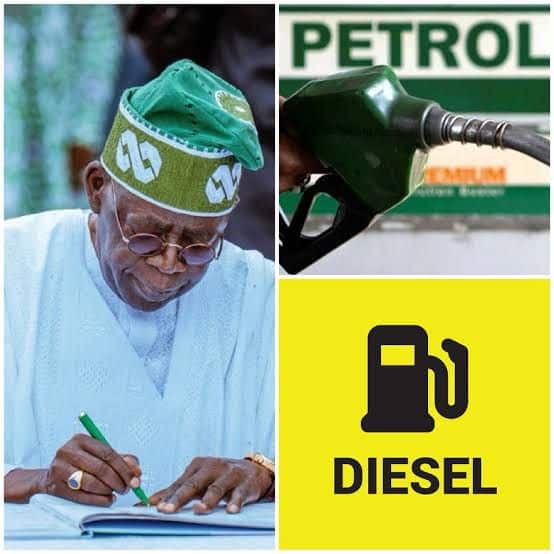
While economists see it as a bold reform, many citizens view it as another burden on an already struggling population.
Civil society organisations, labour unions, and opposition politicians have urged the government to provide palliatives or tax relief to cushion the policy’s impact.
Some have called for a gradual implementation timeline tied to the operational efficiency of local refineries.
The Nigerian Labour Congress (NLC) has warned that without concrete measures to mitigate the impact, “this 15% import duty could worsen hardship and deepen poverty levels.”
In the long term, Nigeria’s success in implementing the 15% import duty on petrol and diesel will depend on how effectively it balances market protection with consumer welfare.
If the government ensures local refineries produce at competitive costs, improve transparency in pricing, and reinvest tariff revenues into infrastructure and social support, the policy could transform Nigeria’s oil sector into a sustainable, value-driven engine of growth.
But without adequate oversight and public accountability, it risks becoming yet another policy that burdens citizens without delivering the promised benefits.
For now, Nigerians must brace themselves for short-term pain—in the hope that this sacrifice leads to long-term energy independence and economic stability.