Israel attacks Lebanon once again, crossing the border under the cover of night to unleash a violent raid that left a Lebanese municipal worker dead and communities terrified.
The brutality shocked residents in the border town of Blida, where Israeli troops stormed the local government building, firing indiscriminately and shattering what little calm remained.
Lebanese President Joseph Aoun condemned the assault immediately, branding it a deliberate act of war and proof that Israel’s ceasefire commitments were never meant to be respected.
He declared that the army would no longer remain idle while Israeli forces trample Lebanon’s sovereignty, saying the country’s patience has finally reached its absolute breaking point.
Aoun orders military action in what he described as a necessary step to defend national integrity, calling on soldiers to confront and repel any future Israeli intrusion.
The announcement followed weeks of growing anger over Israeli ceasefire violations that have reduced border communities to rubble and tested Lebanon’s fragile stability since the truce last November.
In Blida, eyewitnesses recounted how the Israeli troops entered after midnight, shooting through doors and walls before killing Ibrahim Salameh, a sleeping municipal worker, without any provocation or warning.
Residents said the operation lasted for hours, with the invading soldiers looting the office and withdrawing only after causing extensive destruction to property and nearby civilian homes.
The Lebanese army confirmed that its patrols were deployed to the area, collecting evidence and preparing a full Lebanon army response as demanded by the president’s direct instructions.
According to Lebanon’s National News Agency, Israeli forces crossed nearly a thousand meters into Lebanese territory, violating multiple international border agreements and showing total disregard for diplomatic restraint.
The Israeli military later issued a statement claiming its soldiers acted against an “immediate threat,” though it failed to provide evidence, exposing yet another hollow justification for aggression.
For many Lebanese citizens, such excuses have become routine; every time Israel attacks Lebanon, it invokes the same tired language of self-defense to mask deliberate civilian killings.
Aoun’s statement from the presidential palace carried a tone of fury, calling the incident a calculated provocation designed to humiliate the Lebanese state and erode national dignity.
He told Brigadier General Rodolphe Haykal that the armed forces must act decisively, stressing that Lebanon will not tolerate another symbolic violation of its independence or territorial authority.
The president insisted that diplomacy had failed because Israel understands only force, and the time had come for a real Lebanon army response against persistent border aggression.
Prime Minister Nawaf Salam joined Aoun in condemning the raid, describing it as a “blatant attack on Lebanese sovereignty” and urging the United Nations to take immediate action.
He warned that continuous Israeli ceasefire violations are pushing Lebanon toward a larger war that could ignite the entire region if international mediators continue turning a blind eye.
Hezbollah supports Lebanese army efforts, declaring that the military must be empowered to confront Israeli threats and protect the country’s southern territories from ongoing bombardment and infiltration attempts.
The group’s spokesperson called the president’s stance courageous, saying it restores dignity to Lebanon after years of humiliation under relentless Israeli aggression that mocks global peace commitments.
Hezbollah’s statement added that the organization stands ready to assist the army logistically if Israel escalates, though it emphasized the operation should remain a national, not factional, defense effort.
Meanwhile, the United Nations peacekeeping force in southern Lebanon confirmed that it is investigating the incursion but stopped short of condemning Israel, angering Lebanese officials once again.
President Aoun criticized the UN’s silence, accusing international observers of allowing Israel attacks Lebanon repeatedly while pretending neutrality, a stance he described as moral cowardice and complicity.
The Lebanese presidency demanded that UN monitors go beyond issuing empty reports and enforce accountability under the ceasefire framework signed on November twenty-seventh last year.
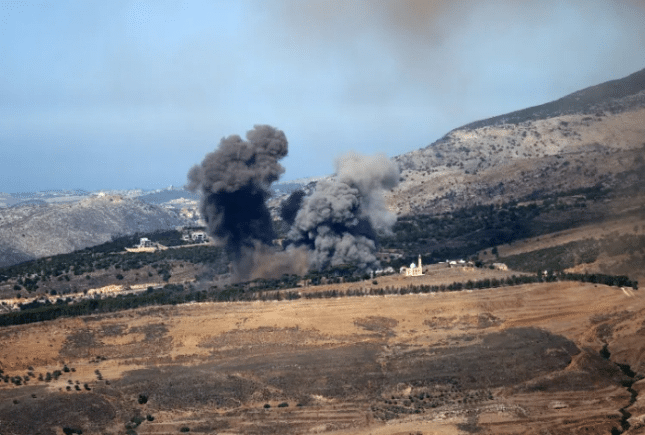
The Israeli air force also conducted new strikes on Mahmoudiyeh and Jarmak, expanding its assault and proving once more that Israeli ceasefire violations are not isolated but systematic.
Witnesses reported explosions throughout the night as warplanes roared overhead, targeting what Israel claimed were Hezbollah positions, though no evidence of militants was provided.
Beirut residents awoke to the sinister hum of Israeli Hermes-450 drones circling above, a constant reminder that Israel attacks Lebanon with impunity, without fear of consequence or reprisal.
In neighborhoods already scarred by past wars, people huddled indoors, fearing another round of strikes that could erase entire families in seconds under the guise of national security.
The Lebanese Health Ministry confirmed that more than twenty civilians have died this month alone from Israeli bombings, many of them children and elderly trapped in southern villages.
Aoun accused Israel of using these attacks to prevent reconstruction in the south, calling it a campaign of deliberate devastation aimed at keeping Lebanon weak, divided, and dependent.
He argued that Israel’s refusal to withdraw from five occupied positions in southern Lebanon shows clear contempt for international law and the terms of the ceasefire deal.
Under that agreement, Hezbollah was to retreat north of the Litani River, and only Lebanese army and UN troops were allowed south, yet Israel still holds territory.
Western diplomats claim Tel Aviv fears Hezbollah’s rearmament, but Lebanese officials counter that Israel uses this excuse to justify endless assaults and avoid genuine border normalization.
Aoun orders military action as part of a broader strategy to reclaim Lebanon’s dignity and show that national defense will not be outsourced to foreign intermediaries.
He declared that the Lebanese army is the only legitimate force to protect citizens, dismissing claims that Hezbollah alone bears the burden of confronting Israeli aggression.
Still, Hezbollah supports Lebanese army mobilization and pledged coordination, stating the current escalation is proof that Israel seeks to keep its neighbors perpetually destabilized and vulnerable.
Analysts say Israel’s regional attacks on Lebanon, Syria, and the West Bank indicate a broader policy to dominate through chaos while dismissing peace frameworks signed under global supervision.
They note that when Israel attacks Lebanon, it simultaneously strikes in Syria and Gaza, proving its ambition to maintain military superiority through fear rather than negotiated coexistence.
As tension mounts, Washington has urged restraint, though Lebanese leaders see American silence as tacit endorsement of Israel’s brutality and its disregard for Lebanese civilian lives.
The anger in Beirut is palpable. Citizens openly question how long Lebanon must absorb humiliation while international powers preach calm but reward Israel with diplomatic cover.
In southern towns, funeral prayers for Ibrahim Salameh drew thousands who condemned the occupation and vowed that the next Lebanon army response would not be limited to words.
Families of victims say they no longer trust ceasefires, believing that as long as Israel attacks Lebanon without punishment, peace will remain an illusion for generations.

Aoun reiterated that Lebanon’s sovereignty is not negotiable, promising military readiness for every inch of national territory, whatever the political or military cost required to preserve it.
The government’s rhetoric signals a major policy shift from restraint to confrontation, meaning any new incursion could spark a conflict neither side may be able to control.
Despite pleas for calm, Israeli warplanes continue to roam Lebanon’s skies daily, each violation fueling rage and confirming that ceasefire agreements now exist only on paper.
Across the country, the message is clear: Lebanon has had enough. As Israel attacks Lebanon again, the promise of resistance has replaced the illusion of peace entirely.
About The Author