

As Nigeria’s economic reforms deepen under President Bola Tinubu’s administration, the daily struggle of survival has taken on new urgency.
The removal of fuel subsidies, the floating/unification of the naira, and rising power tariffs have triggered what many economists describe as a severe cost of living crisis in Nigeria.
From food markets in Lagos to transport parks in Kano, households across the country are grappling with rising prices and shrinking purchasing power.
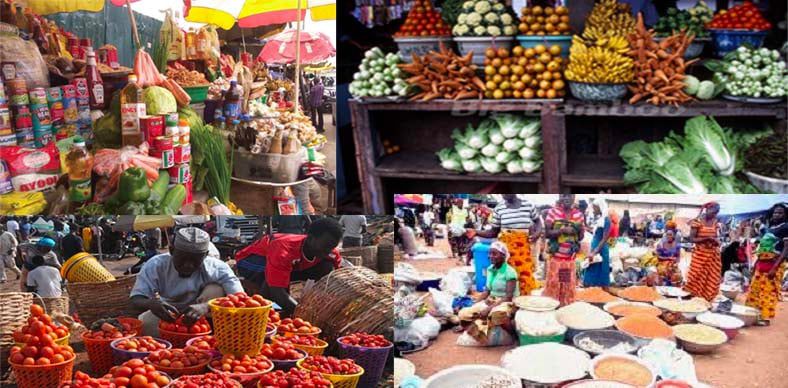
Yet, amid the pain, stories of adaptation and resilience are emerging — as families, workers and small business owners find creative ways to cope with a harsh new reality.
Rising Prices and Shrinking Incomes
Latest data shows the headline inflation rate in Nigeria eased to 20.12 % year-on-year in August 2025, down from 21.88 % in July.
Food inflation also fell to 21.87 % in August, from 22.74 % the previous month.
While the decline is encouraging, the level remains high — and many Nigerians feel the pinch.
The naira continues to trade weakly against the dollar; for example, in the parallel (black) market it was around ₦1,540–₦1,560 per US$1 in recent months.
These dynamics mean import-cost pressures, high transport and energy costs, and heavy burdens on low-income families.
A middle-income household that once spent say 50 % of earnings on essentials may now be spending upwards of 60–70 %, leaving little for rent, education or healthcare.
The Reform Gamble
The Tinubu administration insists that tough policies are essential to restore macro-economic stability.
The government argues that ending subsidies and allowing the naira to find market rates will attract foreign investment and sustain growth.
However, the immediate social cost has been steep. The floating/unified exchange rate caused a sharp depreciation last year, pushing up the cost of imports and contributing to surging living-costs.
Analysts note that the cost of living crisis in Nigeria reflects a painful transition from a distorted economy to one governed more by market forces.
Economic analyst Dr Bayo Adeniran explains:
“What we’re witnessing is economic correction after years of distortion… But without social cushioning — such as improved wages, food support or affordable transport — the burden will fall disproportionately on low-income households.”
Survival Strategies Amid the Squeeze
Despite the hardship, Nigerians are finding ways to adjust.
In many urban neighbourhoods, households now share cooking-gas cylinders, buy food cooperatively in bulk, or switch to cheaper local staples.
Many workers are reducing their commute days to cut transport costs; informal car-pool networks are increasingly common among vendors and civil-servants.
For business owners, flexibility has become vital. Tailors, food-vendors and POS operators are adjusting prices daily, accepting mobile transfers, or offering barter arrangements to retain customers.
“We’ve had to think differently,” says Chukwudi Eze, a trader in Onitsha.
“When customers can’t pay cash, we let them pay in instalments. Everyone is just managing to stay afloat.”
Government Response and Public Skepticism
In response to public outcry, the federal government rolled out palliative measures, including conditional-cash transfers and plans to distribute food-grains.
Yet many critics argue that the interventions are patchy and inadequate.
Labour unions continue to press for a new national minimum wage that reflects current economic realities.
While negotiations are ongoing, inflation continues to out-pace income growth, deepening public frustration.
Economist Dr Funke Ilesanmi says: “The government must balance reform with compassion.
You cannot tell people to tighten their belts indefinitely when their belts are already cutting into their skin.”
Resilience in Uncertain Times
Amid all this, the Nigerian spirit of resilience remains unbroken.
Across the country, stories of resource-fulness abound — from community cooperatives supporting widows to tech-savvy youths launching micro-businesses online.
Social-media platforms have become informal marketplaces where individuals trade services, sell homemade goods or offer tutoring to supplement incomes.
“The hustle is still alive,” says Bisi Adedayo, a university graduate turned online vendor. “We may be struggling, but we refuse to give up.”
Looking Ahead
As the cost of living crisis in Nigeria continues to bite, analysts believe the coming months will test both the government’s reform agenda and the resilience of its people.

Economic stability may take time, but citizens are already redefining what it means to survive — and thrive — in an era of uncertainty.
For millions of Nigerians, survival is no longer about luxury but endurance.
The challenge for policymakers, economists say, is to ensure that Nigeria’s road to recovery does not leave its most vulnerable behind.
Until then, ordinary Nigerians are showing that resilience remains one of the nation’s greatest economic assets.


