Sweden jammed Russian drone operations near a French aircraft carrier after its armed forces confirmed they electronically disrupted an unmanned aircraft operating dangerously close to a NATO naval deployment, intensifying concerns across Europe that Moscow is escalating hybrid warfare tactics alongside its prolonged invasion of Ukraine.
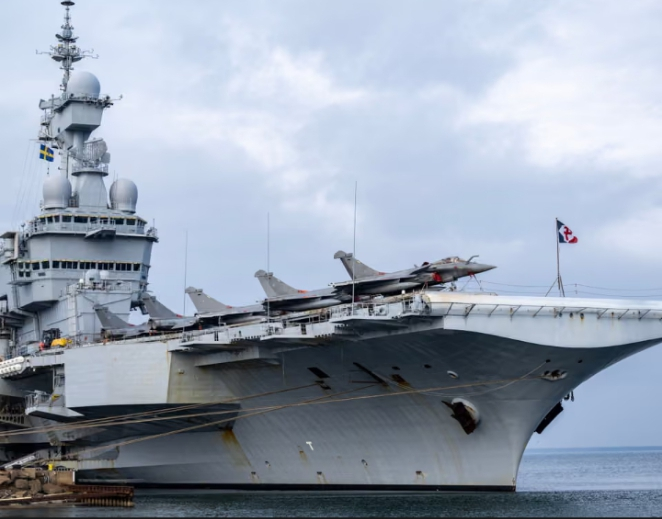
The Swedish military said the incident occurred earlier this week in the Øresund strait, a strategically sensitive stretch of water separating Sweden and Denmark, when a Swedish navy vessel detected and jammed a drone flying within approximately 13 kilometres of France’s flagship aircraft carrier, the Charles de Gaulle.
Swedish officials later confirmed that the drone was Russian, though they stopped short of describing the episode as an act of direct military aggression.
French authorities reacted sharply to the development. Speaking to journalists while aboard the Charles de Gaulle, France’s foreign minister Jean-Noël Barrot said that if Russian involvement was formally confirmed, the incident could only be interpreted as “a ridiculous provocation.”
His remarks reflected mounting unease in Paris and other European capitals over what they describe as a deliberate campaign by Moscow to test NATO’s resolve through non-kinetic means such as electronic interference, cyber operations, and political destabilisation.
The Kremlin dismissed the French accusation, with spokesperson Dmitry Peskov describing Barrot’s comments as “quite an absurd statement” and reiterating Russia’s long-standing denial of conducting hostile operations against NATO forces outside the Ukraine battlefield.
Despite such denials, Western intelligence officials argue that the pattern of incidents across Europe suggests a coordinated strategy designed to stretch allied resources while avoiding actions that would trigger a formal military response.
The drone incident in the Øresund followed a separate episode in which Romania scrambled fighter jets after an unmanned aircraft breached its airspace during a Russian attack on Ukraine.
Several NATO countries along the alliance’s eastern flank have reported similar violations in recent months, with defence officials warning that Russia is increasingly willing to push the boundaries of acceptable behaviour as the war drags on into its fourth year.
Military analysts say drones have become a particularly useful tool in Russia’s hybrid warfare playbook because they allow for deniability while still generating political pressure and operational risk.
Even brief incursions near sensitive infrastructure or military assets can force costly defensive responses, test command-and-control systems, and send a broader signal of capability and intent.
Concerns about hybrid warfare extend beyond military incidents.
In Denmark, the country’s intelligence services issued a warning that a foreign power may attempt to influence the general election scheduled for 24 March.
In a joint assessment, Denmark’s police and military intelligence agencies said the campaign period could be marked by disinformation efforts and cyber-attacks, identifying Russia as the most likely source due to Copenhagen’s consistent support for Kyiv.
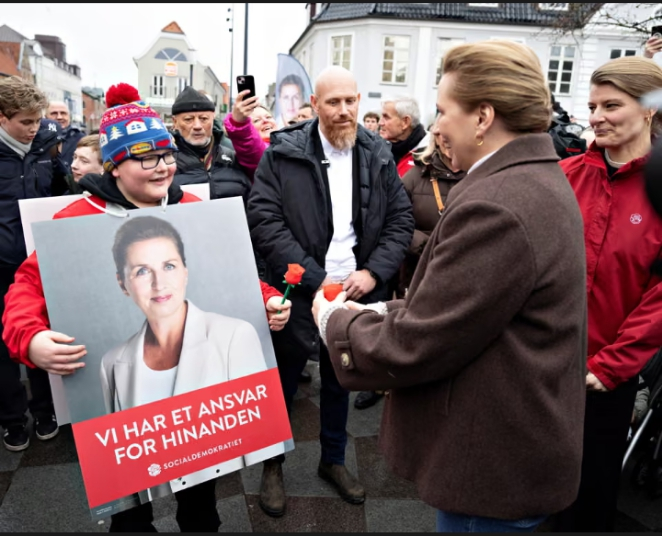
Denmark’s prime minister, Mette Frederiksen, called the election earlier this week, citing national security concerns alongside domestic political considerations. She said Russia’s actions now represent one of the most serious threats facing the country, adding that democratic institutions must be protected from external interference.
European Union officials have echoed those warnings, noting that election cycles across the continent provide opportunities for hostile actors to exploit social divisions, spread misleading narratives, and undermine public trust.
Intelligence agencies in several countries have reported increased online activity linked to Russian-aligned networks, often amplifying polarising issues related to migration, economic hardship, and the cost of supporting Ukraine.
In central Europe, political tensions linked to the war are also intensifying. In Hungary, prime minister Viktor Orbán is facing declining poll numbers ahead of elections expected in April.
Analysts say his government has increasingly used Ukraine as a political distraction, shifting public debate away from domestic issues such as strained public services, inflation, and economic stagnation.
Orbán’s administration has deployed state-funded advertising campaigns portraying Ukraine’s president Volodymyr Zelenskyy alongside European Union officials, suggesting that Brussels and Kyiv are demanding financial sacrifices from Hungarian taxpayers.
The messaging mirrors broader narratives promoted by pro-Kremlin outlets, even as Budapest remains formally aligned with EU sanctions against Russia.
Tensions have also surfaced between Ukraine and its neighbours Slovakia and Hungary over the Druzhba pipeline, which carries Russian oil through Ukrainian territory. Ukraine says the pipeline was damaged in Russian airstrikes in late January, while Slovak and Hungarian officials insist it has since been repaired.
Slovakia’s prime minister Robert Fico and Orbán have accused Zelenskyy of using “blackmail” by threatening transit disruptions, claims Kyiv has rejected.
The dispute has spilled into EU decision-making, with Hungary blocking an emergency financial package for Ukraine as negotiations continue. Diplomats say the standoff highlights the growing strains within the EU as the costs of prolonged support for Ukraine become more politically sensitive in some member states.
Amid the political and military manoeuvring, concerns remain acute over the safety of critical infrastructure in the war zone.
The International Atomic Energy Agency confirmed it had negotiated a temporary local ceasefire between Ukrainian and Russian forces to allow repairs to a backup power supply at the Zaporizhzhia nuclear power plant.
The facility, Europe’s largest nuclear station, has repeatedly lost external power connections since Russia seized it early in the war.
Rafael Grossi, the IAEA’s director general, said the agreement marked the fifth such local ceasefire brokered by the agency, underscoring the fragile and ad-hoc nature of arrangements designed to prevent a nuclear accident.
Western officials continue to warn that the militarisation of civilian infrastructure represents one of the most dangerous aspects of the conflict.
The war’s global repercussions were further highlighted by comments from Ghana’s foreign minister, who said at least 55 Ghanaians had been killed after being “lured into battle” on Russia’s side.
According to Ghanaian officials, hundreds of citizens were recruited with promises of employment and later found themselves on the front lines in Ukraine.
Russian authorities deny illegally recruiting foreign nationals, but reports of African, Asian, and Middle Eastern fighters being drawn into the conflict have increased over the past year.
For European defence planners, the Swedish drone incident serves as a reminder that the conflict’s front lines extend far beyond Ukraine’s borders.
Hybrid actions such as electronic jamming, cyber-attacks, election interference, and covert influence campaigns blur the distinction between war and peace, complicating traditional deterrence strategies.
Read also: 100,000 pray at Al-Aqsa mosque amid Israeli restrictions on second friday of Ramadan
While NATO has so far avoided direct military confrontation with Russia, officials say incidents like the one near the Charles de Gaulle reinforce the need for vigilance, coordination, and clear signalling.
Sweden’s decision to disclose its role in jamming the drone was seen by analysts as a deliberate move to demonstrate transparency and deterrence, particularly as the country continues to integrate more deeply into NATO structures.
As the war enters its 1,466th day, European leaders face the challenge of sustaining support for Ukraine while defending their own societies from a widening spectrum of threats. Whether through drones over the Baltic, cyber-operations targeting elections, or political pressure within the EU, the conflict increasingly shapes Europe’s security landscape in ways that extend far beyond the battlefield.