Mark Carney F-35 fighter jet contract has become a lightning rod in Canadian politics as pressure mounts over sovereignty, defence costs, and escalating tensions with Washington.
The controversy intensified after Donald Trump threatened punitive trade measures, pushing Canada’s defence debate into public view and exposing vulnerabilities within long-standing cross-border military arrangements.
Opposition parties argue the Mark Carney F-35 fighter jet contract entrenches dependence on the United States at a time when diplomatic relations appear increasingly transactional and unpredictable.
The New Democratic Party has urged the government to cancel the initial purchase commitment, warning that defence integration should not come at the expense of national autonomy.
Interim NDP leader Don Davies framed the issue bluntly, saying, “Buying F-35s deepens reliance on a superpower rather than strengthening independent Canadian security.”
Supporters of cancellation say the Mark Carney F-35 fighter jet contract contradicts calls for middle powers to cooperate outside dominant geopolitical blocs.
Trump’s warning of a 50 per cent tariff on Canadian aircraft added urgency, linking defence procurement directly to trade retaliation and political leverage.
The threat followed Canada’s refusal to certify several Gulfstream jets, a dispute Trump described as unfair and damaging to American aerospace interests.
In a social media statement, Trump accused Canada of acting “wrongfully and illegally,” language critics say blurred lines between diplomacy, commerce, and coercion.
Analysts note the Mark Carney F-35 fighter jet contract now sits at the intersection of defence strategy and economic security.
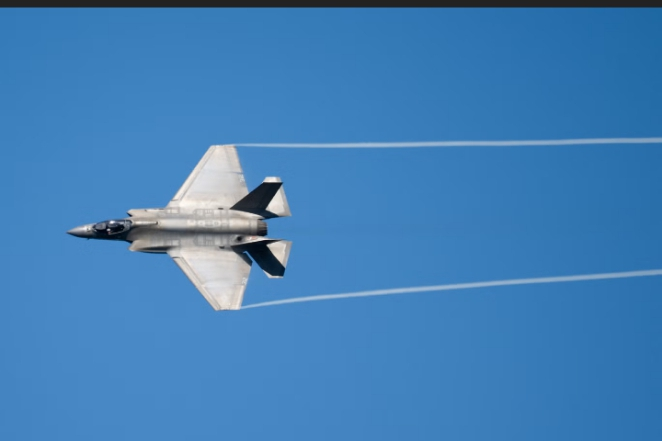
Canada originally agreed to purchase eighty-eight F-35A jets from Lockheed Martin, with funding initially approved for sixteen aircraft deliveries.
Since that agreement, production delays and rising costs have fueled scepticism about long-term affordability and value for Canadian taxpayers.
A 2025 audit revealed projected costs climbing to $27.7bn, significantly above earlier estimates, intensifying scrutiny of Canadian defence procurement decisions.
Government officials acknowledge concerns but stress that national security obligations cannot be reduced to short-term political calculations.
Industry minister Mélanie Joly said Canada must focus on projects that “protect sovereignty while creating jobs across the country.”
Critics counter that the Mark Carney F-35 fighter jet contract exports too much economic value abroad, limiting domestic industrial benefits.
Attention has therefore turned toward alternatives, most notably Saab Gripen fighter jets offered by Sweden.
Saab has pledged to manufacture aircraft in Canada, a proposal estimated to generate more than twelve thousand skilled jobs nationwide.
Advocates argue such an approach aligns defence spending with economic development and technological transfer.
Don Davies described the Swedish option as a “predictable source of defence cooperation between two middle powers.”
Supporters say the alternative weakens the narrative that Canada must choose between security and independence.
However, defence analysts caution that switching suppliers would involve transition costs, training challenges, and interoperability questions.
The Mark Carney F-35 fighter jet contract also carries implications for NORAD and continental air defence coordination.
US officials have warned any major change could require adjustments to shared command structures and operational planning.
Those warnings have been criticised as implicit pressure rather than neutral strategic assessments.
Opposition lawmakers say such statements reinforce arguments for diversifying defence partnerships beyond Washington.
Canada US defence tensions have grown more visible as trade, technology, and security disputes increasingly overlap.
Public opinion appears divided, with polls showing concern over costs but caution about weakening military readiness.
Veterans groups have expressed mixed views, some prioritising capability, others questioning long-term dependency risks.
Military experts note the F-35 offers advanced stealth and sensor integration unmatched by most competitors.
Yet they also acknowledge that mission requirements differ and may not justify maximum-capability platforms.
Trump tariff threat Canada has therefore reframed procurement as a sovereignty issue rather than purely technical choice.
Economists warn tariffs on Canadian aircraft could ripple through supply chains and regional manufacturing hubs.
The government insists contingency planning is underway should trade retaliation materialise.
Privately, officials concede that Trump’s unpredictability complicates strategic planning cycles.
The Mark Carney F-35 fighter jet contract has thus become symbolic of broader questions about Canada’s global positioning.
Is Canada best served by deep alignment with one partner, or diversified cooperation among trusted allies?
Supporters of diversification argue recent events demonstrate the risks of overconcentration.
They say defence autonomy strengthens negotiating power rather than undermining alliances.
Government loyalists reply that abandoning the contract could damage credibility with allies and suppliers.
They stress that procurement decisions send long-term signals about reliability and commitment.
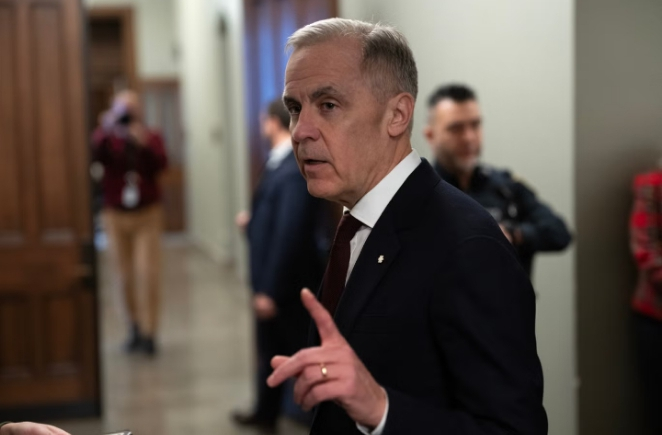
As debate continues, Mark Carney faces pressure to reconcile economic nationalism with strategic continuity.
The decision will shape Canada’s air force capabilities for decades, extending far beyond current political cycles.
Whatever the outcome, the controversy has forced an overdue national conversation on defence priorities.
Canada’s next move will signal how it navigates power politics in an increasingly volatile international order.
Read also: Sana-mania grips Japan as voters rally behind Takaichi ahead of historic election
About The Author